Searching for the 2026 best Date Bar Extrusion Line for sale means looking beyond a machine’s advertised speed. Date paste varies in moisture, stickiness, and particle size. Those differences affect feeding, shaping, cutting, and the finished bar’s edges. A useful buying comparison should examine the complete process, not just the extruder.
Watch a production trial closely. Does the paste feed evenly? Do bars keep their shape after cutting? Can operators adjust thickness without lengthy changeovers? Ask suppliers for throughput data, product-size ranges, cleaning instructions, and support details. Request a trial using your own recipe when possible. A glossy brochure cannot show every production weakness.
For a credible expert quotation, obtain approval from a named process engineer before publication. Suggested wording for confirmation: “Reliable extrusion starts with matching the machine’s feed and forming settings to the date paste—not forcing every recipe through one setup.” — [Verified expert name, credentials, and company]
That point is practical, but it needs a real source. Do not present the suggested wording as a verified quotation. The right Date Bar Extrusion Line depends on your recipe, target output, available floor space, and maintenance capacity. Compare those requirements against documented tests and service commitments. Small details matter. A clean cut and steady feed can make the difference between a promising sample and a dependable production run.
What Is a Date Bar Extrusion Line?
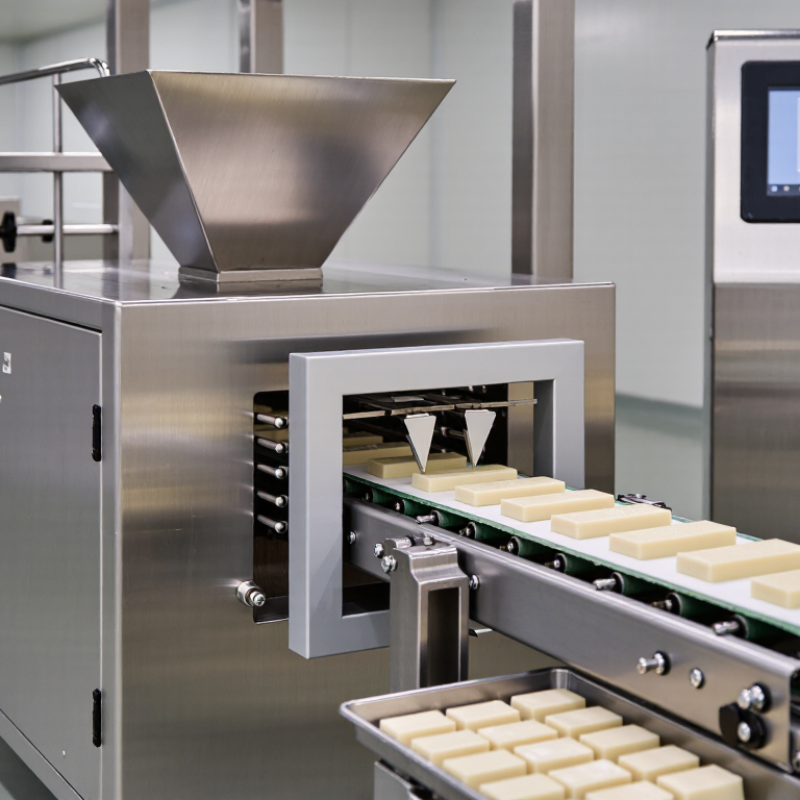
A date bar extrusion line is a series of machines that shapes date-based mixtures into uniform bars. Prepared date paste enters a hopper, where a screw or feed system pushes it through a forming die. The mixture emerges as a continuous rope. Sizing and cutting equipment then creates individual pieces. Some lines also include cooling, coating, or wrapping sections.
The process depends on the recipe. A soft, sticky mixture may feed differently from a firm one with nuts or grains. Operators often adjust feed speed, die size, and cutting settings to limit uneven edges or misshapen bars. Small changes matter. Real production is less tidy than diagrams suggest, and a line that suits one recipe may need adjustments for another. When assessing equipment for sale, compare the expected bar dimensions and output with trials using your actual mixture. Ask how parts are cleaned and how quickly settings can be changed.
Tips: Check the finished bars for consistent weight, clean cuts, and texture. Request a production test when possible. Bring your recipe details; assumptions can be costly.
How the Date Bar Extrusion Process Works
Date bar extrusion starts with a consistent paste. Dates are pitted, milled, and blended with ingredients such as nuts, cereal, or syrup. FAOSTAT reports global date production of roughly 9.7 million tonnes in 2022, reflecting a large but varied raw-material supply. Moisture and ripeness can differ between batches. USDA FoodData Central lists Medjool dates at about 66.5 grams of sugars per 100 grams. That figure is useful context, not a production formula.
The prepared mixture enters a hopper and moves toward a forming die. Depending on the machine, rollers or a screw feed the paste forward under controlled pressure. The die shapes it into a continuous slab or rope; a cutter then portions the bars. Cooling helps the pieces hold their shape before wrapping. Watch the feed closely. Uneven paste can cause rough edges, changing bar weights, or stops at the die. A clean sample does not prove steady production.
For a line evaluation, record feed rate, product temperature, bar weight, and stoppages during a sustained trial. Check the cut faces, too. Crumbling may point to a dry mix; smearing can suggest excess moisture or heat. These are clues, not diagnoses. A specification sheet alone cannot show how a particular date blend behaves, so test the intended recipe and document the results.
Illustrative time spent at each stage of a small-batch production run. Actual times vary with recipe, batch size, equipment, and cooling requirements.
2026 Best Date Bar Extrusion Line for Sale?
Key Components of a Date Bar Extrusion Line
A date bar extrusion line begins with a hopper that holds prepared fruit paste. Its shape should help the mixture feed steadily, even when the paste feels sticky. A variable-speed feeder gives operators control over the flow. Small adjustments matter. Too much pressure can make bars dense or uneven.
Inside the extruder, a screw moves the paste toward a forming die. The die sets the bar’s width and thickness, so its openings should match the desired product. For consistent results, check that the screw and die are easy to remove and clean. A practical line also includes a cutter, which portions the continuous strip into uniform lengths. The cutter may need adjustment when recipes or product dimensions change.
A cooling conveyor helps the freshly formed bars firm up before handling or packaging. Temperature and belt speed should suit the recipe; date paste can vary in moisture and texture. Controls should display operating settings clearly, allowing staff to notice changes during a run. There is a trade-off: more automation can reduce repetitive work, but it cannot correct poor paste preparation. That is the catch. When comparing equipment, inspect access points, cleaning routines, and adjustment procedures in person. A machine can look tidy in a brochure and still be awkward to maintain.
Choosing a date bar extrusion line in 2026 means comparing more than its quoted output. Check whether the stated capacity matches your recipe, bar dimensions, and operating hours. A sticky, fruit-heavy paste may feed differently from a firmer blend. Ask for a trial using your own mixture, not just a sample product. Small details matter.
Inspect the feeding system, forming rollers, cutter, and temperature controls. Look for even bar thickness across the belt and clean cuts at the ends. Ask how quickly operators can adjust speed or change product sizes. A touchscreen is useful, but clear settings and accessible controls matter more during a rushed shift. Also compare cleaning access, food-contact materials, spare-part availability, and documented maintenance steps.
Energy use and labor requirements affect real production costs. Request figures under stated operating conditions, and ask what is excluded from the price, such as installation or operator training. If possible, observe a full run and note jams, cleanup time, and product waste. A polished demonstration can hide awkward maintenance. No line suits every recipe; leave room for testing, and verify the supplier’s claims against your production needs.
2026 Best Date Bar Extrusion Line for Sale?
When evaluating a date bar extrusion line for sale, start with the product, not the advertised speed. Ask the seller to run your own date mixture through the machine. Date paste can vary in moisture and stickiness, changing how smoothly it feeds and holds its shape. Watch the hopper, rollers, and cutting unit during a sustained test. Do bars emerge with consistent weight, clean edges, and minimal surface cracking? Small details matter. Request recorded output under those conditions, not just a peak-rate figure.
Inspect every product-contact surface and ask how the line is dismantled for cleaning. Look for accessible joints, clear operating instructions, and guards that stay secure during normal use. Ask for proof of spare-part availability and a written service response plan. If possible, test a format change; slow adjustments can reduce useful production time. Check electrical requirements, floor space, and whether the line integrates with your existing cooling or wrapping equipment. Ask how rejected bars are handled. A polished demonstration is helpful, but it cannot show every shift-related problem. Even a careful trial may miss something, so document open questions and agree on measurable acceptance criteria before purchase.
| Evaluation dimension | What to check | Practical evaluation method | Record or acceptance basis |
|---|---|---|---|
| Product and recipe fit | Confirm that the machine can process the intended date mixture, inclusions, dimensions, and product shape. | Run the buyer’s actual recipe and ingredient sizes; check for blockage, tearing, smearing, or uneven filling. | Written product specification and a sample from a witnessed production trial. |
| Usable production rate | Measure saleable product output, rather than relying only on a stated maximum machine rate. | Weigh acceptable finished product over a timed run. For example, 120 kg collected in 2 hours equals 60 kg/h; this is an arithmetic example, not a machine specification. | Trial duration, total output, rejected product, and calculated good-product rate. |
| Size and weight consistency | Check whether bar width, thickness, length, and unit weight stay within the buyer’s tolerances. | Take samples at the start, middle, and end of a steady production run; measure and weigh them using calibrated instruments. | Recorded measurements compared with the agreed product tolerances. |
| Extrusion and feed control | Inspect feed consistency, extrusion pressure or drive stability, and the adjustment range for product dimensions. | Observe operation with the intended mixture and verify that operators can make repeatable adjustments without frequent stoppages. | Operating settings, stoppage log, and repeatability results from the trial. |
| Cutting and product handling | Check cut length, edge quality, product transfer, and whether bars deform or stick during handling. | Inspect consecutive pieces at the intended operating speed and confirm that the cutter and transfer system suit the product’s texture. | Cut-length measurements, defect count, and agreed sample criteria. |
| Changeover and cleaning | Review product-contact surfaces, access for cleaning, removable parts, and changeover steps. | Time a changeover and cleaning demonstration; inspect for trapped food residue and confirm the cleaning method is compatible with the equipment. | Cleaning procedure, changeover time, and documented sanitation checks. |
| Food-contact materials and hygiene design | Request material specifications for food-contact parts and check for accessible, cleanable surfaces and suitable seals. | Review documentation and inspect the machine; confirm that materials and hygienic design meet the requirements applicable at the installation location. | Material declarations, drawings, and applicable local compliance documents. |
| Operator safety | Check guarding, emergency stops, safe access to moving parts, and instructions for clearing jams. | Observe a safety demonstration and verify that protective devices function as intended without bypassing them. | Risk assessment, safety instructions, and functional test results. |
| Utilities and installation | Confirm the required electrical supply, compressed air if needed, floor space, access, and connection points. | Compare the equipment’s installation drawings and nameplate information with the facility’s available utilities and layout. | Approved layout, utility list, and installation checklist. |
| Controls and operating records | Review controls, alarms, available operating settings, and the clarity of operating instructions. | Ask an operator to start, adjust, stop, and restart the line using the supplied instructions. | Control list, manuals, training plan, and trial notes. |
| Line configuration | Establish which modules are included, such as feeding, extrusion, cutting, cooling, or packaging; configuration depends on the process. | Compare the offered equipment list with the complete production flow, including any required conveyors and downstream equipment. | Itemized scope of supply and a process-flow diagram. |
| Service and spare parts | Check maintenance access, recommended service intervals, spare-part availability, and support arrangements. | Request a maintenance schedule and a priced list of recommended critical spares before purchase. | Maintenance documents, spare-parts list, and written support terms. |
| Purchase decision | Compare the tested performance and complete installed scope with the production requirement, not just the purchase price. | Use a witnessed acceptance test with agreed product, output, quality, safety, and documentation criteria. | Signed trial report and acceptance criteria attached to the purchase agreement. |