Skip to content

2026 Best Metal Tools Box for Global Buyers?

For global buyers, choosing the best Metal Tools Box in 2026 means looking beyond a polished product photo. A box may appear sturdy online, yet a thin lid or loose hinge can become obvious after repeated use. Details matter. Check the steel thickness, corner joints, coating, and handle attachment. Ask for clear specifications and photos of the actual model, not only a catalog image. These checks help compare suppliers on practical features rather than broad claims.

The right design depends on where and how the box will be used. A mobile repair team may value secure latches, reinforced handles, and drawers that stay closed during transport. A workshop may need greater capacity, smooth drawer slides, and compartments sized for common tools. Measure the available storage space, then confirm the box’s dimensions, weight, packaging, and replacement-part options with the supplier. Also review warranty terms and any product documentation required by your destination market. Requirements can differ, so do not assume one certificate or label fits every order.

Price still matters, but the lowest quote may leave out useful details, such as protective packaging or clear after-sales support. Not every buyer needs the heaviest model. Compare build quality against workload, shipping costs, and expected service life. A careful checklist will not remove every purchasing risk, and supplier descriptions can be incomplete. Still, asking specific questions before placing an order makes the decision more informed and easier to explain to your team.
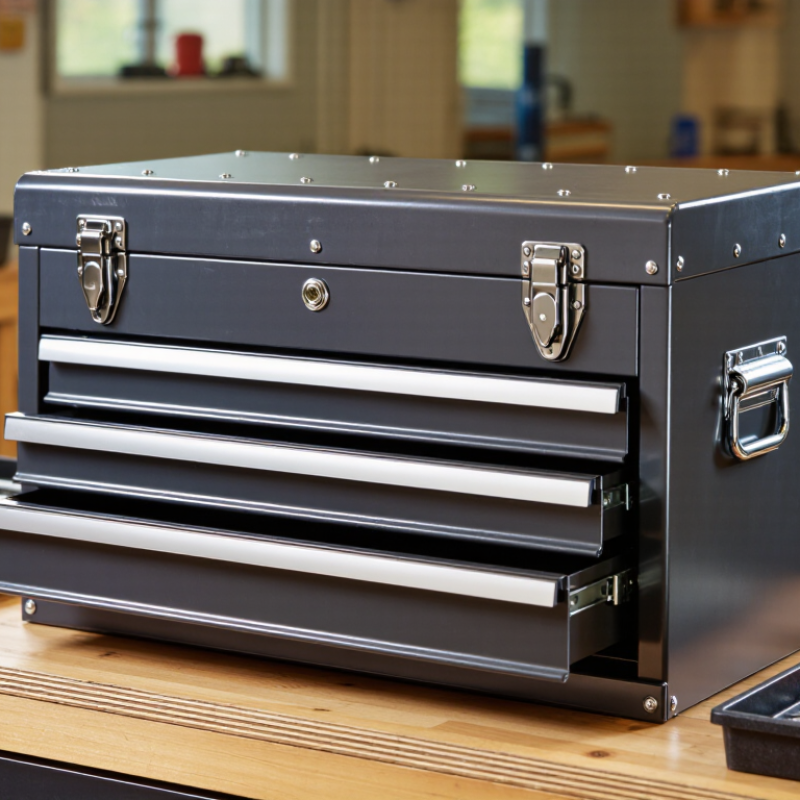
2026 Best Metal Tools Box for Global Buyers?

What Defines a Metal Tool Box and How Is It Used?

A metal tool box is a rigid storage case, usually made from formed steel or aluminum, with a lid, handle, and latch. Larger models may include drawers, dividers, or wheels. It keeps tools together during transport and helps protect them from knocks, dust, and workshop clutter. Small details matter: a lid that stays open, smooth drawer slides, and a comfortable handle can save time on a busy job.

Steel suits workshops where impact resistance matters, but it adds weight. Aluminum is easier to carry, though its panels can dent under heavy loads. World Steel Association data puts global crude steel production at about 1.88 billion tonnes in 2024. That figure shows steel’s vast industrial scale, not the quality of any individual box. A thick-looking panel is not automatically well made.

In use, sort tools by task, keep heavy items low, and avoid overloading handles or drawers. The U.S. Bureau of Labor Statistics reported 2.4 recordable injury and illness cases per 100 full-time private-industry workers in 2023. That rate does not prove tool boxes prevent injuries, but orderly storage supports safer housekeeping. One trade-off is easy to miss: a box packed to capacity may be harder to move than expected. Check its loaded weight, latch strength, and corrosion protection before choosing one.

Which Metal Tool Box Types and Materials Suit Different Needs?

Metal tool boxes should match the worksite, not just the tool list. A portable steel chest suits a workshop bench, where weight matters less than rigidity. Rolling cabinets help technicians move sockets and power tools across smooth floors. Cantilever boxes make small parts visible, though their open trays can collect dust. For frequent transport, check latch security, handle attachment points, and loaded weight—not just empty-box dimensions.

Material choice changes the trade-off. Carbon steel is sturdy and widely used, but chipped coatings can expose it to moisture. Stainless steel resists corrosion better in damp settings, usually at a higher cost. Aluminum is lighter for vehicle-based work, but thin panels may dent under heavy loads. The World Steel Association reported 1.89 billion tonnes of global crude steel production in 2024; the International Aluminium Institute reported about 70.6 million tonnes of primary aluminum in 2023. These figures describe broad material industries, not toolbox quality.

For coastal workshops or washdown areas, inspect seams, hinges, and coating coverage closely. A small gap can matter more than a thick panel. For mobile crews, compare the box’s loaded weight with carrying limits and vehicle storage space. I would not select by thickness alone; welds, corner reinforcement, and drawer slides deserve equal attention. That judgment can be easy to overlook.

How to Compare Security, Capacity, Durability, and Portability

When comparing a metal tool box, look beyond its lock and listed capacity. Check how the lid overlaps the body, whether hinges are protected, and whether the latch can accept a sturdy lock. A lock deters casual access; it does not make a box theft-proof. For capacity, compare usable interior dimensions with your actual tools, including room for dividers and handles. A crowded box can slow work and damage delicate items.

Durability depends on more than sheet thickness. Inspect welded corners, hinge attachment, coating coverage, and the underside, where moisture can collect. ASTM B117 describes a salt-spray test for evaluating corrosion resistance, but test hours should not be treated as a direct prediction of service life. Portability matters, too. NIOSH’s Revised Lifting Equation uses 51 pounds as a load constant under ideal lifting conditions; awkward reach, twisting, or repeated lifts can lower recommended limits. Weigh the empty box, then estimate its loaded weight.

Tips: Pack your heaviest tools low and close to the handle. Try the latch with gloves on, and check that the handle stays comfortable when loaded. One detail is easy to miss: a large box may offer capacity but become impractical on stairs. A smaller, better-organized box can sometimes serve the job more reliably.

What Global Buyers Should Check in 2026

Global buyers should compare metal toolboxes by measurable construction, not glossy photographs. The World Steel Association reported 1,882.6 million tonnes of crude steel production in 2024. That figure shows the scale of steel supply, not the quality of any toolbox. Ask for the steel grade, sheet thickness, rated load, and test method. Check a sample. Look closely at welded corners, drawer travel, hinge alignment, and sharp edges. Small defects matter.

Corrosion deserves equal attention. NACE’s 2016 IMPACT study estimated the global cost of corrosion at US$2.5 trillion, or about 3.4% of global GDP. This is an economy-wide estimate, not a toolbox-specific figure. Still, it explains why coating details matter. Ask how coating thickness is measured and whether exposed edges receive protection. A powder-coated surface alone proves little. Salt-spray results can help, but compare test duration and method rather than relying on a pass claim.

For international shipments, confirm the packed dimensions, carton protection, and replacement-part availability. Photograph the unit before dispatch, especially the corners and drawer slides. Request drawings and written load ratings; vague specifications are hard to compare across suppliers. The uncomfortable part: a low quote may conceal thinner steel or weaker casters. Price still matters, but I would not treat it as a quality test.

2026 Best Metal Tools Box for Global Buyers? — What Global Buyers Should Check in 2026

Buying Dimension What to Check Practical Evaluation Evidence to Request
Material and sheet thickness Identify the metal type, nominal thickness, and whether the stated thickness applies to the body, drawers, lid, or all panels. Compare thickness in millimetres rather than relying only on gauge labels. As a general reference, common US steel-gauge conversions are approximately 0.9 mm for 20 gauge, 1.2 mm for 18 gauge, and 1.5 mm for 16 gauge; actual specifications can vary by standard and material. Material specification, thickness tolerance, and a product drawing showing the measured panels.
Dimensions and usable capacity Distinguish external dimensions from internal storage dimensions. Check drawer opening size, usable depth, and lid clearance. Confirm that the box fits the intended vehicle, workbench, storage space, and tools. Compare usable volume and compartment layout, not just the outside measurements. Dimensioned drawings, internal measurements, and a stated capacity in litres or cubic feet where applicable.
Load ratings Check separate ratings for each drawer, the top surface, the total box, and any wheels or handles. Do not treat a static rating as a rolling or dynamic rating. Confirm whether the stated load assumes evenly distributed weight and whether the box must be stationary during loading. Rated-load documentation and test conditions for drawers, cabinet, top, and mobility components.
Drawer slides and operation Check slide type, extension length, drawer retention, and operation under the stated load. Full-extension slides can improve access to items at the rear. Test drawers for binding, excessive play, and unintended opening when the box is moved. Slide specifications, load rating per drawer, and a sample inspection or functional test report.
Wheels and mobility For mobile units, review wheel diameter, material, brake arrangement, mounting points, and total load rating. Check whether the listed capacity applies to the complete wheel set and whether brakes are fitted to the required wheels. Consider floor type, thresholds, and the weight of the loaded box. Wheel and caster specifications, mounting details, and the complete unit's load rating.
Corrosion protection Ask about surface preparation, primer, coating type, and protection of edges, seams, and internal surfaces. Coating performance depends on preparation, application, handling, and environment. If salt-spray results are supplied, check the test method, duration, sample condition, and pass criteria; hours alone do not predict service life. Coating specification and, where relevant, a test report identifying the method and acceptance criteria.
Locking and security Check the locking mechanism, number of locking points, key management, and whether the lid or drawers lock together. A lock can help prevent casual access but should not be assumed to provide high-security protection unless supported by a suitable security rating or test. Locking-system description, key details, and any applicable security-test documentation.
Fit, finish, and safety Inspect seams, corners, burrs, sharp edges, handles, lid stays, and pinch points. Open and close every drawer and lid. Check that handles are secure, edges are finished, and moving parts do not create obvious snagging or pinch hazards during normal use. Pre-shipment inspection checklist, sample photographs, and agreed quality-acceptance criteria.
Packaging and shipment Review packing method, corrosion protection during transit, carton or crate dimensions, and handling instructions. Confirm packed dimensions and gross weight for freight planning. Packaging should protect corners, coatings, locks, and wheels against movement and impact during transport. Packing specification, packed measurements and weight, and photographs of the shipment-ready package.
Compliance and destination requirements Identify requirements that apply in the destination market, especially for materials, labeling, packaging, and workplace use. Requirements vary by product type and country. Do not assume that a general conformity statement replaces destination-specific review or required documentation. Applicable declarations, test documents, labels, and packaging information confirmed for the destination market.
Warranty and replacement parts Check warranty duration, covered components, exclusions, claim process, and availability of keys, slides, wheels, and handles. Compare the written terms and the process for obtaining replacement parts. Confirm who pays freight and whether parts are available after the initial shipment. Written warranty terms, spare-parts list, and service contact or claims procedure.

Buyer note: The evaluation points above are general purchasing checks, not a ranking of specific products. Confirm current specifications, test conditions, and destination-market requirements with the supplier before ordering.

How to Match a Metal Tool Box to Your Work and Storage Needs

A metal tool box should fit the work, not just look substantial. Start by listing the tools you actually carry. Measure the longest wrench and the tallest power tool before choosing a compartment layout. Leave room for gloves or a small parts tray. A crowded box slows down everyday jobs.

For mobile work, check the handle, latch, and empty weight. A box that feels manageable in a showroom can become awkward when loaded. Weight adds up. For a fixed workshop, drawers may keep sockets and fasteners visible, while a deeper compartment can hold bulky equipment. Check that drawers slide smoothly under a realistic load, not just when empty.

Steel thickness affects weight and stiffness, but thicker is not automatically better for every buyer. Consider the storage environment, too: damp air may call for a corrosion-resistant finish and dry storage. Ask suppliers for clear dimensions, load ratings, and details about finish testing. Shipping measurements matter when comparing options across markets. One detail is easy to overlook: internal dimensions can differ from the advertised outside size. I would measure twice, and still expect the first layout to need adjustment.