China Best Slim Frame Aluminum Sliding Doors Supplier?
Choosing the China Best Slim frame aluminum sliding doors Supplier? It requires more than comparing online prices. Buyers should examine manufacturing experience, material quality, design accuracy, and after-sales support. A reliable supplier should explain each specification clearly, from aluminum alloy grades to glass thickness and hardware options.
In practical projects, slim frame aluminum sliding doors must balance appearance, strength, insulation, and daily usability. Imagine a living room facing a garden. The panels should move quietly, meet evenly, and remain stable after repeated opening. Narrow frames can improve natural light, but they may demand tighter production tolerances. Small errors become visible quickly.
Factory experience matters.
Ask for project photos, test reports, and installation guidance. A professional supplier can discuss powder coating, drainage design, rollers, locks, and weather seals without vague promises. Product samples also reveal useful details. Check corner joints, handle movement, frame alignment, and the smoothness of the sliding track.
However, no supplier is perfect. Even an experienced factory may face delays, replacement issues, or communication gaps. This is where transparent processes become important. Confirm drawings, delivery terms, packaging methods, warranty coverage, and response times before placing an order. A thoughtful supplier welcomes technical questions and admits limitations.
This guide explores how to identify a dependable Chinese manufacturer. It considers product performance, customization ability, certifications, production control, and customer feedback. The “best” choice may not offer the lowest price. It should offer consistent quality, honest communication, and practical support throughout the project. Suppliers should be judged carefully, because attractive catalog images can hide ordinary weaknesses.
What Are Slim Frame Aluminum Sliding Doors?
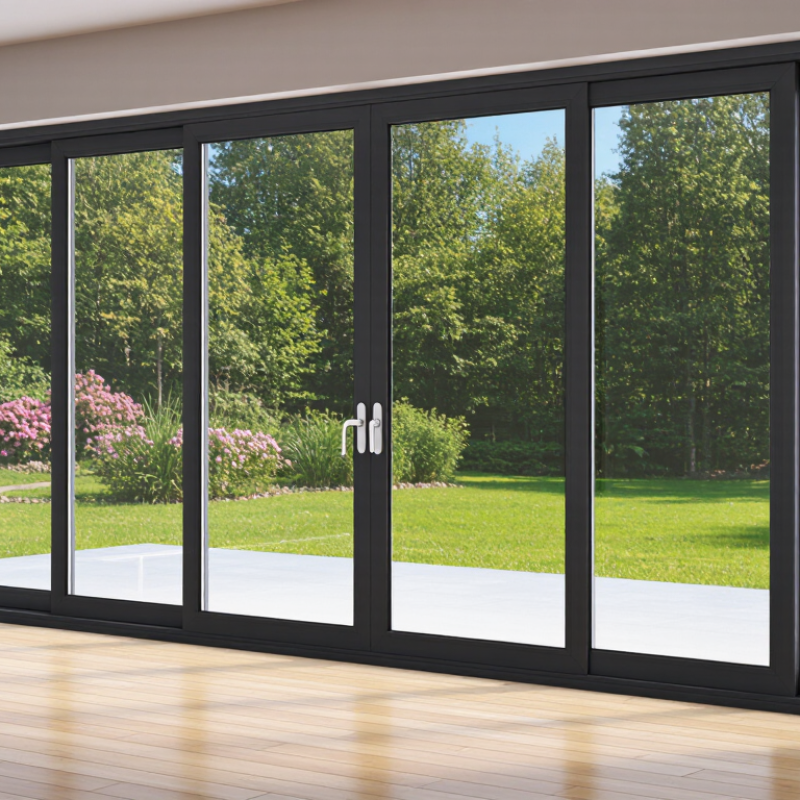
Slim frame aluminum sliding doors use narrow aluminum profiles around large glass panels, creating wider views and more daylight. The frame carries the rollers, locks, seals, and structural load. “Slim” describes the visible sightline, not necessarily the complete frame depth.
A slim profile must still resist wind, water, and repeated movement. The U.S. Department of Energy reports that windows can represent 25–30% of household heating and cooling energy use. Door performance depends on glazing, thermal breaks, weather seals, and installation quality. Low-emissivity double glazing can reduce heat transfer, while laminated glass improves safety and acoustic comfort. Small details matter.
Independent testing is essential. Look for air, water, wind-load, thermal, and cycle-test results based on recognized standards. The National Fenestration Rating Council explains that U-factor measures heat transfer, while solar heat gain coefficient measures admitted solar energy. Lower U-factor usually means better insulation, but climate changes the ideal specification. Not every narrow frame performs well. That assumption needs challenging.
In practical inspections, check whether the panels move smoothly without lifting or scraping. Examine drainage channels, corner joints, and gasket compression. Ask for tested maximum panel sizes and hardware load limits. A supplier’s catalog is useful, but laboratory evidence is stronger. Installation can still weaken a good system. Even a well-designed door may leak if the opening is poorly prepared.
China Best Slim Frame Aluminum Sliding Doors Supplier? - What Are Slim Frame Aluminum Sliding Doors?
| Data Dimension | Typical Information | Why It Matters | Supplier Evaluation Point |
|---|---|---|---|
| Product Definition | A sliding door system using narrow aluminum profiles to maximize the visible glass area. | Creates a clean architectural appearance and allows more daylight into the room. | Confirm the actual visible frame width rather than relying only on the term “slim.” |
| Main Material | Aluminum alloy profiles, commonly finished with powder coating, anodizing, or liquid paint. | Aluminum is lightweight, corrosion-resistant, dimensionally stable, and suitable for large openings. | Request the alloy grade, profile thickness, surface-treatment standard, and finish warranty. |
| Common Opening Types | Two-panel, three-panel, four-panel, multi-track, pocket, and corner-opening configurations. | The configuration affects ventilation, access width, sightlines, and installation requirements. | Check whether custom panel layouts and corner connections are available. |
| Glass Options | Single, double, or laminated insulating glass, depending on the system and project requirements. | Glass selection influences thermal insulation, acoustic performance, safety, weight, and cost. | Ask for compatible glass thickness, safety-glass options, and tested performance data. |
| Thermal Performance | Thermal-break systems generally provide better insulation than non-thermal-break profiles. | Improves indoor comfort and can reduce heat transfer through the door assembly. | Request the complete door U-value or U-factor, not only the glass value. |
| Weather Resistance | Performance depends on seals, drainage design, track construction, glass installation, and correct fitting. | Reduces the risk of air leakage, water penetration, and wind-related problems. | Request air, water, and wind-load test results applicable to the intended project. |
| Operating Hardware | Rollers, tracks, handles, locks, gaskets, bumpers, anti-lift devices, and optional soft-close mechanisms. | Hardware determines operating smoothness, security, service life, and maintenance needs. | Confirm roller load capacity, replacement availability, corrosion resistance, and warranty terms. |
| Maximum Panel Size | Varies according to profile design, glass composition, panel weight, hardware capacity, and wind conditions. | Oversized panels require stronger profiles, reinforced tracks, and appropriately rated rollers. | Obtain engineering calculations and approved maximum dimensions for each configuration. |
| Security Features | Multi-point locks, laminated safety glass, anti-lift blocks, reinforced keepers, and optional restrictors. | Helps prevent forced lifting, unauthorized opening, and glass-related injuries. | Check hardware configuration, lock testing, safety-glass compliance, and local code requirements. |
| Surface Finishes | Common options include white, gray, black, metallic, anodized, wood-look, and customized colors. | The finish affects appearance, UV resistance, scratch resistance, and long-term maintenance. | Request color samples and confirmation of the applicable coating or anodizing standard. |
| Installation Conditions | Requires accurate opening measurements, a level sill, suitable structural support, and correct drainage detailing. | Poor installation can reduce weather performance and cause difficult or uneven operation. | Ask for shop drawings, installation instructions, sill details, and site-support requirements. |
| Typical Applications | Residential balconies, patios, terraces, villas, apartments, hospitality areas, offices, and retail spaces. | Suitable where wide views, natural light, and connection between indoor and outdoor areas are priorities. | Verify that the selected system meets the project’s climate, building-code, and usage requirements. |
| Maintenance Requirements | Regular cleaning of tracks, inspection of seals, adjustment of rollers, and lubrication where recommended. | Routine care helps maintain smooth movement, drainage, sealing, and hardware performance. | Confirm cleaning methods, service intervals, spare-part support, and after-sales response. |
| Key Selection Criteria | Profile design, visible frame width, glass specification, thermal performance, weather testing, hardware quality, customization, and technical support. | A slim appearance alone does not guarantee structural strength, energy efficiency, or long-term reliability. | Compare complete tested systems and project-specific quotations instead of comparing frame prices alone. |
Note: Performance values and allowable dimensions vary by system design, glass specification, hardware, installation method, and local environmental conditions. Request project-specific technical documentation before ordering.