10 Best Harness Assembly Manufacturers for Global Buyers
Choosing a harness assembly manufacturer is not just a price comparison. It is a decision about fit, traceability, process control, and communication. A connector may look correct on a drawing, yet a small change in wire gauge or routing can affect the finished assembly. Details matter.
W. Edwards Deming is widely associated with the principle, “Quality is everyone’s responsibility.” That idea applies directly to harness assembly: designers, buyers, and production teams all influence the result. Still, a familiar quotation cannot verify a supplier’s capabilities. Buyers should examine documented inspection practices, sample builds, material controls, and how clearly a manufacturer explains its limits. Ask to see evidence, not only polished claims.
This guide reviews ten manufacturers for global buyers, with attention to practical selection factors such as production range, customization, quality systems, and support across project stages. A checklist helps. It does not reveal everything. A supplier may meet a specification and still communicate poorly when a drawing changes; that risk deserves more attention than it often gets. Use the comparisons as a starting point, then confirm current capabilities directly with each company. The strongest choice is not automatically the largest or least expensive. It is the partner that can produce the required assembly consistently, explain its process plainly, and respond when a real-world detail does not match the plan.
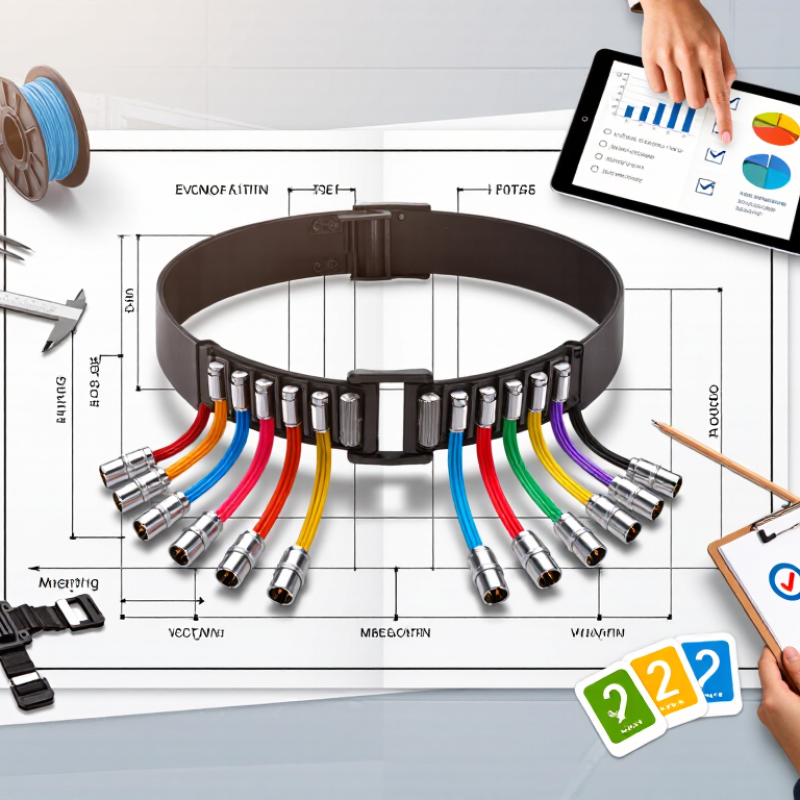
Understanding Harness Assembly and Its Role in Global Supply Chains
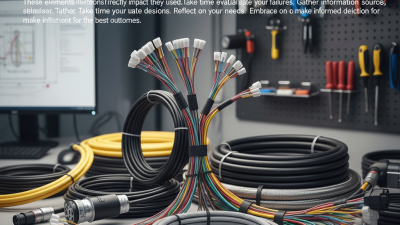
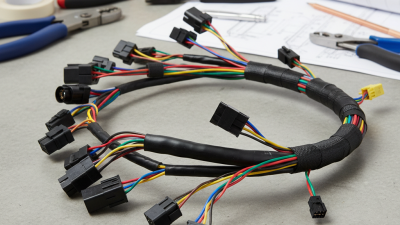
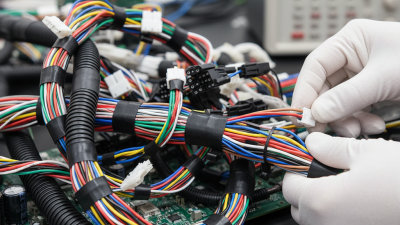
A harness assembly is more than a bundle of wires. It combines conductors, terminals, seals, connectors, and protective coverings into a tested system that carries power and signals. In a vehicle, a technician may route it behind a dashboard, through a door, or beside a hot engine. Each branch must reach the right component without chafing or blocking maintenance access. Small errors matter. A poorly crimped terminal can cause intermittent faults that are difficult to trace.
The supply-chain stakes are substantial. OICA reported 93.5 million motor vehicles produced worldwide in 2023, illustrating the scale of industries that depend on reliable electrical assemblies. The International Energy Agency’s Global Supply Chains of EV Batteries report also highlights how battery production depends on geographically concentrated materials and manufacturing capacity. Harness makers therefore need dependable access to copper, terminals, polymers, and skilled assembly labor. They also need clear revision control when a drawing changes. That sounds basic, but it is often where confusion begins. UNCTAD’s Review of Maritime Transport 2024 describes persistent disruption risks in global shipping, making lead-time planning and qualified backup suppliers practical concerns. Buyers should assess test records, traceability, and change management—not just unit price. A lower quote can hide extra sorting, rework, or delayed production.
Understanding Harness Assembly in Global Supply Chains
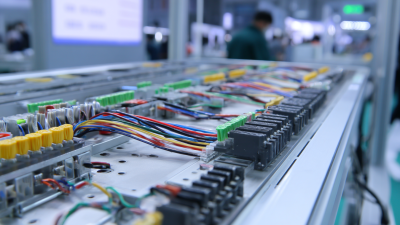
A harness assembly combines wires, terminals, connectors, and protective materials into an organized electrical system. The chart shows a common production sequence; actual processes vary by product and manufacturer.
How to Evaluate Harness Assembly Manufacturers for International Sourcing
International sourcing starts with evidence, not a polished capability deck. The International Energy Agency’s Global EV Outlook 2024 reports that electric car sales approached 14 million in 2023, increasing demand for reliable, application-specific wiring systems. Buyers should check whether a harness assembly manufacturer can manage changing volumes without weakening inspection controls. Ask for process records covering crimp height, pull-force testing, continuity checks, and first-article approval. Request sample inspection reports, not just a quality certificate. Small details matter. A loose terminal in a sample may signal inconsistent tooling or operator training.
Evaluate traceability across materials, production, and shipment. Can the supplier link a finished harness to its wire, terminals, work order, and inspection results? Review change-control procedures, backup tooling, and capacity plans. Then test communication with a practical scenario: a connector specification changes two weeks before shipment. Who confirms the revision, updates the work instructions, and approves the sample? IPC/WHMA-A-620 provides widely used acceptance criteria for cable and wire harness assemblies, but a standard alone does not prove consistent execution. Ask how operators are trained and how defects are recorded. Factory visits help, though one visit cannot show every shift. Some buyers overvalue the lowest quote; I would, too, if schedules were never real. Compare landed cost, lead time, defect handling, and evidence of repeatable production before qualifying a supplier.
Profiles of Ten Harness Assembly Manufacturers Serving Global Buyers
Global buyers rarely need the same harness twice. One project may require short-run prototypes; another needs thousands of sealed assemblies with documented testing. Grand View Research estimated the global wire harness market at about US$87.4 billion in 2023, with projected growth through 2030. That scale helps explain the variety of suppliers, but market size alone says little about factory fit.
A practical review of ten manufacturer profiles should span distinct strengths: automotive volume production, electric-vehicle cabling, aerospace-grade traceability, medical-device assemblies, industrial control wiring, appliance harnesses, telecom cable systems, heavy-equipment looms, prototype services, and regional low-volume production.
Buyers can compare crimp-force monitoring, connector sourcing, overmolding, and test coverage. Ask for sample inspection records, not just a capability sheet. Small details matter.
The IPC/WHMA-A-620 workmanship standard offers a common reference for cable and wire-harness acceptance criteria. Still, a certificate does not prove every assembly suits a buyer’s application. Check whether the supplier can provide continuity and hipot test results, labeled samples, change-control records, and realistic lead-time estimates.
A neat sample is not enough. Some manufacturers may quote quickly, then struggle with tooling or component shortages; that deserves scrutiny. Profiles are most useful when they connect equipment, process controls, and proven experience to the exact assembly being sourced.
Comparing Capabilities, Quality Systems, and Production Scale
Comparing harness assembly manufacturers requires more than checking catalog breadth. Buyers should examine how each supplier handles drawings, wire specifications, connector selection, and design changes. Ask for sample builds that match the intended application, not just a polished showroom piece. Small details matter: a labeled branch, a secure strain relief, or a terminal that seats consistently can prevent costly rework.
Quality systems deserve close inspection. Request evidence of incoming material checks, crimp-height controls, continuity testing, and documented final inspections. A strong process should link test results to a production lot, so defects can be traced rather than guessed at. Ask how operators are trained and how measuring tools are calibrated. Paperwork alone is not proof. During an audit, compare written procedures with the actual workbench; gaps can appear there.
Production scale is less simple than a factory’s stated monthly capacity. A large facility may suit repeat orders, while a smaller operation may respond faster to engineering changes. Discuss lead times at realistic volumes, peak-season capacity, and the effect of adding a second shift. Request a pilot run before committing to a ramp-up. Watch for variation between the first and last assemblies. I would also ask what happens when a component is unavailable; some suppliers explain this well, while others give vague answers. That uncertainty deserves a closer look.
How to Select a Manufacturer for Your Application and Market
A harness assembly manufacturer should be judged against your actual application, not a generic capability list. Start with the drawing, operating temperature, voltage, vibration exposure, and expected service life. A cable used inside a stationary control cabinet faces different demands from one routed through moving machinery. Ask how the manufacturer controls wire cutting, stripping, crimping, and final inspection. Details matter. For a sample build, check terminal retention, label readability, connector fit, and whether wire lengths match the print. Request relevant test records and a clear process for handling design changes. A polished brochure is not proof of repeatable production.
Market requirements shape the choice, too. Confirm the supplier can provide the documentation, traceability, packaging, and delivery cadence your customers expect. If your product ships to several regions, discuss material availability and how substitutions are approved before production. Ask who will own technical questions after the order is placed. A responsive engineer can prevent a small drawing mismatch from becoming a costly batch problem. Compare quotations carefully: unusually low pricing may omit testing, tooling, or packaging assumptions. I would also review a pilot run before committing to a large order. It takes time, and it may reveal that your own specification is incomplete. That is useful information. The right manufacturer is one whose demonstrated process, communication, and capacity fit your product’s risks and purchasing schedule.