Skip to content

10 Best High Speed Lifts for Global Buyers

High Speed Lifts are becoming essential in dense cities, where every minute between floors affects comfort, productivity, and building value. A lift moving at 6–10 metres per second can shorten journeys in towers exceeding 50 storeys. Yet speed alone does not define a superior system. Acceleration, vibration, noise, emergency control, energy use, and maintenance access matter equally.

The global elevator and escalator market was valued at approximately USD 88.4 billion in 2023, according to Fortune Business Insights’ 2024 industry report. The same report expects continued growth through 2032, supported by urbanisation, high-rise construction, and modernisation projects. CTBUH’s tall-building data also shows sustained global development above 200 metres. These figures explain why international buyers are examining High Speed Lifts more carefully. They need reliable equipment, not impressive brochure numbers.

Henrik Ehrnrooth, former KONE President and CEO, stated, “Urbanization is one of the biggest global megatrends.” His observation, published in KONE corporate reporting, highlights the pressure placed on vertical transportation systems. In practice, that pressure appears in crowded lobbies, short dispatch intervals, and demanding peak-hour traffic. This guide evaluates ten high-speed solutions for global buyers, considering rated speed, ride quality, safety features, control technology, service coverage, and lifecycle cost. Some comparisons remain difficult because manufacturers publish different testing conditions. That limitation deserves attention. A faster lift is not automatically a better lift. Reliable performance should win.
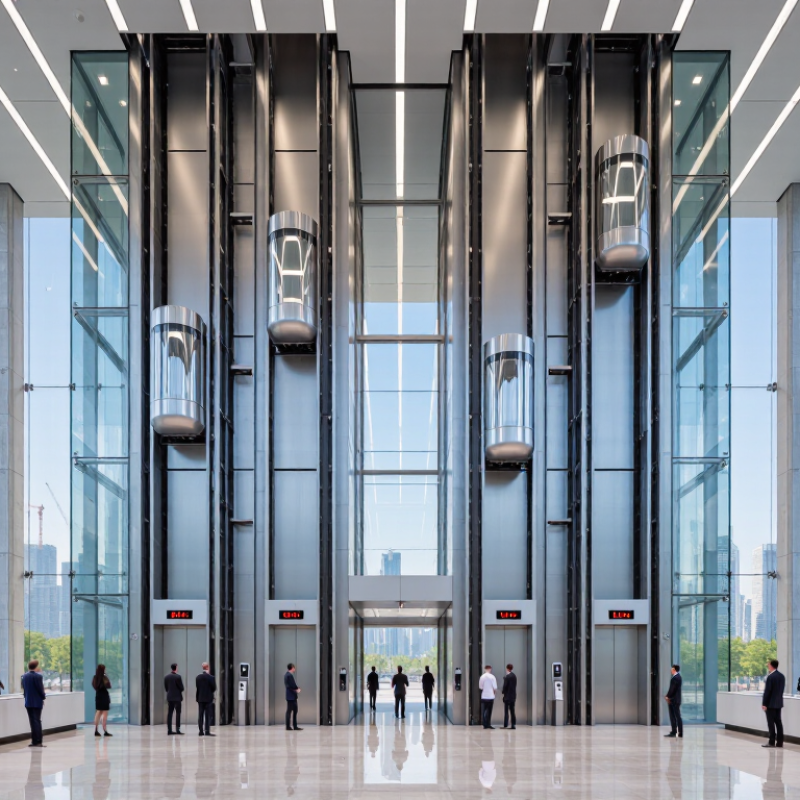
10 Best High Speed Lifts for Global Buyers

What Defines a High-Speed Lift for Global Buyers

10 Best High Speed Lifts for Global Buyers

What Defines a High-Speed Lift for Global Buyers

A high-speed lift is more than a cabin moving quickly between floors. It must deliver speed, stable control, quiet operation, and safe stopping. In practical site evaluations, ride comfort often matters as much as travel time. A lift that reaches 8 meters per second may still disappoint if passengers feel vibration or pressure changes.

Global buyers should examine the complete operating environment. Building height, traffic volume, climate, power quality, and local safety requirements all influence lift performance. A system designed for a dry city may need different protection in a humid coastal region. Temperature monitoring, emergency communication, door protection, and backup power deserve careful review. These details are not decorative extras.

Control technology also defines a high-speed lift. Smart dispatching can reduce crowded lobbies during morning peaks. Regenerative systems may lower energy use, although savings depend on traffic patterns and maintenance quality. Ask for verified test data, service response times, spare-part plans, and installation records. Paper specifications can look impressive. Real performance can differ.

Passenger expectations vary across markets. Some buyers prioritize maximum speed, while others prefer smoother acceleration and shorter waiting times. This is where judgment becomes difficult. Faster is not always better for every building. A reliable lift with balanced performance may serve occupants better than the fastest available option. Careful comparisons, site inspections, and transparent technical documents support a more dependable purchasing decision.

Key Types of High-Speed Lifts and Their Main Applications

10 Best High Speed Lifts for Global Buyers

High-speed lifts serve different buildings, not identical buyer needs. Passenger lifts suit offices, hotels, and high-rise residences with heavy peak traffic. Shuttle lifts connect ground transport areas with sky lobbies, often reducing intermediate stops. Double-deck lifts move two floors of passengers within one shaft cycle, making them practical for supertall towers. Panoramic lifts add visibility, but their glass cabins may increase heat gain and maintenance demands.

The Council on Tall Buildings and Urban Habitat recorded 128 buildings above 200 meters completed worldwide in 2023. That figure shows why vertical transportation planning matters for global buyers.

In dense office towers, destination-control systems can group passengers by floor and reduce unnecessary stops. In residential projects, quieter gearless traction lifts usually provide a better experience. Hospitals need careful evaluation. High speed is less important than smooth acceleration, wide entrances, and reliable emergency operation. A faster ride is not always a better lift.

Tips: Compare rated speed, travel height, stopping frequency, cabin size, and local service capacity. Check measured ride comfort, not only brochure figures.

The U.S. Department of Energy notes that elevators and escalators can represent 2% to 10% of a building’s energy use. Regenerative drives may reduce operating demand, but savings depend on traffic patterns. Buyers should request site-specific energy estimates. Early assumptions can be wrong.

Essential Performance, Safety, and Energy-Efficiency Criteria

10 Best High Speed Lifts for Global Buyers

Essential Performance, Safety, and Energy-Efficiency Criteria

Choosing a high-speed lift requires more than checking its rated speed. Buyers should examine acceleration, deceleration, ride comfort, and accurate floor leveling. A smooth start matters in busy towers, where passengers may carry luggage or stand near the doors. Traffic analysis should match peak demand, building height, and expected passenger volume. Oversized equipment can waste energy and increase purchase costs.

Safety systems deserve careful attention. Look for monitored door locks, overload protection, emergency communication, controlled evacuation, and backup power compatibility. Local building codes, seismic conditions, fire rules, and accessibility requirements must guide the specification. In practical assessments, a lift that stops two millimeters unevenly can still create a trip risk. Small details matter.

Energy performance depends on real operating patterns, not only laboratory figures. Regenerative drives can recover energy during braking, while efficient motors, LED lighting, and standby controls reduce daily consumption. Ask for measured data, maintenance records, noise levels, and service response times. A strong warranty helps, but dependable local technicians matter more. Some impressive specifications remain difficult to verify. Buyers should question unclear claims and request independent testing when possible. Reliability is built through evidence, not promises.

10 Best High Speed Lifts for Global Buyers

Essential performance, safety, and energy-efficiency criteria

The chart presents representative planning benchmarks for high-speed passenger lift applications. Rated speeds commonly range from 3.5 to 10.0 m/s, while regenerative-drive systems can typically reduce lift-related energy consumption by approximately 15%–35%, depending on traffic patterns, travel height, load balance, and operating schedules. Buyers should also verify compliance with local safety codes, overspeed protection, emergency braking, door monitoring, seismic requirements, evacuation provisions, and inspection standards.

Comparison of the 10 Best High-Speed Lift Models

10 Best High Speed Lifts for Global Buyers

Comparison of the 10 Best High-Speed Lift Models

Choosing a high-speed lift requires more than checking its top speed. Model 1 reaches 4 m/s and suits mid-rise offices with moderate traffic. Model 2 offers 5 m/s, but its higher power demand may increase operating costs. Model 3 combines 3.5 m/s travel with a compact shaft design for urban projects. Model 4 supports heavier loads, making it practical for hotels and mixed-use buildings. Model 5 focuses on quiet operation, using vibration control around residential areas. Model 6 provides advanced destination control, which can reduce waiting during busy periods. Model 7 has strong performance in taller buildings, but installation planning becomes more demanding. Model 8 emphasizes energy recovery and standby efficiency. Model 9 offers flexible cabin sizes for hospitals and public facilities. Model 10 balances 4.5 m/s speed with simpler maintenance access.

Real project experience shows that traffic patterns matter as much as speed. A lift moving quickly can still feel slow when dispatching is poorly configured. Buyers should compare rated load, stopping accuracy, door cycles, emergency lowering, and local service support. Certification requirements also vary by country. Verify documentation before signing a contract. This step is often underestimated.

Tips: Request measured noise data, not general promises. Check spare-part availability for at least ten years. Ask for a full maintenance schedule. Review energy use under typical traffic, not only maximum speed. A lower-speed model may perform better overall. That is easy to miss.

How to Select the Right Lift for Different Markets

Choosing among the 10 best high speed lifts requires more than comparing rated speed. Market conditions change the correct specification. In dense Asian cities, strong traffic handling and short waiting times may matter most. In regions with frequent power interruptions, emergency lowering and backup systems deserve priority. Local codes, seismic risk, shaft dimensions, and maintenance skills must guide the decision.

The International Energy Agency’s Buildings 2023 report states that buildings consume about 30% of global final energy. Lift selection therefore affects operating costs. Regenerative drives, standby controls, efficient lighting, and destination dispatch can reduce unnecessary movement. The European Lift Association has also reported that lifts can represent a noticeable share of a building’s electricity use, especially in tall commercial properties. The exact percentage varies.

Think beyond the catalog.

For hot, humid markets, specify corrosion-resistant components and ventilation for machine rooms. For dusty areas, improve sealing and inspection access. The Council on Tall Buildings and Urban Habitat emphasizes traffic planning, zoning, and vertical transportation efficiency in tall-building design. That experience supports simulation before purchase. A lift moving at 6 meters per second may still perform poorly with weak dispatch logic or undersized capacity. I have seen specifications favor speed while ignoring door dwell time. That is an expensive mistake. Buyers should compare lifecycle cost, local technician availability, spare-part access, noise levels, ride comfort, and compliance with ISO 8100-1 and applicable national regulations. Another reality: the cheapest compliant option may not be the most reliable after five years.

10 Best High Speed Lifts for Global Buyers - How to Select the Right Lift for Different Markets
No. Lift Solution Typical Rated Speed Typical Travel Range Typical Capacity Best-Fit Building or Market Recommended Traffic Profile Key Technical Requirements Regional Selection Priorities
1 Ultra-High-Rise Gearless Traction Lift 8.0–12.0 m/s 250–600 m 1,600–2,000 kg Super-tall office towers, mixed-use skyscrapers and premium commercial developments Very high peak demand with long vertical travel Gearless permanent-magnet motor, high-performance door operator, advanced group control, load weighing, overspeed monitoring and refined car balancing Confirm seismic design, wind-induced building movement, evacuation strategy, local inspection rules and high-rise fire-service requirements before specifying speed
2 High-Rise Single-Deck Passenger Lift 4.0–8.0 m/s 150–350 m 1,000–1,600 kg High-rise offices, hotels and residential towers Heavy morning up-peak and regular two-way traffic Gearless traction drive, regenerative braking option, high-speed door system, destination-control compatibility and accurate floor leveling Compare travel time, handling capacity, shaft dimensions and energy performance rather than selecting the highest available speed
3 Mid-Rise Machine-Room-Less High-Speed Lift 2.5–4.0 m/s 50–120 m 1,000–1,600 kg Urban apartments, offices, hotels and compact commercial buildings Medium to high passenger demand with limited plant-room space Compact permanent-magnet traction machine, efficient controller, accessible maintenance zones, heat-resistant equipment and reliable emergency lowering Suitable where roof space is restricted; verify local requirements for machine access, rescue procedures, ventilation and maintenance clearance
4 High-Speed Destination-Control Group 4.0–8.0 m/s 100–300 m 1,000–1,800 kg per car Large office campuses, transport-linked towers and mixed-use developments High traffic with concentrated arrival and departure periods Destination dispatch, hall-call allocation, traffic analytics, access-control integration, zoned service and efficient group scheduling Most effective in markets with disciplined passenger behavior and strong building-management integration; allow space for touchscreens and accessibility controls
5 Double-Deck High-Speed Lift 5.0–10.0 m/s 150–400 m 1,600–2,000 kg per deck Very tall office towers with paired or zoned floor layouts Extremely high passenger flow between dedicated lobby zones and office floors Precisely coordinated landing doors, strict floor-to-floor consistency, advanced dispatch logic, structural vibration control and clear passenger guidance Requires compatible floor planning and sufficient lobby depth; evaluate accessibility, floor numbering, emergency operation and local code acceptance
6 High-Speed Hotel and Premium Residential Lift 3.0–6.0 m/s 80–220 m 800–1,600 kg Luxury hotels, serviced apartments and premium residential towers Moderate to high demand with strong expectations for ride comfort and quiet operation Low-noise traction system, smooth acceleration and deceleration, vibration isolation, destination control, card access and durable interior finishes In hospitality markets, prioritize sound levels, ride quality, service response, humidity resistance and finish durability over maximum speed
7 High-Speed Hospital and Stretcher Lift 2.0–4.0 m/s 40–120 m 1,600–2,500 kg Hospitals, medical centers and emergency-care facilities Frequent intensive use with stretcher, bed, staff and visitor traffic Large car and door opening, accurate leveling, smooth ride, priority operation, fire-service operation, hygienic surfaces and dependable emergency power interface Use local healthcare, accessibility and fire regulations; confirm bed dimensions, infection-control requirements, standby power and emergency response procedures
8 High-Speed Fire-Service and Evacuation-Support Lift 2.5–5.0 m/s 60–200 m 1,000–2,000 kg High-rise residential, commercial, public and government buildings Normal passenger service with dedicated emergency and fire-service functions Protected lift lobby, fire-rated landing doors, emergency communication, firefighter operation, water-protection measures, standby power and controlled access Fire and evacuation provisions vary substantially by jurisdiction; obtain approval from the responsible authority before finalizing layout or equipment
9 High-Speed Heavy-Duty Freight Lift 1.5–3.0 m/s 30–100 m 2,000–5,000 kg Logistics hubs, warehouses, manufacturing plants, shopping centers and data facilities Frequent goods movement with heavy carts, pallets or equipment Reinforced car and sill, wide doors, robust guide systems, impact-resistant finishes, overload monitoring and duty-rated controls Choose capacity from actual load and trolley dimensions; account for loading method, dust, temperature, moisture, duty cycles and forklift interaction
10 Seismic- and Climate-Adapted High-Speed Lift 2.5–5.0 m/s 60–200 m 800–1,600 kg Earthquake-prone regions, coastal cities, tropical climates and areas with unstable power supply Medium to high demand under demanding environmental conditions Seismic sensors and restraints where required, corrosion-resistant components, moisture protection, thermal management, emergency battery functions and surge protection Specify according to local seismic category, ambient temperature, humidity, salt exposure, grid quality and inspection requirements; environmental design may matter more than top speed
Technical values are typical planning ranges for preliminary comparison, not guaranteed product specifications. Final selection should be based on traffic calculations, building height, shaft geometry, local elevator regulations, fire requirements, seismic conditions, power quality, accessibility rules and maintenance capability. Common regulatory frameworks include EN 81-20/50, ASME A17.1/CSA B44 and applicable national standards; the governing code depends on the installation location.