What Is the Best Museum Lighting in 2026?
What is the best museum lighting in 2026? It is not a single fixture, color temperature, or technology. The right approach helps visitors see detail while protecting objects and creating a calm, readable experience. Museum Lighting increasingly combines controlled LEDs, precise optics, daylight management, and responsive controls. Yet equipment alone cannot solve a gallery’s needs. A pale textile, a glossy photograph, and a bronze tool respond differently to light. Their placement, surface, age, and viewing distance all matter. Light is never neutral.
A reliable lighting plan begins with the collection, the room, and the people using it. It considers how visitors move, where reflections appear, and whether labels remain easy to read. Conservators’ guidance and collection policies should inform exposure decisions, rather than assumptions about one ideal brightness. Curators and lighting professionals can then select suitable fixtures, beam angles, color quality, and controls. Modern systems may also use sensors to adjust output when daylight changes or galleries are empty. But technology needs careful commissioning. A well-calibrated system can still create glare on glass or leave a painting unevenly lit. Sensors can save energy, yet poorly tuned changes may distract visitors. Small choices matter. This guide examines what makes museum lighting effective in 2026, from object protection and visual comfort to energy use and maintenance. It also considers a practical truth: even a thoughtful plan may need adjustment once people enter the gallery and view the objects from different angles.
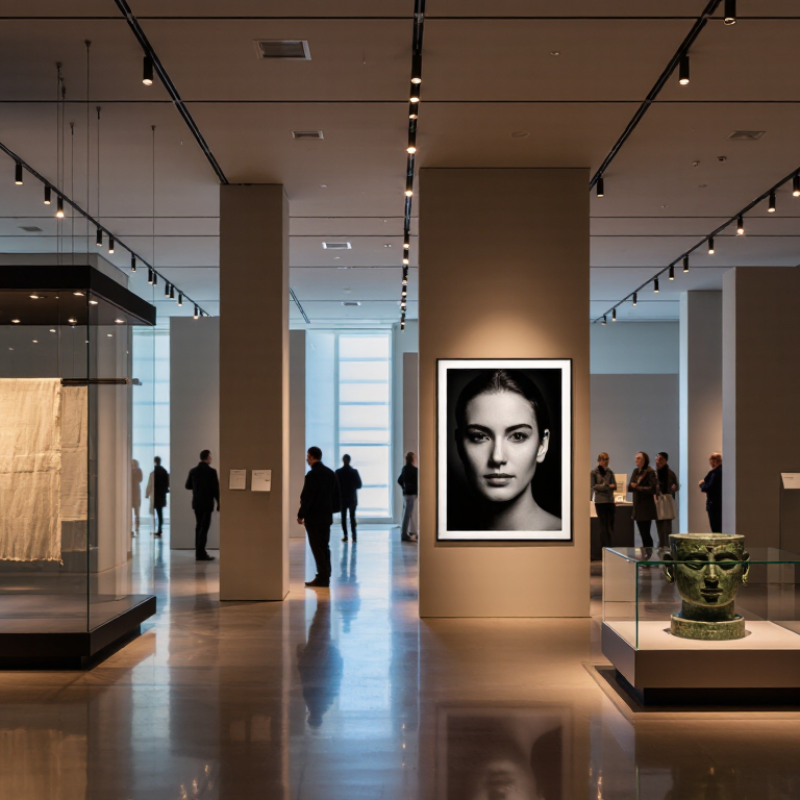
What Museum Lighting Means and Why It Matters
Museum lighting is the controlled use of light to help visitors see objects while limiting damage and visual discomfort. It shapes what feels important in a gallery: a softly lit case can draw attention to a small carved figure, while a bright reflection may hide its details. Lighting is part of interpretation, not merely decoration.
Light can fade pigments, paper, textiles, and other sensitive materials over time. The risk depends on both brightness and exposure duration, so conservation teams consider cumulative light, not just a single reading. Some sensitive objects are displayed at around 50 lux, though appropriate levels depend on the material and the museum’s conservation plan. UV should be minimized, and measured illumination at the object matters more than how bright a room feels. Small details count.
Good lighting also supports comfortable viewing. Even illumination, controlled glare, and clear differences between objects and backgrounds help visitors read labels and notice texture. Color quality matters, but a vivid appearance should never come at the expense of an object’s preservation. There is no perfect setting for every gallery, and any rule that ignores the collection is too simple. A practical plan may still need adjustment after installation; reflections and shadows can behave differently on site than they did on paper.
Key Factors for Evaluating Museum Lighting in 2026
In 2026, museum lighting should be judged by conservation, visibility, comfort, and operating needs—not brightness alone. The Canadian Conservation Institute recommends maximum illuminance of about 50 lux for highly light-sensitive objects, 150 lux for moderately sensitive materials, and 300 lux for less sensitive items. These are useful starting points, not universal guarantees. Exposure accumulates: at 50 lux for ten hours daily, an object receives 182,500 lux-hours in a year. Paper, textiles, and pigments may fade even under carefully managed light.
Measure light at the object, not just at the fixture. Check lux levels, ultraviolet output, glare, color rendering, and how evenly light falls across labels and display cases. CIE 157:2004 provides a framework for assessing light-related damage to museum objects. A high color-rendering score can help reveal material colors, but it cannot reverse damage from excessive exposure. LED sources can reduce heat and energy use, yet poor placement may still create hot spots or reflections on glass. Small adjustments matter. Visitor comfort matters too.
Tips: Use dimmers, shutters, or timed lighting to limit exposure. Keep a lux meter handy. Compare readings at the object’s surface, especially near windows. Recheck after displays change; a small spotlight shift can leave one corner far brighter than the rest. No setting is perfect, and conservation goals can conflict with clear viewing. That trade-off deserves regular review.
Lighting Types Used for Different Collections and Spaces
What Is the Best Museum Lighting in 2026?
Lighting Types Used for Different Collections and Spaces
Museum lighting works best when it responds to both the object and its surroundings. Paintings often benefit from broad, even illumination that limits glare and harsh reflections. Textiles, photographs, and works on paper are more light-sensitive, so lower illuminance and carefully managed exposure are usually appropriate. Stone, metal, and ceramics can often tolerate brighter displays, though reflective surfaces may need angled or diffused light. There is no single setting for every collection. Conservation staff should guide decisions using each object’s condition and exposure history.
In galleries, adjustable track lighting can highlight individual works, while indirect lighting helps visitors move comfortably through shared spaces. Display cases need small, well-shielded fixtures to avoid hot spots and reflections on glass. In archives and storage areas, practical task lighting matters, but lights should not remain on unnecessarily. LED sources can reduce heat and offer control, yet they still require suitable colour quality, dimming, and careful placement. A technically efficient choice can still make a display feel flat.
Tips: Test lighting at the object, not just on a plan. Check glare from visitor eye level, and compare colours under the installed lights. Keep a simple record of settings and exposure time. Small adjustments can help. Recheck after displays change; even a good setup may need reconsideration.
How to Balance Visibility, Color Accuracy, and Artifact Protection
Museum lighting in 2026 is not simply about making every object bright. It must help visitors see details while limiting avoidable exposure. A carved wooden bowl may need gentle side lighting to reveal its grain; a faded textile needs much less light. For sensitive materials, conservators set limits based on the object and its condition. Track exposure over time, not just the brightness of one display.
Color accuracy matters, too. A high color-rendering score can be useful, but it does not guarantee that every hue will look natural. Review the full spectrum data, then test the chosen light beside the actual artifact. A painted surface can shift under different color temperatures. Small changes matter. Check the display from visitor height, and watch for glare on glass, deep shadows, or bright spots that pull attention away from nearby objects.
LED sources often produce little ultraviolet radiation, but each installation still deserves measurement and review. Use focused beams where detail needs emphasis, and keep light off neighboring surfaces when possible. Dimming, timers, and rotating sensitive objects can reduce cumulative exposure. There is a trade-off: lower light protects materials, yet visitors may struggle to read fine details. A mock-up in the gallery can reveal problems that plans miss. It may need another adjustment. That is not failure; it is part of careful display design.
Emerging Technologies Shaping Museum Lighting in 2026
In 2026, museum lighting is moving beyond efficient bulbs toward systems that respond to objects, rooms, and visitors. Tunable LED sources can adjust color and brightness to suit different displays. A painted surface may look vivid under one setting, then muted under another. That matters. For textiles and works on paper, curators must also limit cumulative exposure, not just brightness at a single moment. Settings should be checked with a calibrated light meter and reviewed against each object’s condition.
Occupancy and daylight sensors can dim lights when galleries are empty or sunlight shifts across a wall. Data logging can show how long an object received light, which a peak reading alone cannot reveal. Digital controls also let staff create separate scenes for display, conservation checks, and events. But sensors can miss visitors, and color may vary between fixtures. Regular testing helps catch those problems. More technology is not automatically better. A complex system can be difficult to maintain, and some galleries may benefit from stable, simple settings. There is still room for trial and correction.