Skip to content

7 Best Pallet Truck Seals Which One Should You Buy?

Pallet Truck Seals may look like small parts, but a poor match can leave oil on the workshop floor and a truck out of service. The right choice depends on the seal’s location, dimensions, material, and working conditions. A hydraulic cylinder seal faces different demands from a dust seal near a wheel. Small details matter.

“Measure the groove, not just the old seal.” This practical workshop reminder is useful, but I cannot verify it as a quotation from a named pallet-truck-seal expert. A credible guide should not attach invented words to a real person. Before choosing, check the truck manual or ask a qualified seal supplier to confirm the part number, material, and fit. Look closely at the old seal, too. A hardened lip, flattened edge, or scoring on the rod can point to a cause beyond ordinary wear.

This guide compares seven common Pallet Truck Seals and explains what each is suited for. It covers fit, material, durability, and the limits of a quick replacement. There is no single best seal for every pallet truck. A cheaper option may work well in light-duty use, but fail sooner under frequent lifting or contamination. That trade-off deserves a closer look. A correct seal cannot fix a damaged cylinder or a scratched rod. Check the surrounding parts before ordering, and use the manufacturer’s specifications where available.
7 Best Pallet Truck Seals Which One Should You Buy?

What Pallet Truck Seals Do and Why They Matter

A pallet truck seal is a small barrier with an important job: keeping hydraulic oil inside the pump and cylinder. In a manual pallet truck, intact seals help maintain pressure as the forks rise and hold a load. When a seal hardens, tears, or wears unevenly, oil may leak around the piston rod. The forks may also sink, or pumping may feel unusually soft. A small warning. Oil on a concrete floor can reduce traction and signal lost lifting capacity. However, a new seal will not repair a bent rod, scored cylinder, or worn pump. That distinction matters.

OSHA’s Powered Industrial Trucks safety guidance estimates about 85 fatalities and 34,900 serious injuries annually in forklift incidents in the United States. These figures cover powered industrial trucks broadly; they do not isolate pallet trucks or seal failures. Still, they underline why basic equipment checks deserve attention.

With the truck unloaded, inspect the cylinder and floor for fresh oil, then check whether the forks lift and lower smoothly. Use a seal that matches the equipment’s dimensions and hydraulic-fluid requirements; incompatible material may swell or crack. Seal checks are easy to postpone. That is worth reconsidering, especially when a slow leak becomes a slippery patch or an unreliable lift.

Key Seal Types and How They Differ

7 Best Pallet Truck Seals: Which One Should You Buy?
Key Seal Types and How They Differ

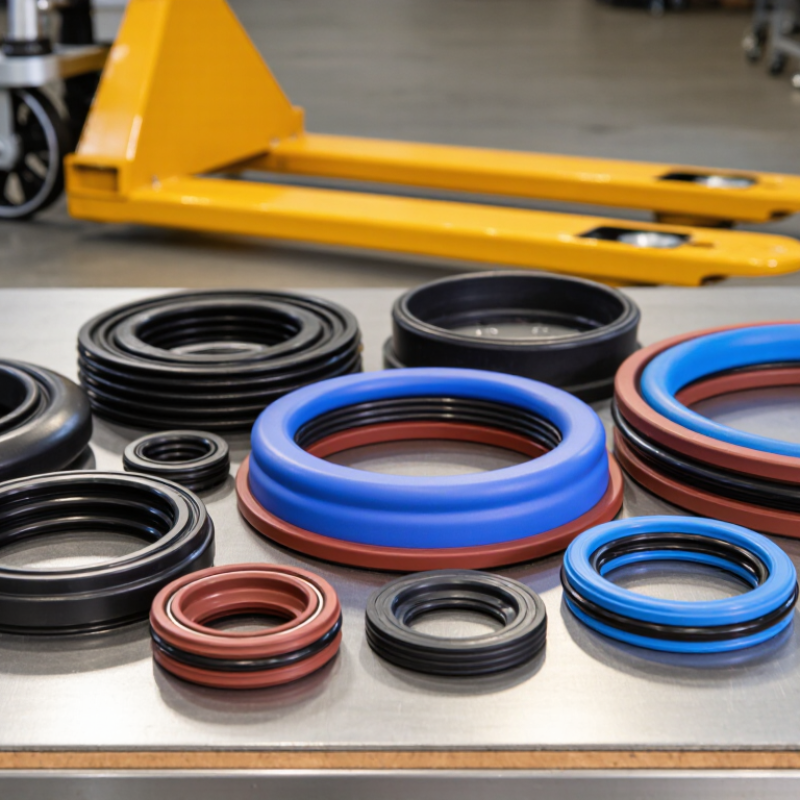
A pallet truck’s hydraulic unit may use several seals, and each serves a different job. O-rings seal static joints, such as a valve cover. U-cup seals hold hydraulic pressure around a moving piston or rod. Wiper seals sit at the cylinder opening and scrape dust from the rod. Backup rings support pressure-loaded seals and help prevent extrusion. Small parts matter. A wiper cannot replace a pressure seal, even if both fit the same groove.

Match the seal to its location, fluid, pressure, and temperature. ISO 3601 specifies O-ring dimensions and tolerances, helping buyers check size rather than guess by appearance. Contamination matters too: ISO 4406:2021 classifies hydraulic-fluid cleanliness using particle counts at 4, 6, and 14 micrometres. Abrasive particles can score a rod or damage a seal lip. One caveat: a correct material may still fail if the groove is worn or the seal is installed twisted.

Tips: Photograph the old seal beside a ruler, then record its cross-section and location. Check for nicks on the rod and cylinder bore before fitting a replacement. Keep the work area clean. I would still verify the dimensions against the truck’s service information; visual matching alone can be misleading.

7 Best Pallet Truck Seals: Key Types and How They Differ

Each bar marks a typical application, not a performance score. Match the seal to its position and function: rod and piston seals control hydraulic fluid, while wipers keep contaminants out. Exact designs and suitability vary by pallet truck.

Seven Pallet Truck Seals Compared by Use and Performance

Pallet truck seals do different jobs, so the best choice depends on where fluid, pressure, and dirt move. A piston seal helps retain hydraulic pressure inside the lift cylinder. A rod seal limits oil escaping along the moving shaft. Both matter during repeated lifting, but a worn rod seal may leave a visible oil film near the cylinder. Small clues count.

An O-ring is useful at static joints, such as fittings that do not move during operation. A backup ring can support an O-ring under higher pressure and reduce the risk of extrusion. A wiper seal scrapes dust and grit from the rod before they enter the cylinder. A guide ring steadies moving parts and helps prevent metal-to-metal contact. A dust seal offers another barrier against debris, though it may not replace a properly sized wiper.

Compare seals by fit, material compatibility, temperature range, and working pressure—not by appearance alone. Measure the groove and shaft carefully; a close guess can still cause leakage. In a clean warehouse, dust protection may be less demanding than in a loading area with grit and moisture. That is not always obvious. Inspection also matters: hardened rubber, uneven wear, or recurring oil traces can point to a mismatch or another cylinder problem. A seal set is only as reliable as its installation.

How to Choose a Seal for Your Truck and Operating Conditions

A pallet truck seal must match the job, not just the cylinder opening. In a hydraulic cylinder, a U-cup or other piston seal helps hold pressure, while a wiper keeps grit away from the moving rod. O-rings suit some static joints, but they are not a universal replacement for moving seals. Check the equipment manual or a service diagram before choosing a profile.

Measure the old seal and its groove, including thickness and inner and outer diameters. Wear can distort the original, so compare measurements with the cylinder dimensions where possible. Then check the hydraulic fluid, operating temperature, pressure, and how often the truck is used. A seal material that works with one oil may swell or harden with another. Cold storage rooms and hot loading areas can also change how flexible it remains.

Look closely at the working conditions. Dusty floors call for an effective rod wiper; frequent lifting makes pressure and wear resistance especially important. A leak around the rod may point to a worn seal, but a scratched rod or contaminated fluid can cause repeat failures. Don’t just replace the part and hope. Inspect the rod for rough spots, clean the groove, and avoid stretching the new seal during installation. Even careful measurements can miss a detail, so confirm fit with a controlled test before returning the truck to regular work.

Checking Compatibility, Replacing Seals, and Avoiding Common Mistakes

A pallet truck seal can look right and still be incompatible. Check the truck’s model and hydraulic unit, then compare the seal’s inner diameter, outer diameter, and thickness with the service specifications. Similar-looking seals may use different materials or profiles. Small details matter. Confirm that the seal material suits the hydraulic oil and working temperature. If specifications are unclear, ask a qualified service technician rather than guessing from a worn part.

Before replacement, lower the forks, unload the truck, and follow the service instructions to release hydraulic pressure. Keep grit away from the open cylinder. A clean cloth and a well-lit bench help reveal scratches on the rod or cylinder bore. Remove the old seal carefully; sharp tools can nick a sealing surface. Fit the new seal in the correct direction and lubricate it with compatible hydraulic oil. Do not force it. I have seen rushed repairs fail because a seal was twisted during installation, though that is easy to miss. After reassembly, test the truck without a load, then raise and lower the forks several times. Check for fresh oil around the cylinder. If leakage continues, the seal may not be the only problem; wear, contamination, or incorrect assembly may need attention.

7 Best Pallet Truck Seals: Which One Should You Buy?

A practical guide to checking compatibility, replacing seals, and avoiding common mistakes.

Seal Type Typical Location and Function Common Material Compatibility Checks Replacement Tip Common Mistake to Avoid
Hydraulic Piston Seal Fits around the pump piston to limit hydraulic fluid bypass and help the jack build pressure. Often polyurethane or nitrile rubber, depending on the design and fluid requirements. Match the piston diameter, seal profile, groove dimensions, and specified fluid compatibility. Inspect the piston and cylinder for scoring before fitting the replacement seal. Choosing by outside diameter alone; the cross-section and profile must also match.
Rod Seal Seals around a moving pump rod or plunger to reduce fluid leakage along the rod. Commonly polyurethane or nitrile rubber. Check rod diameter, housing or gland dimensions, seal orientation, and the original seal profile. Protect the sealing lip from sharp edges during installation and lubricate with compatible hydraulic fluid. Installing the seal backward or stretching it excessively during fitting.
O-Ring Creates a static seal at joints such as plugs, covers, or valve connections. Often nitrile rubber for compatible hydraulic oils; other compounds may be specified for different conditions. Measure the cross-section and inside diameter; confirm compound and fluid compatibility. Use a smooth, clean groove and replace a flattened, cracked, or swollen ring. Reusing an old O-ring or substituting a similar-looking size that does not fit the groove.
Backup Ring Supports an O-ring in a pressure-exposed groove and helps reduce extrusion into a clearance gap. Often PTFE or another specified, low-extrusion material. Check groove width, ring shape, pressure-side arrangement, and whether the design calls for one or two rings. Follow the original arrangement; some backup rings are directional or have a specific installation position. Replacing a backup ring with an O-ring, or omitting it where the assembly requires one.
Wiper Seal Located at an exposed moving rod to wipe dirt and moisture away from the hydraulic assembly. Commonly polyurethane or a suitable elastomer. Match rod diameter, housing dimensions, lip style, and available installation space. Clean the rod and inspect it for corrosion or burrs that could damage the new lip. Treating the wiper as a pressure seal; it is primarily designed to exclude contamination.
Valve Seal or Valve O-Ring Seals control-valve parts that direct or release hydraulic fluid in the pump assembly. Usually a fluid-compatible elastomer specified for the valve design. Verify the valve location, groove dimensions, cross-section, and compatibility with the hydraulic fluid. Keep small valve parts clean and return them to their original positions and orientations. Mixing up similar-looking seals or allowing dirt into the valve during reassembly.
Pump-Cover or End-Cap Gasket Seals a static mating surface on a pump cover or end cap to help prevent external leakage. May be a formed elastomer gasket or another material specified for the assembly. Match the cover outline, bolt pattern, thickness, and any molded features or fluid requirements. Clean both mating faces and tighten fasteners evenly to the specified procedure. Applying excess sealant or stacking gaskets when the assembly is designed for a single gasket.

Buying and replacement check: Pallet truck seals are not universally interchangeable. Confirm the truck and pump specifications, seal dimensions and profile, material compatibility, and installation orientation before ordering. If the specification is unavailable, compare the removed seal with the groove and mating parts, and consult a qualified service professional.