What Are the Best Rod Heaters in 2026?
Choosing the best Rod Heaters in 2026 is not just a matter of comparing price tags. A heater that warms a metal block quickly may perform poorly in a narrow channel or a temperature-sensitive process. The right choice depends on dimensions, sheath material, watt density, operating temperature, and control equipment. Small details matter.
Thermal-science pioneer William Thomson, Lord Kelvin, is often credited with the line, “To measure is to know.” It is a useful reminder when evaluating Rod Heaters: measure the bore, check the required heat-up time, and confirm the actual operating conditions. A specification sheet can look convincing, yet still leave out the detail that determines service life. For critical applications, consult the manufacturer’s guidance and a qualified heating professional.
This guide compares heater types, materials, performance, and practical selection factors. It also considers installation constraints and temperature control, because a good heater can still produce poor results when the system is mismatched. There is no universal winner. A stainless-steel unit may suit one process, while another needs a different sheath or watt density. Some choices remain uncertain until tested under real operating conditions. That is worth admitting. The aim is to help readers shortlist suitable options, ask sharper questions, and avoid buying on headline wattage alone.
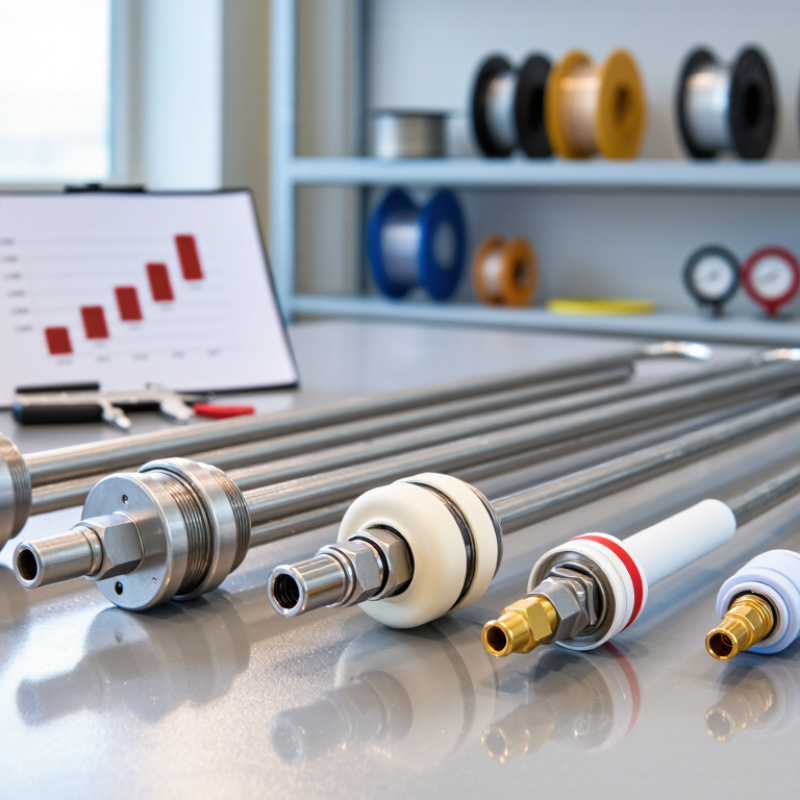
What Are Rod Heaters and How Are They Defined?
Rod heaters are cylindrical electric heating elements designed to deliver heat from a narrow, sturdy body. The term is used broadly, so the exact construction can vary. Many models contain a resistance wire surrounded by electrical insulation and enclosed in a metal sheath. When powered, the wire heats the sheath, which transfers energy to nearby equipment or material. Simple in principle.
Depending on the design, a rod heater may sit in a drilled metal block, fit inside machinery, or contact a surface. It is not automatically suitable for heating liquids; that requires a model designed for immersion and safe sealing. The sheath material, diameter, length, voltage, and wattage all affect performance. Fit matters. A loose heater may transfer heat poorly, while an undersized bore can make installation difficult. In practical use, matching the heater to the application is more reliable than choosing by wattage alone. Product terminology can be inconsistent, too, so checking the manufacturer’s specifications is worth the extra minute. A precise definition helps, but it cannot replace verifying operating temperature, mounting conditions, and the equipment’s limits.
How Do Rod Heaters Work?
A rod heater turns electrical energy into heat through a resistance element. Current passes through a metal wire or coil, whose electrical resistance generates heat. This is Joule heating. A surrounding metal sheath transfers that heat to air, a tank, or nearby equipment. In many designs, compacted mineral insulation separates the live element from the sheath while allowing heat to pass. That is the core.
The U.S. Department of Energy’s 2022 Industrial Decarbonization Roadmap estimates that process heating accounts for about half of energy use in U.S. manufacturing. Rod heaters serve some of these applications, but their performance depends on installation, temperature, and heat loss. DOE’s Energy Saver guidance notes that electric resistance heating converts nearly all input electricity into heat at the point of use; that does not mean every setup uses energy wisely. Poor contact can leave a tank’s center cool while the heater surface runs hot. It is worth checking placement and controls. Still, the simple picture can mislead: scale, airflow, and insulation all change how evenly heat reaches the load.
What Types of Rod Heaters Are Available in 2026?
Rod heaters in 2026 generally fall into three groups: immersion, tubular, and radiant. The right choice depends on what needs heating, how quickly, and how evenly. The U.S. Department of Energy’s 2022 Industrial Decarbonization Roadmap estimates that industry uses about one-third of U.S. energy. That scale makes heater efficiency and maintenance practical concerns, not just technical details.
Immersion rods sit directly in liquids, making them useful for tanks and process baths. Check the sheath material and liquid compatibility; a mismatch can cause corrosion. Tubular rods transfer heat through a metal sheath and suit ovens, ducts, and equipment surfaces. Radiant rods, often made with quartz or ceramic elements, heat objects without first warming all the surrounding air. They can feel quick, but placement matters. Fit matters. A rod that is too powerful may create hot spots, while one that is undersized may struggle to hold temperature.
Tips: Compare rated wattage, voltage, temperature range, and control method before buying. For liquid use, confirm the rod is designed for immersion and stays covered as specified. Allow clearance around radiant elements, and inspect cables and connections regularly. One detail is easy to overlook: real-world heat loss may differ from a product’s stated rating.
How Can Rod Heaters Be Compared for Performance and Safety?
To compare rod heaters, match their wattage to the liquid volume, container, and target temperature. A higher rating may warm water faster, but it can also create hotter zones in a small vessel. Check whether the heater has a thermostat, then compare how closely it holds the selected temperature. A clear temperature range helps. So does a sensor positioned where it can measure the liquid accurately.
Safety features deserve equal attention. Look for overheat protection, a stable mounting method, and clear instructions for minimum immersion depth. Check the cord and plug for damage, and use the heater only with a suitable, grounded power supply. Some models are designed for specific liquids or containers; do not assume they are interchangeable. Follow the manual’s limits. Never handle an energized heater.
Materials and build quality affect both service life and upkeep. A smooth, corrosion-resistant Heating Rod is generally easier to inspect and clean, though suitability depends on the liquid. Compare warranty terms and available safety documentation, not just advertised heating speed. In real use, temperature readings can vary with circulation and placement. I would test with a separate thermometer, too; it is a small extra step, but it can reveal uneven heating.
Which Rod Heaters Best Fit Different Applications in 2026?
What Are the Best Rod Heaters in 2026?
Which Rod Heaters Best Fit Different Applications in 2026?
The right rod heater depends on what it heats, how quickly, and under what conditions. For water tanks, an immersion-style heater with corrosion-resistant sheathing can suit steady, uniform heating. In oil or other viscous fluids, lower watt density may help reduce localized overheating. Check the fluid’s temperature range and chemical compatibility before choosing a material. Fit matters.
For compact equipment, a straight rod heater may fit a narrow bore, while a flanged assembly can work better in a larger tank. Measure the available space, including clearance for wiring and removal. A close fit is not always a good fit. In practical installations, poor clearance can complicate maintenance, even when the heater performs well.
Choose controls to match the process. A thermostat may be adequate for simple temperature holding, while a sensor and controller can provide tighter regulation. Include over-temperature protection, and confirm that the heater will remain covered by liquid when required. Specifications can look reassuring on paper; real fluid flow, scale buildup, and uneven tank temperatures still deserve attention. That detail is easy to miss.
What Are the Best Rod Heaters in 2026?
Typical heater-class fit by application. Ratings are an indicative selection guide (1 = lower fit, 5 = stronger fit), not measured performance; the right choice depends on temperature, watt density, materials, and operating conditions.
Quick guide: Cartridge heaters commonly suit dies and molds; finned tubular heaters are often used for moving air; immersion heaters are designed to heat liquids in tanks. Check the manufacturer’s specifications and application requirements before selecting a heater.