A Smart Street Light in 2026 should do more than turn on at dusk. It should provide dependable illumination, use energy efficiently, and make routine maintenance easier. Yet “best” depends on the road, climate, budget, and existing infrastructure. A quiet residential street has different needs from a busy junction or an industrial access road.
This guide compares the details that matter in real installations: light distribution, dimming controls, sensor performance, connectivity, weather resistance, and service access. Picture a technician opening a pole-mounted cabinet on a wet morning. Clear diagnostics and replaceable parts can save time; confusing software can erase some of those gains. Small details matter. So does glare.
We also consider whether a system can work with available controls and expand without forcing an unnecessary equipment replacement. Product specifications are useful, but they do not tell the whole story. Installation quality, maintenance plans, and local operating conditions can change results. There is no perfect fixture for every street. Some trade-offs remain, and published efficiency figures may not reflect every site. The sections ahead offer a practical framework for comparing options, checking vendor claims, and choosing a system that fits its intended use.
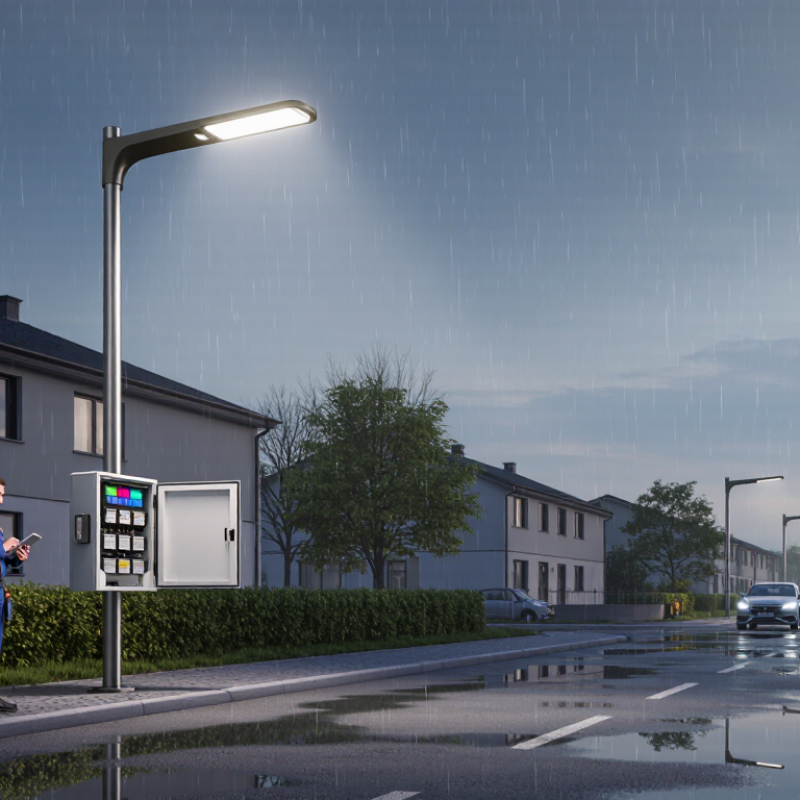
A smart street light pairs an LED fixture with a controller, communications link, and sometimes sensors. The controller sets lighting schedules and adjusts brightness. A photocell can respond to daylight, while motion sensors can raise light levels when pedestrians or vehicles approach. Network connections let operators monitor energy use and receive fault alerts without inspecting every pole. That is the basic loop. Not magic.
The International Energy Agency reported that lighting used about 15% of global electricity in 2022, showing why efficient operation matters. The U.S. Department of Energy’s 2019 solid-state lighting forecast estimated that LED adoption could save 569 terawatt-hours of U.S. electricity annually by 2035. That figure covers LEDs broadly, not smart street lights alone. Still, it points to the value of efficient fixtures, while connected controls can help avoid unnecessary full-brightness operation. In practice, sensor placement and schedules need local testing; a tree canopy or quiet side street can confuse assumptions. Dimming is useful, but poor settings may leave a crossing too dark.
The best smart street lights in 2026 should do more than switch on remotely. They need to provide even, usable illumination while reducing wasted light on empty roads and sidewalks. Look for adjustable output, well-designed optics, and dimming schedules that can respond to traffic or pedestrian activity. A bright patch beneath a pole is not enough; check how light reaches crossings, paths, and road edges.
Control features matter when they work reliably in everyday conditions. Useful systems report outages, energy use, and fixture status, and let operators change settings without visiting each pole. Sensors can support responsive dimming, but they need careful placement and testing. A sensor facing a busy storefront may keep nearby lights bright all night. Small details matter.
Durability and serviceability deserve equal attention. Sealed housings, replaceable components, and clear fault alerts can reduce maintenance visits, especially across long road networks. Check that controls use documented communication methods and offer sensible access protections. Ask for performance data from comparable installations, not just a polished dashboard. Numbers can mislead. Even strong systems may need seasonal adjustment, and the best choice depends on local roads, weather, and maintenance capacity.
Comparing leading smart street light systems in 2026 means looking beyond brightness. A capable system pairs efficient LED fixtures with remote dimming, fault alerts, and reliable communications. Some use cellular connections; others rely on mesh networks or local gateways. Each design has trade-offs. Cellular links can simplify deployment, while mesh coverage may depend on pole spacing and nearby buildings. That matters. Check whether the controls integrate with existing software, or crews may end up managing duplicate dashboards. Ask how the system behaves during outages and whether operators can export their own data.
Field performance is easier to judge with a small pilot. Track response times for failed lamps, nighttime visibility, and how quickly staff can adjust dimming schedules. A wet week, a blocked signal, or one stubborn controller can reveal more than a polished demonstration. Sensor options also differ: motion detection may support adaptive lighting, but poor calibration can cause distracting changes on quiet roads. Compare warranty terms, replacement procedures, cybersecurity updates, and the cost of gateways or subscriptions. The best fit depends on local conditions, not a feature count. Even a strong system may need manual checks; that part is easy to underestimate.
Comparing typical energy-saving potential across street-lighting upgrade strategies
LED retrofits commonly reduce energy use compared with conventional street lights, while adaptive controls can provide further savings by dimming lights when conditions allow. Actual results vary with the existing equipment, operating schedule, and local lighting requirements; the ranges are indicative and should not be added together.
Smart street lights are used on urban roads, residential streets, and busy intersections where lighting needs change through the night. In a quiet neighborhood, lights can dim after midnight while keeping sidewalks visible. At a junction, sensors may raise brightness when pedestrians or vehicles approach. Results depend on sensor placement, weather, and local traffic. Rain can confuse some sensors. That matters.
These systems also serve parks, campus paths, parking areas, industrial sites, and rural roads. In a park, scheduled dimming may reduce unnecessary light near wildlife habitats. Motion-based controls can brighten paths when visitors pass. On bridges and long roads, remote monitoring helps crews locate failed lamps without checking every pole in person. Useful, but not magic. Poor pole spacing or a badly aimed fixture still creates dark patches or glare.
For planners, suitable locations often have uneven nighttime use, recurring maintenance needs, or clear opportunities to reduce energy use. A small pilot can show whether sensors respond reliably and whether people find the light comfortable. Field checks still matter. Data may miss a shadowed doorway or a corner that feels unsafe. Settings may need adjustment after residents and maintenance crews share what they observe.
In 2026, the best smart street light is the one that fits a city’s streets, budget, and maintenance capacity. Start with a night-time audit: note dark crossings, glare on wet pavement, and poles that are difficult to reach. Light matters. Choose optics and color temperature based on pedestrian and road needs, not just maximum brightness. The U.S. Department of Energy’s 2016 municipal survey reported that LED street-lighting upgrades commonly reduced energy use by 50–70%, though actual savings depend on existing equipment and operating hours.
Compare total cost over the full service life, including installation, network fees, replacement parts, and staff training. Ask suppliers to demonstrate dimming schedules and fault alerts on a small group of poles before a citywide rollout. Check that controls can work with other systems and that the city can export its data. NISTIR 8259A outlines baseline cybersecurity capabilities for connected devices, including secure configuration, data protection, and software updates. A specification can look complete and still miss a maintenance detail; that is worth reviewing with field crews.
Tips: Request a photometric plan for real intersections, not just a product sheet. Test controls after dark and in poor weather. Record energy use, outages, and resident feedback during the pilot. Keep the results—even if they challenge the original plan.