2026 How to Choose the Best Multilayer Chip Capacitor?
In the rapidly evolving electronics market, selecting the right Multilayer Chip Capacitor (MLCC) is crucial for optimal performance. According to a recent industry report from ResearchAndMarkets, the global MLCC market is projected to reach $10 billion by 2026. This growth underscores the increasing reliance on capacitors in various applications, from smartphones to automotive electronics.
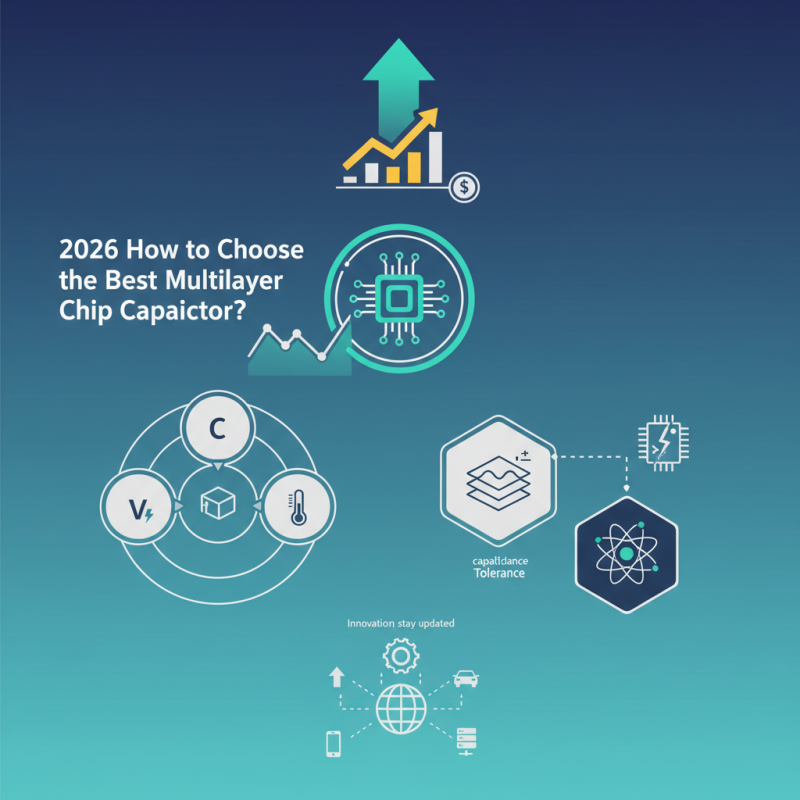
Dr. Emily Chen, a leading expert in capacitor technology, emphasizes, "Choosing the right Multilayer Chip Capacitor can significantly impact circuit reliability and efficiency." Her insights highlight the importance of understanding key parameters such as capacitance, voltage rating, and temperature characteristics. With diverse options available, it can be challenging to navigate the specifications.
Making informed decisions is vital. Many engineers often overlook the effects of capacitance tolerance and dielectric type. These factors can lead to circuit failures if not properly considered. As the industry continues to innovate, staying updated on trends and recommendations will ensure the best choice for applications demanding high precision.
Understanding Multilayer Chip Capacitors: Key Features Explained
Multilayer chip capacitors (MLCCs) are vital components in modern electronics. They provide essential functions in filtering and energy storage. When selecting an MLCC, understanding key features is crucial. You should consider capacitance value, voltage rating, and dielectric type. Each feature impacts performance in different applications.
Capacitance value defines how much charge a capacitor can hold. Typically measured in microfarads, higher capacitance often leads to larger sizes. Voltage ratings indicate the maximum voltage a capacitor can withstand without failing. Choosing a capacitor with appropriate voltage margins is important to avoid breakdown.
Dielectric types affect performance traits, such as temperature stability and frequency response. Common dielectrics include X7R and NP0. X7R offers higher capacitance in smaller sizes but has more variation with temperature. NP0 provides tighter tolerance but is less capacitive.
The choice depends on your specific needs. Understanding these factors is key when navigating the vast options available. Selecting the right MLCC can be challenging, but it significantly influences the reliability and functionality of your design.
Identifying Application Requirements for Multilayer Chip Capacitors
When selecting multilayer chip capacitors (MLCCs), understanding the application requirements is crucial. Application environment, voltage ratings, and size specifications play a significant role. According to industry reports, the global MLCC market is projected to reach $14 billion by 2026, highlighting its growing importance in various applications, from automotive to consumer electronics. This underscores the need to assess specific operational demands thoroughly.
One tip is to consider the dielectric material. MLCCs come in different dielectrics, such as X7R and C0G. X7R capacitors handle higher capacitance but have voltage and temperature sensitivity, while C0G offers stability but is less capacitance-dense. It's vital to align these characteristics with your application needs. Another tip is to evaluate the capacitor’s packaging. Package size can directly impact performance, especially in space-constrained environments like smartphones.
Investing time in understanding these factors is worthwhile. However, some engineers overlook tolerance ratings, which can lead to performance issues. A higher tolerance may not always be necessary, depending on the application. This aspect often requires careful consideration, reflecting the complexity of MLCC selection.
Material Considerations: Dielectric and Conductive Choices
When selecting a multilayer chip capacitor, material choices significantly impact performance. Dielectric materials such as X7R and C0G have distinct characteristics. C0G offers low loss and stability, while X7R delivers higher capacitance values in a compact form. According to industry reports, C0G capacitors typically withstand temperatures ranging from -55 to 125 °C, with capacitance stability over time.
Conductive choices also play a vital role. Most multilayer chip capacitors use silver or copper for electrodes. Silver provides superior conductivity but at a higher cost. Copper, while more economical, can lead to reliability issues due to oxidation. Recent studies indicate that capacitors utilizing silver electrodes can have a failure rate reduced by up to 70% in harsh environments. However, these advantages come with trade-offs, such as increased price.
Careful consideration of the dielectric and conductive materials is paramount. This impacts not just the capacitor's long-term reliability but also its performance in high-frequency applications. Engineers often face the dilemma of balancing cost with performance. Choosing the right materials is crucial for ensuring the capacitor meets specific application demands. The decision process must reflect both current needs and future reliability expectations.
Evaluating Performance Metrics: Voltage, Capacitance, and ESL
When selecting a multilayer chip capacitor, understanding performance metrics is crucial. Voltage rating is one of the key specs. It defines the maximum voltage the capacitor can withstand without breaking down. Exceeding this voltage can lead to failure, resulting in circuit malfunction. It's important to analyze the application's needs. Consider how much voltage the capacitor will typically experience.
Capacitance value is another critical factor. This indicates how much charge the capacitor can store. Capacitors come in a variety of capacitance values. Choosing the correct one impacts circuit performance significantly. Too low capacitance can result in insufficient filtering. Conversely, too high may lead to delayed response times. The balance is essential.
Equivalent series inductance (ESL) also matters in high-frequency applications. A lower ESL means better performance in AC applications. It reduces signal distortion and improves overall efficiency. Evaluating ESL involves looking at the capacitor's construction and materials. Focus on these metrics to make informed choices.
Making a decision isn't always straightforward. It requires careful consideration of specific needs and conditions. Reflect on the impact of each metric on your design. Understanding these elements leads to better specifications in your circuit design.
Cost vs. Quality: Making Informed Purchasing Decisions
When considering multilayer chip capacitors, the balance between cost and quality is crucial. Many buyers prioritize lower prices, but this approach can lead to poor performance and reliability issues. Understanding the specifications and applications for your capacitor is essential. A slightly higher-priced capacitor may offer superior longevity, reducing overall costs in the long run.
Tip: Research the dielectric materials used in capacitors. Ceramic capacitors often provide better temperature stability and lower losses compared to their counterparts. This can significantly impact the efficiency of your circuit.
Not all capacitors are created equal. It's easy to be tempted by cheap offers, but beware of potential hidden issues, such as a high failure rate. The performance under different environmental conditions can vary greatly. Always check for relevant certifications that verify quality standards.
Tip: Pay attention to the voltage ratings. Using a capacitor rated lower than required can lead to catastrophic failures. Choose parts that meet or exceed your circuit's requirements for safety and reliability. This added caution pays off in performance consistency.