How to Choose the Best Sewer Jetting Machine for Your Needs?
Choosing the right Sewer Jetting Machine is crucial for effective drainage maintenance. With a market that reached $4.2 billion in 2021 and is projected to grow significantly, the demand for high-quality jetting machines continues to rise. This reflects a strong emphasis on enhancing urban infrastructure. Sewer jetting machines are essential for clearing blockages and maintaining flow in sewer systems.
Professional experts often recommend evaluating machine pressure, flow rate, and nozzle types. A study by the American Society of Civil Engineers highlights that poorly maintained sewer systems can lead to costly repairs, emphasizing the necessity for reliable equipment. Understanding your specific needs is vital to ensuring you select a machine that meets both efficiency and safety standards.
However, many users overlook the importance of service and maintenance. It’s common to invest in a machine and underestimate ongoing costs. Reflecting on these factors can lead to a more informed choice, one that balances initial price with long-term value. An educated decision will enhance productivity and reliability in sewer management.
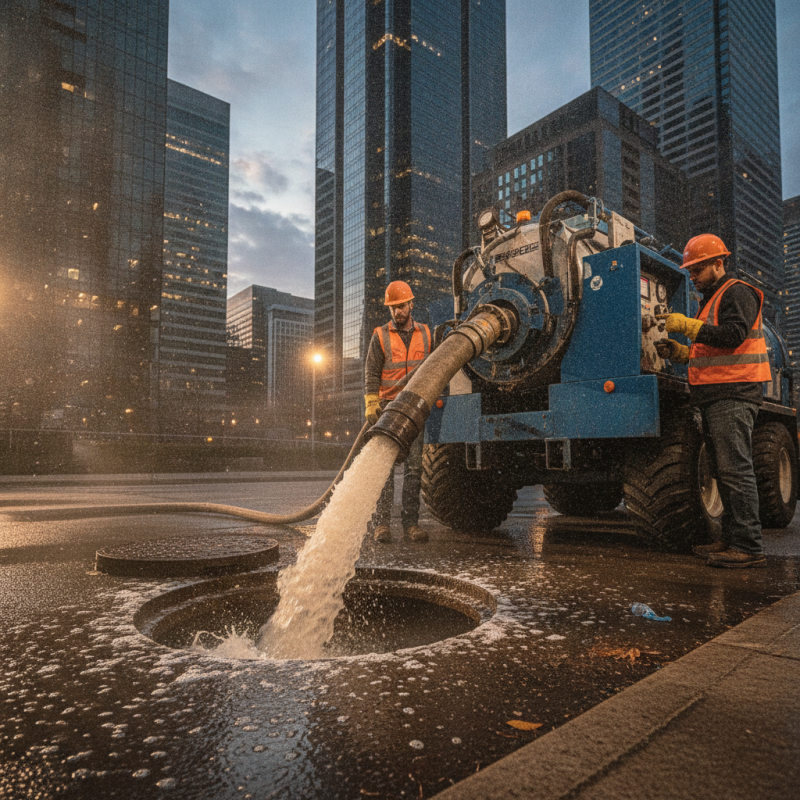
Identifying Your Specific Sewer Jetting Needs and Requirements
Choosing the right sewer jetting machine requires a clear understanding of your specific needs. A detailed assessment of the types of blockages you regularly encounter is crucial. According to industry data, about 70% of sewer blockages originate from grease and debris buildup. This highlights the importance of choosing a machine with sufficient pressure and flow rate to tackle such issues efficiently.
Consider the size of the sewer lines affected. For residential applications, a machine with a pressure range of 1,500 to 3,000 PSI might suffice. However, commercial properties often require more robust solutions. Reports indicate that commercial entities face more substantial blockages, demanding machines with pressures exceeding 4,000 PSI. This makes it essential to evaluate the machine's compatibility with your specific sewer sizes and types.
User feedback is another vital aspect. Many professionals note that the ease of use significantly impacts operational efficiency. Some machines offer advanced features like remote control, while others may lack basic portability. Therefore, assess customer reviews and expert recommendations before making a decision. Understanding these nuances can help you choose a sewer jetting machine that not only meets your immediate needs but also offers long-term reliability.
Understanding the Different Types of Sewer Jetting Machines Available
When it comes to sewer jetting machines, understanding the different types is crucial. There are primarily two categories: electric and gas-powered machines. Electric machines are typically quieter, making them suitable for indoor use. They are often lighter and easier to transport. However, they may not provide the same power as their gas counterparts. Gas-powered machines excel in tough outdoor conditions. They can handle heavy blockages effectively, but they come with higher noise levels.
Another distinction lies in the pressure ratings and flow rates. Machines with higher pressure ratings can tackle more severe clogs. Conversely, those with lower ratings might suffice for simpler tasks. Flow rates affect how quickly you can clear a blockage. A higher flow rate can often lead to quicker cleaning times.
Choosing the right machine is not just about power. Consider ease of use and maintenance. Some machines may require specialized training, while others are user-friendly. Reflecting on your specific needs and the environment in which you'll work can guide your decision. Researching and understanding these factors is essential for making an informed choice.
Key Specifications and Features to Consider in a Jetting Machine
When selecting a sewer jetting machine, several key specifications and features should be at the forefront of your decision-making process. One of the most critical aspects is the pressure output. Machines with higher pressure ratings can tackle more stubborn blockages. Consider models that provide adjustable pressure settings. This flexibility allows you to tailor the output for different jobs, ensuring efficiency and safety.
Next, water flow rate matters significantly. A higher flow rate can improve cleaning efficiency, especially in larger pipes. Look for machines that offer a balance between pressure and flow. Additionally, portability is essential. Some machines are heavier and less mobile, making them impractical for tight spaces. Think about your typical job site and choose a machine that fits your mobility needs.
Durability is another vital feature. A robust machine can withstand various job conditions. Examine the materials used in construction. Corrosion-resistant materials generally extend the lifespan of the equipment. Also, ease of maintenance is worth considering. Machines that are simple to maintain will save time and money in the long run. Reflect on these aspects carefully; overlooking them can lead to costly mistakes and inefficiencies in the future.
Evaluating Manufacturers and Models Based on Industry Performance Data
When it comes to choosing a sewer jetting machine, evaluating manufacturers and models is crucial. Industry performance data offers insights into the efficiency and reliability of these machines. Look for specifications like pressure levels and flow rates. These metrics can directly impact your cleaning results. Imagine dealing with stubborn blockages; a high-pressure machine might save time and effort.
Explore user reviews and case studies. They reveal how different models perform in real-world scenarios. Are they durable? Do they require frequent repairs? Gathering testimonials helps gauge the experiences of other professionals. It's essential to consider both successful outcomes and challenges faced by users. Balance positive feedback with potential drawbacks to avoid unrealistic expectations.
When assessing manufacturers, reputation matters. Well-established companies typically offer better customer support and warranty options. However, new companies may innovate and provide unique features. Weighing these aspects involves critical thinking. Look at technical support, parts availability, and community knowledge. Engaging with industry forums can reveal hidden insights that aren't found in brochures.
How to Choose the Best Sewer Jetting Machine for Your Needs?
| Machine Type | Pressure (PSI) | Flow Rate (GPM) | Water Tank Capacity (Gallon) | Weight (lbs) | Durability Rating |
| Compact | 3000 | 5 | 50 | 150 | 4/5 |
| Standard | 4000 | 8 | 100 | 250 | 5/5 |
| Heavy-Duty | 5000 | 12 | 150 | 350 | 5/5 |
| Portable | 3000 | 3 | 30 | 85 | 4/5 |
| Trailer-Mounted | 6000 | 15 | 300 | 500 | 5/5 |
Budgeting for a Sewer Jetting Machine: Costs and Return on Investment
When budgeting for a sewer jetting machine, it’s crucial to consider both initial costs and long-term return on investment. The initial purchase price can vary significantly based on the machine's features. A more robust machine may require a larger upfront expenditure. However, investing in quality often translates into savings over time. Look for machines with durable components that decrease the frequency of repairs.
Tips: Research the market before making a purchase. Compare models and read reviews. Understand the maintenance requirements of each machine. A model that seems economical at first can later incur high repair costs.
Consider the potential income generated from a high-quality sewer jetting machine. If used in a service business, it can pay for itself quickly. Anticipate how many jobs you can expect to complete each month. Calculate the average revenue per job to estimate a realistic timeline for recouping costs.
Don’t forget the operational expenses. Water consumption, fuel, and maintenance can add up. Budget for these ongoing costs to avoid unexpected financial strain. Making informed choices is vital for maximizing your investment.