Skip to content

How to Choose the Best RF Feeder Cable for Your Needs?

Choosing the best RF Feeder Cable is crucial for optimizing signal transmission. The right cable will enhance performance and minimize interference. Various factors come into play, including cable type, length, and connectors.

When evaluating options, consider the specific application. Different environments may require unique solutions. For instance, outdoors might need better weather resistance. Indoor installations may focus on flexibility and aesthetic considerations. Understanding your requirements will guide the selection process.

Do not underestimate the impact of quality. A poor choice can lead to signal loss and inefficiency. Investing in a reliable RF Feeder Cable pays off in the long run. Reflecting on past experiences can inform better decisions. Each installation reveals new challenges and opportunities for improvement.
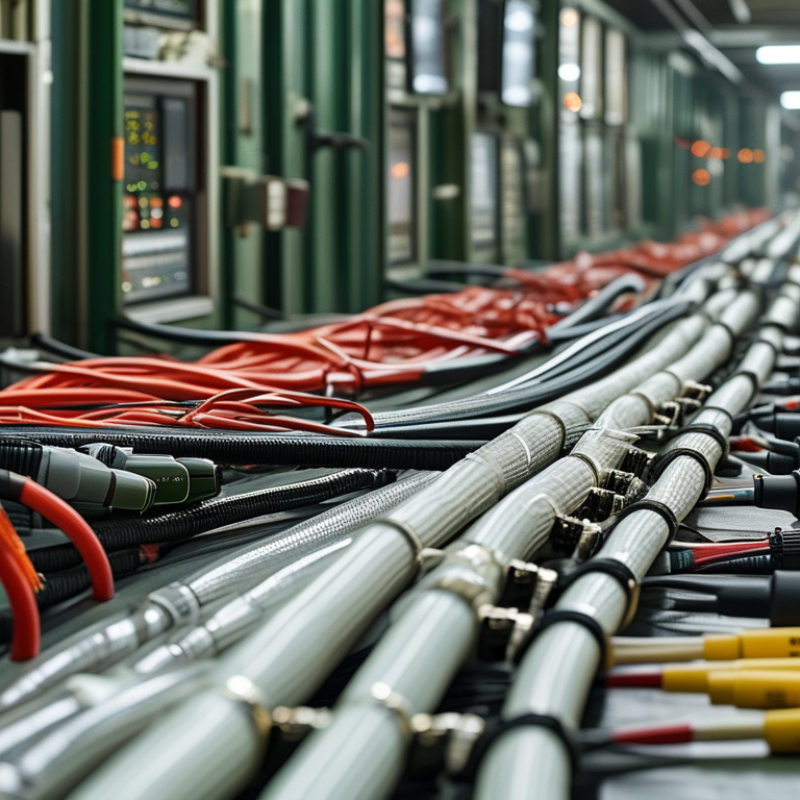
How to Choose the Best RF Feeder Cable for Your Needs?

Understanding RF Feeder Cables: An Overview of Types and Uses

RF feeder cables play a crucial role in a wide range of applications. Understanding the different types helps to make informed decisions. Generally, there are two primary categories: coaxial and fiber optic cables. Coaxial cables are ideal for short to medium distances and provide robust signal transmission. They are widely used in television and radio broadcasting. Fiber optic cables, on the other hand, excel in long-distance communication due to their high bandwidth and lower signal loss.

Choosing the right cable can be daunting. Various factors influence this decision, including signal loss, installation environment, and frequency range. For example, coaxial cables are affected by their length and quality, which can lead to increased attenuation. The installation setting is equally important; outdoor conditions may require cables with better weather resistance.

It's essential to evaluate your specific needs carefully. A poorly chosen cable can lead to signal interference or degraded performance. Users often overlook the importance of durability and flexibility when making their selections. Each type has its strengths and weaknesses, and assessing these helps ensure optimal performance.

Key Factors to Consider When Selecting RF Feeder Cables

When selecting RF feeder cables, it's essential to understand key factors. One major consideration is the cable's attenuation. Lower attenuation values ensure better signal strength over distance. A report by the IEEE indicates that using cables with less than 3 dB of loss per hundred meters can enhance performance significantly. This is especially critical in applications requiring precise signal transmissions.

The environmental conditions where the cable will be installed also play a vital role. For outdoor setups, cables need robust shielding and UV resistance. According to a recent industry survey, nearly 40% of cable failures are linked to environmental stressors. This highlights the importance of choosing cables designed for specific operating conditions.

Cost is another factor, but price shouldn't dictate quality. Investing in reliable cables can result in lower maintenance costs over time. Many users overlook this detail, only to find themselves replacing cables frequently due to poor performance. Although budget constraints are real, high-quality RF feeder cables can be a cost-effective choice in the long run. Prioritizing durability and efficiency will lead to better outcomes in various applications.

Assessing Signal Loss and Performance Requirements in RF Systems

When selecting an RF feeder cable, assessing signal loss is crucial. Signal loss affects performance in RF systems significantly. Each cable type has unique specifications that determine how well it maintains signal integrity. Higher frequencies often lead to greater losses over distance. This requires careful consideration of the cable length and its intended use.

Performance requirements vary by application. For instance, a cable used in a high-frequency setting will need a different design than one suitable for lower frequencies. Evaluating attenuation rates is essential. Measuring the signal loss at 100 MHz might differ from that at 1 GHz. Understanding the specific environment where the cable will operate can help in making the right choice.

RF cables also come with various connectors. Choosing the wrong connector can lead to additional signal degradation. Installation plays a role too. A poorly installed cable can experience more loss than expected. It's worth reflecting on whether the chosen option meets all technical requirements. Ultimately, an informed choice is vital for optimal system performance.

Evaluating Cable Length and Installation Environment for RF Feeder Cables

When choosing an RF feeder cable, understanding cable length and installation environment is crucial. The length of the cable directly impacts signal quality. Longer cables can experience more signal loss, which weakens the performance. Evaluating the distance between the transmitter and receiver ensures your setup functions optimally.

Consider the installation environment as well. Cables installed in areas with high interference may require shielding to reduce noise. An outdoor setup might need weather-resistant features. These factors play a role in maintaining signal integrity and overall system efficiency.

**Tip:** Measure the distance accurately before buying. This ensures your cable meets your needs without excess length that could lead to power loss.

**Tip:** Look for cables designed for your specific environment, whether it’s indoor or outdoor. Quality matters in maintaining signal clarity.

Taking the time to evaluate these aspects can save you from unnecessary challenges down the road.

How to Choose the Best RF Feeder Cable for Your Needs?

Cable Type Length (meters) Installation Environment Frequency Range (GHz) Attenuation (dB/100m)
RG58 20 Indoor 0.5 - 3.0 16.0
LMR400 30 Outdoor 0.4 - 6.0 10.0
RG213 50 Indoor/Outdoor 0.1 - 2.0 6.0
HDF400 100 Outdoor 0.5 - 5.0 8.0
LMR600 25 Indoor 0.2 - 3.0 7.5

Budget Considerations and Cost-Effective Options for RF Feeder Cables

When selecting RF feeder cables, budget considerations play a crucial role. Many industries require high-quality cables while also striving to reduce costs. According to a recent industry report from the RF and Microwave Components Market, nearly 40% of professionals prioritize affordability when buying RF cables. This means finding cost-effective options without compromising performance is essential.


Choosing the right cable can be challenging. For instance, materials like copper and aluminum have different costs and performance characteristics. Copper offers better conductivity, but it may be pricier. On the other hand, aluminum can be more cost-effective but might lead to signal loss. A careful balance is essential. It’s noteworthy that while some low-cost cables may save money initially, they can incur extra costs through poor performance and later replacements.


Research shows that investing in higher-quality cables often yields longer-term benefits. A single high-quality cable can last five years longer than a budget model. In the RF cable market, where signal integrity impacts overall performance, this longevity is worth considering. Users should reflect on their specific needs and weigh them against their budget constraints to ensure they make a well-informed decision.