How to Choose Tungsten Carbide Welding Rods?
Choosing Tungsten Carbide Welding Rods requires more than comparing prices or carbide percentages. The right rod must match the base metal, working temperature, wear pattern, and welding process. A rod used on a quarry bucket faces different stresses than one applied to an agricultural cutting edge. Impact, abrasion, vibration, and heat can quickly expose a poor selection.
In practical repair work, technicians often begin by inspecting the worn surface. They check its hardness, thickness, cracks, and operating environment. Tungsten carbide particle size also matters. Coarse particles may improve resistance against severe abrasion. Fine particles can create a smoother deposited layer. The binder alloy deserves equal attention. Nickel-based and copper-based binders behave differently during heating and service. Welding temperature must remain controlled. Excessive heat can damage carbide particles or weaken the bond.
There is no universal rod for every repair.
Reliable selection also depends on manufacturer data, tested composition, and consistent production quality. Certificates and technical sheets can reveal carbide content, particle grading, binder type, and recommended application methods. Still, specifications do not replace field judgment. A product may perform well in testing yet fail when impact loads, contamination, or poor surface preparation are ignored. That is an easy mistake to make.
This guide explains how to compare Tungsten Carbide Welding Rods with a practical and evidence-based approach. It examines rod construction, carbide size, compatibility, welding technique, and service conditions. The goal is not simply to choose the hardest material. It is to select a dependable solution that balances wear resistance, bonding strength, repair cost, and expected working life.
What Are Tungsten Carbide Welding Rods?
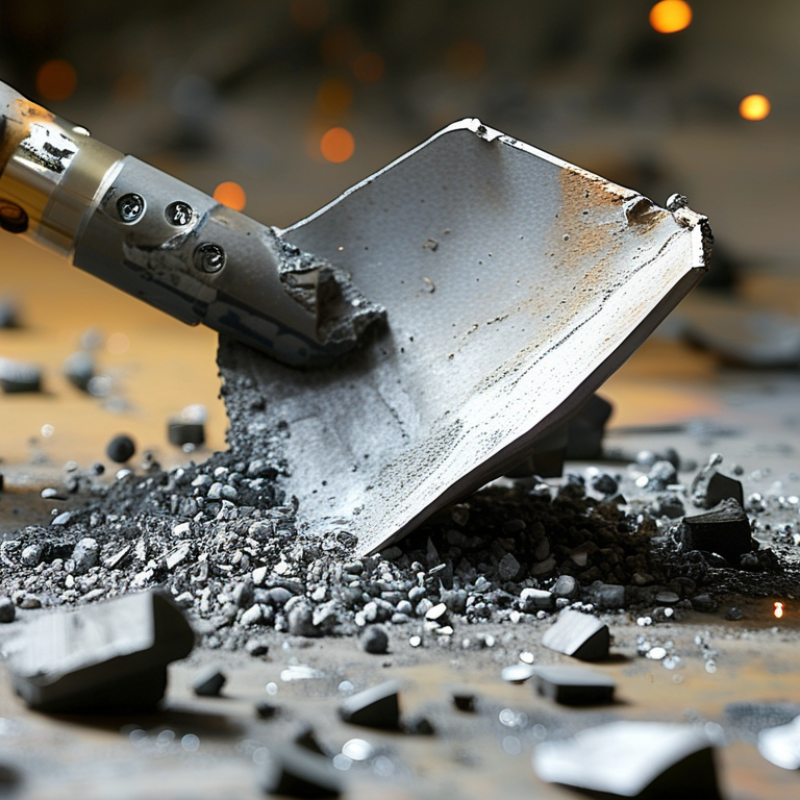
Tungsten carbide welding rods are composite filler materials, not solid tungsten sticks. They contain hard tungsten carbide granules held in a nickel, copper, or bronze-based binder. During welding, the binder melts first and carries carbide particles onto a worn surface. After cooling, the exposed particles resist cutting, sliding, and abrasive wear. The result feels rough under a file, almost like fine gravel fixed in metal.
The International Tungsten Industry Association reports that cemented carbide uses roughly 60% of global tungsten consumption. USGS Mineral Commodity Summaries 2024 estimated worldwide tungsten mine production at about 78,000 metric tons in 2023. These figures explain why carbide content and particle size matter when choosing rods. Coarse particles suit severe rock or sand abrasion. Fine particles create a smoother deposit for moderate wear. That rule is practical, but incomplete.
In a workshop, I inspect the failed edge before selecting a rod. A shovel lip cutting soil needs a different deposit from a valve exposed to heat. I also check the binder’s melting range, carbide distribution, and base-metal compatibility. Too much heat can dissolve carbide and reduce hardness. Too little heat leaves a weak, poorly bonded layer. Rod diameter matters too; a thin rod gives control, while a larger rod builds faster. The choice is rarely perfect on the first attempt. Actual wear testing should challenge the specification.
How to Choose Tungsten Carbide Welding Rods? - What Are Tungsten Carbide Welding Rods?
| Selection Dimension | What It Means | Typical Options or Values | Recommended Choice |
|---|---|---|---|
| Basic Definition | A tungsten carbide welding rod is a filler material containing hard tungsten carbide particles or segments in a metallic binder or steel matrix. | Cast carbide, sintered carbide, or carbide granules in a nickel-, iron-, or cobalt-based matrix. | Choose the construction according to impact, abrasion, temperature, and the base-metal requirements. |
| Main Wear Mechanism | The dominant type of wear determines the required carbide structure and binder toughness. | Abrasive wear, impact wear, sliding wear, erosion, or a combination of these. | Use coarser and tougher carbide for impact; use finer or denser carbide coverage for severe fine-particle abrasion. |
| Carbide Hardness | Hardness indicates resistance to cutting and scratching, but very high hardness can reduce resistance to shock. | Tungsten carbide is commonly around 1,500–2,200 HV, depending on composition and microstructure. | Prioritize carbide hardness for low-impact abrasion and binder toughness for high-impact service. |
| Carbide Particle Size | Particle size affects wear resistance, edge retention, and the ability of the deposit to tolerate impact. | Fine: approximately 0.2–0.8 mm; medium: approximately 0.8–2.5 mm; coarse: approximately 2.5–6 mm. | Select fine particles for uniform coverage and moderate abrasion; select coarse particles for gouging and heavy impact. |
| Carbide Content | A higher carbide fraction generally increases abrasion resistance but may reduce deposit toughness and workability. | Typical hard-particle content is approximately 35–65% by weight, depending on rod construction. | Choose a moderate content for mixed wear and a higher content only when abrasion is the primary failure mode. |
| Rod Diameter | Diameter controls deposited volume, heat input, and accessibility in narrow or detailed areas. | Common diameters include approximately 3.2 mm, 4.0 mm, 5.0 mm, 6.0 mm, and 8.0 mm. | Use smaller rods for thin edges and precision work; use larger rods for broad surfaces and high deposition rates. |
| Rod Length | Length affects handling, storage, and the amount of filler available for one operation. | Many welding rods are supplied in lengths of approximately 300–500 mm. | Choose a length compatible with the torch, joint geometry, and required welding time. |
| Welding Process | The heat source determines suitable rod composition, flux requirements, and application technique. | Oxy-fuel brazing, manual metal arc surfacing, gas tungsten arc welding, and other compatible hardfacing processes. | Select a rod specifically rated for the intended process rather than relying only on diameter or appearance. |
| Matrix or Binder | The matrix holds carbide particles and controls toughness, corrosion resistance, and wetting behavior. | Nickel-based matrices for corrosion resistance; iron-based matrices for general hardfacing; cobalt-based matrices for high-temperature wear. | Match the matrix to operating temperature, chemical exposure, and the compatibility of the base metal. |
| Base Metal Compatibility | The rod must wet and bond properly without causing excessive cracking, distortion, or metallurgical damage. | Carbon steel, low-alloy steel, stainless steel, cast iron, and selected nickel alloys require different procedures. | Check the rod datasheet and welding procedure for preheating, interpass temperature, and post-weld treatment. |
| Operating Temperature | Elevated temperature can reduce binder strength and change oxidation or corrosion behavior. | Ambient-temperature service, intermittent heating, or continuous high-temperature service. | For continuous high heat, select a high-temperature-compatible matrix and follow the specified welding procedure. |
| Deposit Thickness | Excessive buildup can increase residual stress and cracking risk, while insufficient buildup may wear through quickly. | Single-layer deposits are often approximately 1.5–3 mm; multilayer buildup may be used when permitted by the procedure. | Apply the minimum thickness that meets service-life requirements and observe the recommended layer limit. |
| Surface Preparation | Clean, roughened, and properly fitted surfaces improve wetting and reduce inclusions or lack of fusion. | Remove oil, rust, paint, moisture, and loose material; bevel or roughen the repair area when required. | Prepare the surface before heating and keep the work area dry throughout the operation. |
| Cracking Consideration | Some hardfacing deposits develop stress-relief cracks; uncontrolled cracking or cracks extending into the base metal are unacceptable. | Crack tendency increases with high carbide content, excessive dilution, rapid cooling, and thick deposits. | Control heat input, use suitable preheating, avoid excessive buildup, and follow the filler manufacturer’s procedure. |
| Storage and Inspection | Moisture, contamination, damaged coatings, or inconsistent carbide distribution can reduce weld quality. | Store rods in a dry, clean location and inspect diameter, length, surface condition, batch information, and carbide distribution. | Reject visibly contaminated or damaged rods and confirm technical data before production use. |
Note: Values shown are typical industry ranges for selection guidance. Actual performance depends on rod formulation, welding process, base metal, deposit thickness, and service conditions.