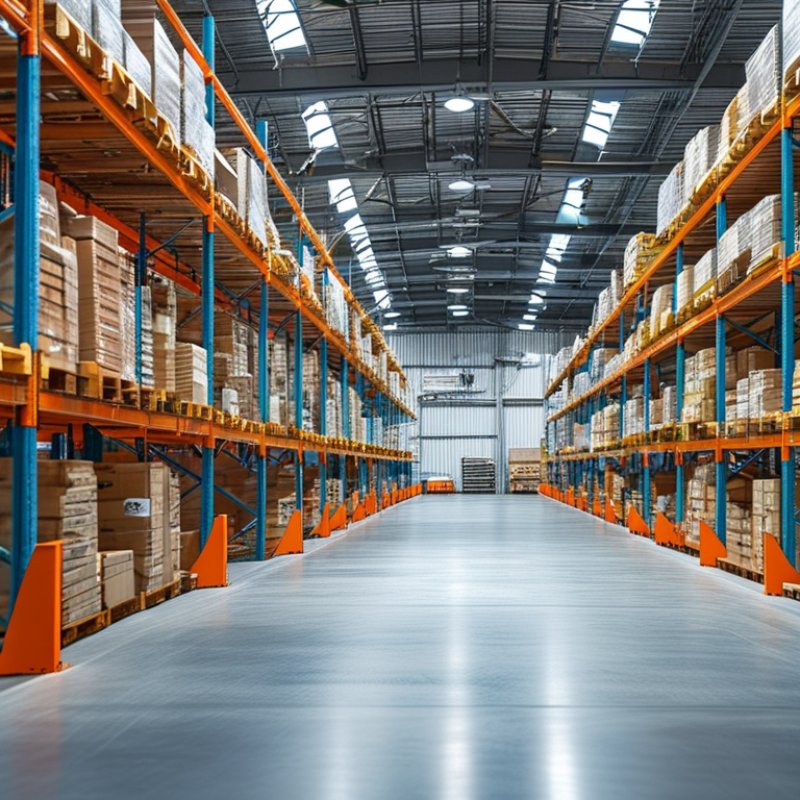
Why Choose the Right Warehouse Rack for Your Business Needs?
Choosing the right Warehouse Rack is critical for your business's success. An effective rack system not only saves space but also improves efficiency. The right warehouse rack can help streamline operations. It offers durability and support for heavy loads.
Think about the items you store. Is your inventory diverse? Understanding your specific needs will guide your choice. Consider factors like accessibility, safety, and adaptability. Each warehouse rack type has strengths and weaknesses. It’s essential to evaluate these aspects thoroughly.
Mistakes can happen. Sometimes businesses choose racks without proper analysis. This often leads to inefficiencies and overcrowded spaces. Reflect on past experiences. Have your current systems led to complications? Prioritizing the right warehouse rack contributes to a smoother workflow.
Importance of Selecting the Right Warehouse Rack for Efficiency
Selecting the right warehouse rack is vital for optimizing efficiency. According to a report by the Warehousing Education and Research Council (WERC), improper shelving can lead to over 20% loss in productivity. Each aisle and shelf must be designed to fit your specific inventory needs. This creates a smoother workflow and minimizes time spent searching for items.
Modern warehouses can use a variety of racking systems. For instance, selective racks provide easy access to all products but may take up more space. In contrast, drive-in racks save space but can complicate access. A study by the Material Handling Industry of America (MHIA) showed that using efficient racks can improve inventory turnover rates by up to 25%.
Often, businesses overlook the impact of poor racking choices. It’s not just about storage; it’s about how it affects employees. If racks are too high or too complex, it can lead to accidents or employee frustration. Striking the right balance is key. A well-planned rack system can reduce strain and increase safety, ultimately leading to a happier and more efficient workforce.
Types of Warehouse Racks: Pros and Cons for Different Needs
When selecting a warehouse rack, understanding the various types is essential. Each type serves distinct needs, and knowing their pros and cons can make a significant impact. For instance, selective pallet racking allows direct access to each pallet, ideal for facilities with diverse inventory. However, it requires considerable floor space and may underutilize vertical storage.
In contrast, drive-in racking maximizes space by allowing forklifts to drive into the rack. This system is perfect for high-density storage but can complicate inventory management. According to the 2022 Warehouse Efficiency Report, businesses can increase storage efficiency by over 30% when using the correct racking system.
Tip: Analyze your inventory turnover rate. High turnover suggests selective racking is beneficial. Low turnover may indicate that a drive-in system is more appropriate.
Another option, Cantilever Racks, are great for long or bulky items. They provide easy access and visibility but might be costly for smaller inventories. Balancing space efficiency and accessibility is crucial.
Tip: Regularly review your inventory and storage needs. Needs change, and a racking system that once worked great may not be effective anymore. By reassessing periodically, you can avoid potential inefficiencies.
Key Factors Affecting Warehouse Rack Selection: Size, Weight, and Accessibility
Selecting the right warehouse rack is crucial for any business managing inventory. The size of the rack determines the capacity and space efficiency. If the rack is too small, it limits storage options. On the other hand, a rack that is too large might waste valuable floor space. Measuring the dimensions of your warehouse allows for a better fit, ensuring optimal use of space.
Weight is another critical factor in rack selection. Heavy items need robust racks designed to bear substantial loads. Understanding the maximum weight load of your inventory is essential. A miscalculation can lead to rack failure, risking safety and product loss. Conversely, lightweight racks might suffice for less heavy goods, but they require careful consideration regarding long-term stability.
Accessibility affects both efficiency and safety in your warehouse. Racks should allow easy access to products, minimizing the time employees spend retrieving items. Narrow aisles can enhance storage density but make it challenging to navigate equipment. Ensuring a balance between accessibility and storage capacity can be tricky. Regular assessments of your workflow will help you determine if the chosen rack system meets your evolving business needs.
Industry Statistics: Impact of Proper Storage Solutions on Productivity
In today's fast-paced business environment, the importance of proper storage solutions cannot be overstated. Industry data shows that businesses can boost productivity by as much as 30% when they utilize suitable warehouse racking systems. This significant improvement stems from optimized space utilization and improved accessibility to inventory.
Moreover, effective storage solutions lead to less time spent searching for products. A study revealed that improper storage can cause up to 20% of a worker's time to be lost. With the right racks, companies also experience a decrease in workplace accidents by up to 26%. This highlights that safety and efficiency go hand in hand in warehouse management.
However, many businesses still overlook the importance of selecting appropriate racking systems. Some may prioritize cost over functionality, only to face the consequences later. Without careful consideration, they risk inefficient layouts and costly operational delays. A well-thought-out strategy is essential for maximizing both safety and productivity in the warehouse.
Cost-Benefit Analysis of Warehouse Racks: ROI Considerations for Businesses
When selecting warehouse racks, ROI considerations are essential. Choosing the right rack can maximize storage space and enhance operational efficiency. A cost-benefit analysis helps businesses evaluate initial investments against potential gains. It is crucial to account for factors like durability, weight capacity, and layout flexibility.
Higher upfront costs for robust racks may lead to long-term savings. For example, strong racks reduce repair costs and improve the flow of goods. Many businesses overlook the hidden costs when choosing racks. They often ignore the impact on labor efficiency, safety, and inventory management. A poorly designed warehouse layout can lead to increased time spent on retrieval and manual errors.
Operational efficiency ties directly to employee productivity. Each second counts in warehouse operations. If racks are not optimal, productivity dips. These issues require reflection and may warrant reevaluation of current systems. In the end, investing in the right warehouse rack can yield significant returns by seamlessly integrating with existing processes and boosting overall performance.