Choosing the right Spinning Filter begins with understanding the process, not the product label. A filter that performs well in one line may fail in another. Flow rate, liquid viscosity, temperature, and particle size all influence the decision. Even a small change in pressure can affect filtration stability. That detail is easy to overlook.
In practical filtration work, I examine the material entering the system first. A thick coating liquid may need a larger screen area and slower rotation. A low-viscosity liquid may require finer mesh control instead. The filter housing should match the chemical properties of the fluid. Stainless steel may suit many applications, but it is not automatically the safest option. Seals, gaskets, and connection types also deserve careful review.
Look at maintenance, too. Can operators remove the screen without special tools? Does the design reduce residue around the outlet? A clear cleaning routine can protect product quality and reduce unexpected downtime. I also recommend checking test data, supplier experience, and relevant quality documentation before purchase. Marketing claims can sound impressive. They still need verification.
There is no perfect choice. Sometimes, the finest mesh creates excessive pressure loss. Sometimes, a cheaper Spinning Filter increases cleaning labor. Pilot testing can expose these trade-offs before full installation. Record pressure, flow, temperature, and filter life during the trial. Then compare results against your actual production needs, not assumptions. A careful selection process supports safer operation, steadier output, and more predictable long-term costs.
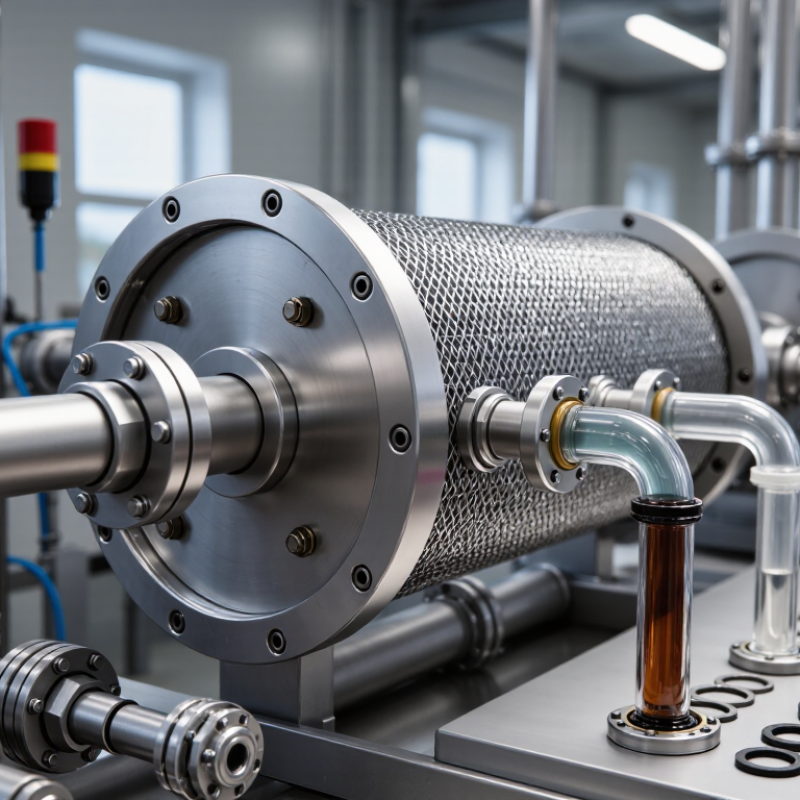
Choosing a spinning filter starts with a clear filtration task, not a catalogue search. Define the liquid, suspended solids, temperature, viscosity, and expected flow rate. Note whether the process needs continuous separation or occasional batch cleaning.
Measure the solids carefully. Their size, shape, concentration, and compressibility can change filter performance. A fine mesh may improve clarity but reduce flow and increase cleaning frequency. Set practical targets for filtrate quality, pressure drop, capacity, and service life. In field testing, collect samples before and after filtration. Record results under realistic operating conditions. Laboratory data alone can be misleading. Real process behavior is often less predictable.
Tips: Write the acceptance limits before selecting equipment. Test several operating speeds and loading levels. Check whether the spinning action damages sensitive particles. Inspect the filter after use, including trapped solids and wear points. Allow space for safe maintenance. A perfect specification is rarely available, and early assumptions may need revision. Experienced operators should review the test results, especially when viscosity or solids concentration changes during production. Keep records of every trial, including temperature, pressure, cleaning time, and filtrate clarity. These details support reliable decisions and make future troubleshooting much faster.
Define the filtration task first: the required particle-size removal, flow rate, and acceptable clean-filter pressure drop determine the most suitable filter configuration.
The chart shows representative clean-filter pressure-drop ranges at a standardized flow of 100 L/min/m². Coarse filters generally provide high flow with low resistance, while fine and membrane filters achieve smaller particle removal at the cost of higher pressure drop. Actual performance depends on fluid viscosity, solids loading, filter area, temperature, and filter geometry.
Choosing the right spinning filter begins with identifying the contaminant, flow rate, and acceptable pressure loss. A spinning filter may use mesh, discs, a rotating screen, or centrifugal separation. Each design handles particles differently. Mesh filters trap solids on openings, while disc filters capture particles between grooved surfaces. Rotating screens continuously move collected debris away from the active area. Centrifugal units separate heavier particles by changing the liquid’s flow direction. These mechanisms are not interchangeable.
Mesh size is easy to understand, but it can mislead. An irregular fiber may pass through one opening and block another. Disc filters provide more contact paths and can retain mixed particle sizes. Rotary screens often reduce manual cleaning, although their moving parts require inspection. Centrifugal separation works best when contaminants differ clearly from the liquid in density. Light particles may remain suspended. Real performance also changes with viscosity and temperature.
Start with a clean-water trial, then test the filter with actual process water. Record inlet pressure, outlet pressure, flow rate, and cleaning frequency. Test dirty water too. Fine dust can behave differently from sand, even at the same measured size. I once focused too heavily on the advertised micron rating. The filter looked efficient, but pressure rose quickly during continuous operation. A larger filter might reduce this problem, yet it can waste space and energy. Leave room for removing the screen or disc stack, because maintenance access is often underestimated.
| Filter Type | Filtration Mechanism | Typical Separation Range | Suitable Feed Characteristics | Operating Mode | Main Advantages | Key Limitations | Common Applications |
|---|---|---|---|---|---|---|---|
| Rotary Drum Screen | A rotating cylindrical screen retains solids on the drum surface while liquid passes through the perforations or mesh. A scraper or spray system removes the screened material. | Approximately 0.2–3 mm, depending on the screen opening and media design. | Large or fibrous solids, moderate suspended-solids loads, and relatively free-flowing liquids. | Continuous, usually driven by gravity flow or a feed pump. | Simple construction, continuous solids removal, low shear, and relatively low energy demand. | Not intended for dissolved contaminants or very fine particles; mesh blinding can occur with greasy or sticky solids. | Pre-treatment of industrial wastewater, municipal wastewater screening, food-processing effluent, and process-water protection. |
| Rotary Disc Filter | Several cloth-covered discs rotate through a tank. Water flows through the filter cloth, while suspended solids accumulate on the cloth and are removed by backwashing. | Typically about 10–60 micrometres, depending on cloth rating, hydraulic loading, and solids characteristics. | Low-to-moderate suspended solids after upstream treatment; best where fine polishing is required. | Continuous or semi-continuous, commonly controlled by water-level difference or head loss. | Compact footprint, efficient tertiary polishing, low hydraulic head requirement, and automatic backwashing. | Cloth fouling may increase when oil, grease, algae, or sticky solids are present; upstream clarification may be necessary. | Tertiary wastewater treatment, reuse-water polishing, cooling-water filtration, and removal of fine suspended solids. |
| Rotary Vacuum Drum Filter | A partially submerged drum rotates under vacuum. Filtrate passes through the filter cloth, forming a cake on the outer surface; the cake is dewatered, washed, and discharged. | Commonly about 5–100 micrometres, primarily determined by the filter cloth and the solids’ particle-size distribution. | Slurries with a sufficient concentration of filterable solids that can form a permeable cake. | Continuous vacuum-assisted operation. | Continuous cake formation, optional cake washing, good throughput for many mineral and chemical slurries, and established mechanical design. | Vacuum performance declines with highly compressible cakes; cloth selection and cake release can be critical. | Mineral processing, chemical slurries, pigment recovery, biomass separation, and industrial solids dewatering. |
| Rotary Pressure Filter | A rotating drum or disc contains filter compartments. Feed pressure forces liquid through the filter medium while solids form a cake that is discharged continuously. | Often about 1–100 micrometres, depending on the filter medium, pressure, and cake properties. | Concentrated slurries requiring higher driving force or improved cake dryness compared with gravity or vacuum systems. | Continuous pressure filtration; operating pressure is selected according to equipment and process design. | Higher driving force than vacuum filtration, continuous cake discharge, and potential for relatively dry filter cakes. | Higher capital and operating complexity; seals, pressure control, and cloth maintenance require careful attention. | Fine chemical processing, mineral concentrates, catalyst recovery, and high-solids industrial slurries. |
| Centrifugal Basket Filter | A perforated or mesh-lined basket spins at high speed. Centrifugal force drives liquid through the screen while solids remain inside the basket and are removed periodically or continuously. | Approximately 5–500 micrometres, based mainly on the basket screen or filter cloth opening. | Free-draining crystalline, granular, or relatively coarse solids; feed should not contain excessive sticky or deformable material. | Batch or continuous, depending on basket and discharge design. | High centrifugal driving force, effective liquid removal, and good performance with free-draining solid products. | Less suitable for compressible, gelatinous, or very fine solids; rotating equipment requires balancing and mechanical protection. | Crystal separation, salt recovery, pharmaceutical solids processing, chemical production, and washing of granular products. |
| Self-Cleaning Rotary Screen Filter | A rotating screen or wedge-wire element separates solids while brushes, sprays, or differential motion continuously remove retained material from the screening surface. | Usually about 0.3–2 mm for coarse-to-fine screening, depending on the screen opening. | Continuous liquid streams containing fibrous, coarse, or moderately sticky solids. | Continuous, with automatic cleaning during operation. | Reduced manual cleaning, stable flow, compact installation, and reliable protection of downstream pumps or membranes. | Screen wear and spray-water consumption may be significant; fine dissolved or colloidal contaminants pass through. | Industrial wastewater pre-treatment, intake-water protection, pulp and paper processes, food production, and irrigation-water screening. |
When choosing a spinning filter, start with the material, not the catalog photograph. During trials, I measure the expected flow rate at the actual liquid temperature. Cold liquid moves slowly. This detail is often missed. Filter capacity should match the volume and contamination load, not just the pipe diameter. An undersized filter may require frequent cleaning and create unstable pressure. An oversized unit can waste space and increase purchase costs. Leave practical headroom for changing conditions.
Mesh size controls which particles remain in the process stream. Use a coarse mesh when the liquid contains visible fibers, flakes, or larger solids. For fine particles, select a smaller opening only after checking the pressure drop. A finer mesh can improve separation, but it may reduce flow quickly. Check particle shape, too. Fibers may bridge across openings more easily than round particles.
Flow rate must be verified under realistic operating conditions. Ask for performance data using similar viscosity, temperature, and contamination levels. Pressure drop matters. Watch inlet pressure, outlet pressure, and filter loading during a short test. In my own testing, I once selected a mesh based on particle size alone. It passed the first inspection. Later, the flow declined within hours. The mistake was ignoring soft debris and cleaning frequency. Record pressure, temperature, flow, and cleaning intervals during the pilot run. These notes support a more reliable selection, even when the first estimate is wrong.
Material choice determines more than filtration quality. It also controls replacement frequency, cleaning effort, and downtime. Stainless steel suits high temperatures and aggressive process fluids. Polypropylene can reduce purchase costs in less demanding applications. PTFE offers strong chemical resistance, but its higher price may not suit every line. The U.S. Department of Energy advises minimizing pressure drop because every two-psi reduction can save about 1% of compressor energy. That makes filter area and media permeability important operating-cost decisions.
Maintenance data deserves equal attention. A filter that needs weekly manual cleaning may cost more than a pricier unit with automated backwashing. Record differential pressure at installation, then compare readings during normal production. A rising reading often signals fouling before flow becomes visibly weak. The DOE’s Improving Compressed Air System Performance guide also recommends selecting filters for low pressure loss and maintaining them consistently. Small pressure losses accumulate. So does labor.
Calculate the five-year cost, not only the invoice. Include electricity, replacement elements, water, labor, disposal, and lost production hours. I would not trust a spreadsheet using perfect cleaning intervals. Real plants experience rushed inspections and unexpected contamination. That is the uncomfortable part. Ask operators how long maintenance actually takes. Then test the filter with representative fluid, temperature, and solids loading. A short pilot can reveal more than a polished specification sheet.
Selecting the best spinning filter begins with installation conditions, not the catalogue image. Check flow rate, inlet pressure, fluid temperature, particle size, and available maintenance space. A filter that performs well in a clean workshop may struggle in muddy irrigation water. FAO AQUASTAT reports that agriculture accounts for about 70% of global freshwater withdrawals, so efficient filtration can protect both equipment and water resources.
Measure the water before choosing mesh or micron ratings. Fine media capture smaller particles, but they usually create higher pressure loss and require more frequent cleaning. WHO guidance recommends keeping turbidity below 1 NTU where possible, especially before disinfection. That target is useful, but raw water conditions can change after heavy rain. Install a pressure gauge before and after the filter. The difference shows when cleaning is needed.
I have seen installations fail because engineers sized filters only by pipe diameter. That shortcut often fails. Select the unit according to peak flow, not average flow, and confirm its rated capacity under real pressure. Leave room for screen removal, flushing, and safe inspection. Corrosive fluids may require compatible stainless steel, coated metal, or engineered plastics. The wrong material can shorten service life quickly. ISO 16889 testing also shows why laboratory efficiency should not replace site-based performance checks. Test the filter after installation, record pressure readings, and review the choice after several operating cycles.