Skip to content

7 Lightning Arrester Buying Tips for Global Buyers

Choosing the right Lightning Arrester is not a routine purchasing task. It is a risk decision involving voltage, environment, system design, and long-term maintenance. A unit that looks suitable on paper may fail in a coastal substation, a dusty factory, or a remote solar project.

Dr. Vladimir A. Rakov, a leading lightning researcher and co-author of Lightning: Physics and Effects, describes lightning as “a giant electrical spark.” That spark can travel through power networks with destructive speed. The arrester must control surge energy before insulation, transformers, or sensitive equipment absorb it. Small details matter.

This guide presents seven practical buying tips for global buyers. It examines continuous operating voltage, nominal discharge current, energy capability, protective level, housing material, certification, and supplier support. These points help buyers compare products beyond attractive prices and impressive brochures. They also encourage questions about testing, traceability, installation conditions, and replacement planning.

Think beyond the catalogue.

A 33 kV system near salt air needs different attention from an indoor 11 kV panel. A polymer-housed arrester may reduce handling weight, yet its sealing quality still deserves careful review. A higher rated discharge current does not automatically mean better protection. That assumption can create expensive mistakes.

Specifications are not the whole story. Field experience, verified test reports, clear documentation, and responsive technical support often reveal a supplier’s real reliability. No buying checklist is perfect. Site conditions are sometimes misunderstood, and even experienced teams can overlook coordination between the arrester and connected equipment. These seven tips provide a disciplined starting point for safer, more defensible purchasing decisions.
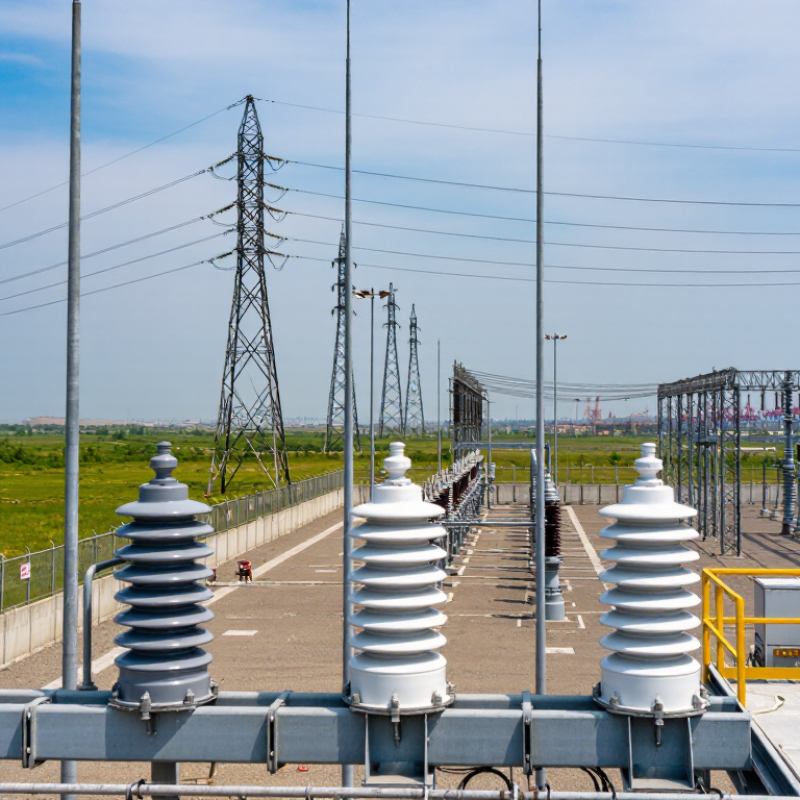
7 Lightning Arrester Buying Tips for Global Buyers

Define the Lightning Arrester’s Protection Requirements

Before comparing prices, define what the lightning arrester must protect. Start with system nominal voltage and highest continuous operating voltage, not the nameplate alone. An arrester rated too low may overheat during normal faults. One rated too high may respond too slowly to damaging surges. In field assessments, I record phase-to-ground voltage, grounding method, fault duration, and transformer insulation level. Small omissions here can distort the entire selection.

Next, describe the surge environment. Is the installation near an overhead line, a substation entrance, a cable transition, or a coastal facility? Estimate lightning current exposure, switching surges, line length, and local thunderstorm frequency. Check discharge current, energy capability, protective level, and temporary overvoltage performance. A rural feeder may need different coordination from a compact industrial panel. Keep lead lengths short and straight. Long connections can add inductive voltage during a fast surge. Altitude, dust, salt, and temperature are easy to overlook.

Protection is also a coordination task. Compare residual voltage with the equipment’s impulse withstand level, leaving a practical margin. Verify clearances, grounding impedance, enclosure conditions, and inspection access. Request test records, applicable standards, production traceability, and clear installation limits from the supplier. Avoid vague claims such as “maximum protection.” That phrase sounds reassuring but defines little. My early specifications sometimes focused too much on peak current and too little on energy and temporary overvoltage. That mistake is worth revisiting before approval.

Choose the Correct Arrester Type and Voltage Rating

7 Lightning Arrester Buying Tips for Global Buyers

Choose the Correct Arrester Type and Voltage Rating

Tip: Start with the system, not the product catalogue. Metal-oxide arresters are widely used because they respond quickly without spark gaps. Distribution, intermediate, and station-class arresters suit different insulation levels and fault duties. Check the transformer location, available short-circuit current, installation height, and expected lightning exposure. A compact arrester may fit the pole but fail under severe temporary overvoltage. That detail is easy to miss.

Tip: Confirm both rated voltage and continuous operating voltage. Rated voltage describes a defined withstand condition, while MCOV, or Uc, indicates the voltage the arrester can tolerate continuously. Compare these values with the system’s line-to-ground voltage, grounding method, neutral shift, and switching events. Ungrounded or resistance-grounded networks often require careful temporary-overvoltage calculations. Do not select by nominal line voltage alone.

Tip: Match the arrester’s discharge capability with the site’s risk. Review nominal discharge current, pressure-relief performance, energy class, and protective level. IEC 60099-4 test evidence can support technical comparisons, but local grid rules still matter. Ask for routine and type-test documentation, clear dimensional drawings, and verified environmental ratings. Salt, dust, altitude, and repeated faults can change real performance. In practice, buyers sometimes focus on the lowest price and overlook cable lead length, which can reduce protection effectiveness. Rechecking the installation drawing is worthwhile.

Verify Standards, Testing, and Product Quality

7 Lightning Arrester Buying Tips for Global Buyers

Verify Standards, Testing, and Product Quality

A lightning arrester should match the electrical system, not only the catalog description. Check its continuous operating voltage, rated voltage, discharge current, and energy capability. Confirm the applicable standard, such as IEC 60099-4 or the required national equivalent. Standards matter. However, a printed standard number proves little without supporting records. Ask for type-test reports, routine-test procedures, and clear report dates. Verify the laboratory’s accreditation and test scope before accepting documents.

Examine the product itself. Zinc oxide varistors should have stable performance, consistent dimensions, and suitable sealing materials. Inspect porcelain or polymer housings for cracks, voids, and uneven surfaces. Tip three is to review production traceability, including batch numbers and raw-material records. Tip four is to request routine-test results for the exact shipment. Tip five is to compare the arrester’s pressure-relief design with local fault levels. A lower price can hide weaker thermal protection.

Use an independent inspection when the project is critical. Ask inspectors to photograph nameplates, terminal fittings, packaging, and moisture barriers. Tip six is to confirm storage and transport requirements, especially for humid or coastal routes. Tip seven is to check warranty terms, replacement procedures, and technical support in writing. A perfect report still cannot replace installation knowledge. Many buyers overlook system grounding, cable length, or pollution severity. That mistake is easy to repeat. Review the complete application with a qualified engineer, and question any data that seems unusually polished or incomplete.

7 Lightning Arrester Buying Tips for Global Buyers - Verify Standards, Testing, and Product Quality

Tip Buying Dimension What to Verify Relevant Standard or Test Reference Practical Acceptance Evidence Why It Matters
1 Confirm the electrical rating Check the system maximum continuous operating voltage, rated voltage, temporary overvoltage conditions, and required nominal discharge current. Do not select an arrester by system voltage alone. IEC 60099-4 or IEEE C62.11; project-specific utility or grid specifications where applicable. Approved datasheet showing MCOV, rated voltage, nominal discharge current, residual voltage, and temporary overvoltage capability. Incorrect voltage selection can cause excessive leakage, thermal instability, or inadequate protection.
2 Verify international standards compliance Ensure the product standard is clearly identified and that the tested configuration matches the offered design, including housing, grading components, disconnectors, and terminals. IEC 60099-4 for metal-oxide surge arresters without gaps; IEEE C62.11 for metal-oxide surge arresters for AC power circuits. Valid type-test report, certificate of conformity, standard edition, laboratory identification, test date, and product configuration reference. Standards verification improves technical comparability and reduces the risk of accepting an untested design.
3 Review type and routine testing Distinguish between design or type tests, routine tests performed on every unit, and sample tests performed on selected units. Confirm test limits and acceptance criteria. IEC 60099-4 test categories include insulation withstand, residual voltage, operating duty, thermal stability, and environmental or housing tests. Signed routine-test report linked to the serial number or production batch, plus an independent type-test report for the design family. Type tests validate the design; routine tests help confirm that each delivered unit was manufactured correctly.
4 Evaluate energy and thermal performance Compare nominal discharge current, line discharge capability, high-current impulse capability, energy withstand, and thermal recovery after temporary overvoltage. Applicable impulse and operating-duty tests in IEC 60099-4 or IEEE C62.11; use the project short-circuit and fault-duration requirements. Test curves or reports showing residual voltage and thermal stability under the specified current, energy, and temporary overvoltage conditions. Higher fault energy and repeated surge exposure require an arrester with adequate energy absorption and heat dissipation.
5 Check housing and environmental suitability Assess housing material, creepage distance, pollution level, altitude, ultraviolet exposure, humidity, salt contamination, temperature range, and mechanical loading. IEC 60099-4 environmental and housing requirements; IEC 60507 may be relevant for artificial pollution testing of outdoor high-voltage insulators. Dimension drawings with creepage distance, material data, environmental test evidence, altitude correction statement, and declared operating temperature range. Surface contamination and weather exposure can increase leakage current and reduce insulation reliability.
6 Inspect manufacturing quality and traceability Review process controls for zinc-oxide varistors, sealing, pressure-relief devices, housing assembly, torque control, and final inspection. ISO 9001 quality-management certification can support process control, but it does not replace product-performance testing. Material certificates, inspection and test plan, calibration records, batch or serial-number traceability, nonconformance procedure, and warranty terms. Traceability helps identify production issues and supports warranty, maintenance, and failure-investigation activities.
7 Assess installation, coordination, and lifecycle support Confirm terminal type, mounting arrangement, lead-length limits, line-to-ground and phase-to-phase application, disconnector operation, spare parts, and technical support. IEC 60099-5 selection and application guidance; installation requirements from the project protection and insulation-coordination study. Installation manual, dimensional drawing, wiring or mounting diagram, coordination calculation, maintenance instructions, and replacement-part list. Short, correctly routed connections and coordinated protection reduce the voltage appearing across protected equipment.

Note: Final selection should be based on the installation’s insulation-coordination study, system fault conditions, environmental profile, and the latest applicable project specifications.

Evaluate Suppliers, Pricing, and Total Ownership Costs

Global buyers should evaluate a lightning arrester supplier beyond the product catalogue. Request factory certificates, inspection records, and recent export references. Ask for evidence. Confirm testing follows recognized standards, such as IEC 60099-4, and matches your system voltage and environmental conditions. A capable supplier should explain discharge ratings, housing materials, sealing methods, and expected service life clearly. Vague answers create future costs.

Compare quotations line by line, not by unit price alone. Check whether testing, packaging, documentation, spare parts, and delivery insurance are included. Cheap is rarely cheap. One overlooked detail can be a different connector, weaker corrosion protection, or an unsuitable mounting arrangement. Ask suppliers to provide drawings and a sample inspection plan before approving a purchase. Payment terms, production capacity, lead time, and after-sales response also reveal supplier reliability.

Calculate total ownership cost over the arrester’s working life. Include installation labor, inspection access, replacement intervals, shipping, storage, downtime, and disposal. A higher initial price may be reasonable if it offers better sealing and stable performance in humid or coastal locations. Still, do not accept durability claims without test data or traceable production records. I have seen buyers overvalue attractive warranties while ignoring difficult replacement access. That decision looked efficient on paper, but maintenance crews paid for it later. Keep a written comparison matrix, and record every assumption before selecting the supplier.

Plan for Installation, Maintenance, and Global Logistics

A lightning arrester can fail before service begins if installation details are ignored. Global buyers should confirm system voltage, frequency, grounding design, and available mounting space. Check the arrester’s discharge rating and temporary overvoltage performance. These figures must match the network, not just the purchase request.

Measure cable routes before ordering. Short, straight connections reduce inductive voltage during a surge. Leave safe clearance from walls, doors, and nearby metalwork. Confirm terminal sizes and tightening torque with the supplier’s technical documents. Installation crews also need clear diagrams and inspection points. Small details matter.

Maintenance planning should include visual checks, leakage-current monitoring, and replacement procedures. Coastal sites may need stronger corrosion protection. Dusty substations require more frequent cleaning. Keep inspection records with dates, readings, and weather conditions. I once underestimated cabinet humidity during a rainy-season shipment. That assumption was wrong. Add moisture barriers, desiccant packs, and shock indicators when practical.

Global logistics needs equal attention. Confirm packing dimensions, gross weight, lifting points, and storage limits before dispatch. Request accurate commercial invoices, packing lists, certificates, and product classifications. Verify destination requirements with a qualified customs professional. Use sealed packaging for long sea routes. Keep critical spare units in dry, accessible storage. A low purchase price means little when missing documents delay commissioning.

7 Lightning Arrester Buying Tips for Global Buyers

Plan for installation, maintenance, and global logistics before placing an order.

The chart uses a practical 1–5 planning-priority score for a global procurement checklist. Electrical coordination, installation requirements, maintenance documentation, and export readiness should be reviewed together rather than treated as separate purchasing tasks.