Skip to content

7 Tips for Buying a Single Jersey Machine

Choosing a single Jersey machine is a production decision, not just a search for speed or a low purchase price. The right model should match your fabrics, yarns, order sizes, and operators’ experience. A machine built for basic cotton jersey may not suit frequent yarn changes or finer gauges. Small details matter: needle wear, oiling access, and how quickly technicians can diagnose a fault.

Industry data helps frame the decision. Textile Exchange’s Materials Market Report 2024 estimates that global fiber production reached 124 million tonnes in 2023, up from 116 million in 2022. That growth does not prove demand for any one fabric, but it highlights why mills need to check which yarns and constructions their customers actually require. ITMF’s International Textile Machinery Shipment Statistics tracks global deliveries of textile machinery, including circular knitting equipment. It offers useful market context, not a guarantee that a particular model will hold its value.

Before requesting quotations, define your target fabrics, expected daily output, available floor space, and maintenance capacity. Then compare gauge, cylinder diameter, feeder count, control systems, spare-parts access, and energy use. Ask suppliers to demonstrate your own yarn and fabric specification, not only a polished sample. A smooth showroom run can hide setup problems. I would also question claims that promise maximum output without naming the fabric, yarn, and operating conditions. No checklist removes every risk. The following seven tips can help buyers ask sharper questions and choose a machine that fits real production needs.
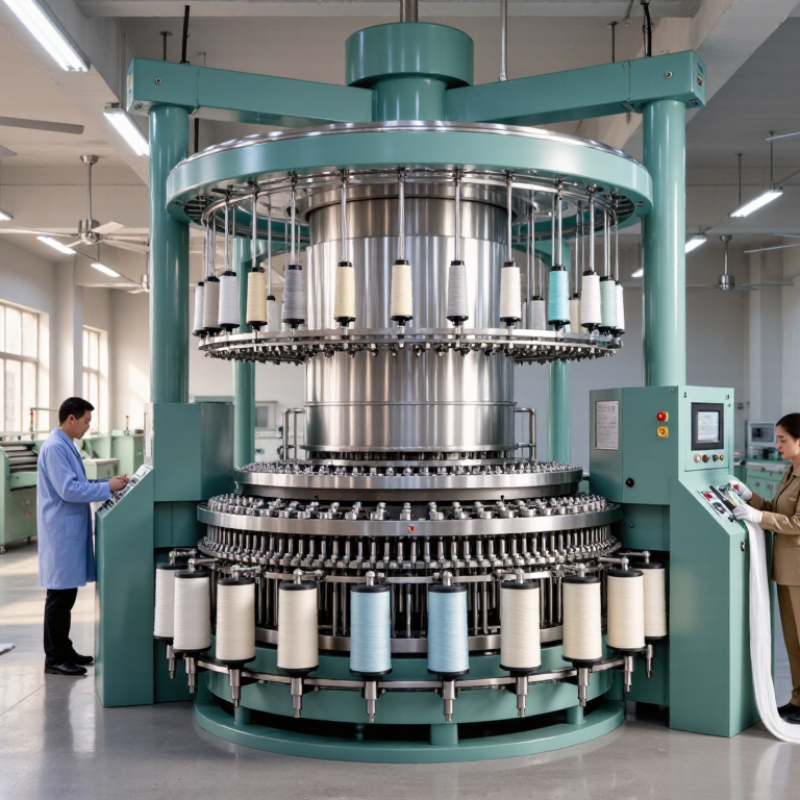
7 Tips for Buying a Single Jersey Machine

Define Your Production Needs and Target Fabric Specifications

Before comparing single jersey machines, write down what you need to produce. Specify fabric types, expected monthly output, working width, and the range of fabric weights you sell. A machine suited to lightweight T-shirts may not deliver the heavier hand feel required for other garments. Be precise. “Standard fabric” is not a useful specification.

Record target GSM, finished width, yarn count, and stitch length for each fabric. Include fiber content and any planned elastane use, since these can affect feeding and fabric behavior. Gauge and cylinder diameter also matter: they influence stitch formation and the width or weight range a machine can handle. Ask for test fabric made with yarn similar to yours, then measure it after the same finishing process used in production. Small changes in stitch length can shift both GSM and stretch. That detail is easy to underestimate.

Match the machine’s feeders and operating speed to realistic order volumes, not the best-case figure in a sales sheet. Check how quickly operators can change settings and how consistently the machine holds them across a full roll. Keep a sample and its settings for comparison. It is not foolproof; yarn lots and finishing conditions can still change the result. Revise the specification after trial runs, even if that means admitting your first estimate was off.

Compare Machine Gauge, Diameter, Speed, and Control Features

Gauge, diameter, speed, and controls should be compared as a working set. Gauge means the number of needles per inch, and it affects stitch density and yarn compatibility. Ask for a fabric swatch knitted at your intended settings. A dense-looking sample may still feel too stiff after finishing. Diameter sets the tube’s circumference and helps determine usable fabric width. Match it to your product plan, not just the space available on the factory floor. Small details matter.

Do not judge speed by the maximum revolutions per minute alone. Compare output using the same yarn, gauge, diameter, and stitch length, then ask how often operators must stop for adjustments. ITMF’s 46th International Textile Machinery Shipment Statistics reported about 26,000 large circular knitting machines shipped in 2022, a 16% decrease from 2021. That figure describes market shipments, not machine performance, but it shows why buyers should check current service and parts support. Request a production trial with a realistic order, not a brief demonstration.

Control features can reduce avoidable downtime. Check whether the machine records faults, monitors yarn breaks, and lets operators adjust stitch settings clearly. Test the display with gloves on, and ask how settings are backed up after a power interruption. A useful comparison sheet should include actual fabric output, setup time, and rejected rolls. One imperfect point: suppliers may report efficiency under different conditions, so figures are not always comparable. Ask for the test conditions in writing.

Check Fabric Quality, Yarn Compatibility, and Operating Efficiency

A single jersey machine should be judged by its fabric, not just its catalogue speed. Ask for a sample knitted with your intended yarn and gauge. Textile Exchange’s Materials Market Report 2024 estimates that global fibre production reached 124 million tonnes in 2023. That variety matters: cotton, viscose, and polyester can behave differently under tension. Check the machine’s recommended yarn counts, needle setup, and feeder range against your actual purchasing plan. Feel the fabric. Look for uneven loops, barre, curling edges, and thin spots under consistent lighting.

ITMF’s International Textile Machinery Shipment Statistics 2022 reported that shipments of large circular knitting machines fell 31% to about 19,000 units in 2022. This figure does not predict which machine will suit your mill, but it highlights the value of checking operating needs before purchase. Run the intended yarn through a trial, then record speed, stoppages, fabric weight, and waste. Measure loop length and inspect several rolls, not one attractive swatch. I would not treat a smooth sample as proof of stable production; that is an easy mistake. Ask operators to assess access for cleaning and needle changes, too. Small delays add up.

7 Tips for Buying a Single Jersey Machine - Check Fabric Quality, Yarn Compatibility, and Operating Efficiency

Buying Check What to Verify Practical Guidance Evidence to Request
1. Fabric quality Inspect a sample knitted on the proposed machine for holes, dropped stitches, barre, oil marks, and uneven appearance. Assess the fabric after relaxation and, where relevant, after the planned finishing process. Compare samples made with the same yarn and settings. A running trial, fabric swatches, inspection results, and recorded stitch-length and take-down settings.
2. Yarn compatibility Confirm the intended fiber, yarn count, yarn structure, package format, and yarn feed arrangement are suitable for the machine and gauge. There is no universal yarn-count range for every gauge. Check the machine’s knitting recommendations and run the actual production yarn before purchase. A yarn-and-gauge compatibility chart, a sample run using your yarn, and confirmation of the required creel and feeders.
3. Gauge and diameter Match needle gauge and cylinder diameter to the required fabric structure, width, and product range. Circular knitting machines are available in different gauges and diameters; confirm the exact configuration rather than relying on a general model description. A written machine specification listing gauge, diameter, needle count, and compatible fabric applications.
4. Stitch settings and fabric weight Check whether stitch length and yarn feed can be adjusted and repeated consistently. Fabric weight depends on factors including yarn, stitch length, machine settings, and finishing. Specify a target GSM and test it using an agreed sampling method. Trial-fabric GSM results, measurement method, and repeat samples produced at the same settings.
5. Operating efficiency Review stable running speed, stoppage frequency, changeover time, and the time needed for routine adjustments. Compare machines under the same yarn, fabric, speed, and trial duration. A rated maximum speed alone does not show typical production output. A production trial log showing running time, stoppage time, output, and causes of stops.
6. Controls and fault monitoring Check the control interface, speed adjustment, safety interlocks, and available yarn-break or fault-stop functions. Operate the controls during a demonstration and confirm that alarms are clear and relevant to the intended production process. A live demonstration, operator instructions, and a list of included monitoring and safety functions.
7. Maintenance and total cost Review access to wear parts, lubrication requirements, service support, installation needs, and expected utility consumption. Compare the full cost of ownership, including tooling, spare parts, training, maintenance, and electricity—not purchase price alone. A maintenance schedule, spare-parts list, training plan, installation requirements, and written service terms.

Note: Specifications and production results vary with machine configuration, yarn, fabric construction, settings, and finishing. Confirm suitability with a documented trial using the intended production materials.

Evaluate Supplier Reliability, Technical Support, and Spare Parts

Before buying a single jersey machine, assess the supplier’s support process, not just its quoted speed. Ask who handles a breakdown, how quickly a technician can respond, and whether remote troubleshooting is available. Request these details in writing. A friendly sales call is not a service plan.

The ITMF’s 2023 International Textile Machinery Shipment Statistics reported a 19% decline in global shipments of new short-staple spindles. That figure does not measure circular knitting machines, but it does show that textile machinery markets can shift sharply. Check whether the supplier can provide service references for comparable knitting equipment, installation records, and clear training arrangements. Ask to speak with a customer who has operated a similar machine for at least a year. One awkward question now can prevent a longer stoppage later.

Request a recommended spare-parts list with part numbers, prices, and realistic delivery times. Focus on items that can halt production, such as needles, sinkers, belts, and sensors. Confirm which parts are stocked locally and which ship from overseas. A small box of critical spares beside the machine may be more useful than a broad promise of support. I would also ask how long parts remain available; buyers sometimes overlook this until a component fails. Keep the answer on record.

7 Tips for Buying a Single Jersey Machine

Evaluate supplier reliability, technical support, and spare parts before making a purchase.

Use these suggested checklist priorities to guide supplier evaluation. Scores are illustrative ratings on a 1–5 scale, not measured supplier-performance data.

Inspect the Machine and Calculate Its Total Cost of Ownership

Tip: Inspect the single jersey machine in person, not only through photographs. Check the frame for cracks, rust, loose fasteners, and signs of oil leakage. Examine the cylinder, needles, sinkers, and cams for wear or damage. Small defects matter. Ask for maintenance records and confirm that replacement parts are available. A tidy exterior is reassuring, but it proves little about internal condition.

Tip: Request a supervised test run using yarn similar to your planned production material. Watch for uneven rotation, unusual noise, vibration, and frequent yarn breaks. Then inspect the knitted fabric under steady lighting. Look for dropped stitches, barré, or inconsistent loops across the width. Record the machine’s speed and settings during the test; results without those details are hard to compare. This step can feel slow. It is worth the time.

Tip: Calculate total cost of ownership, not just the purchase price. Include transport, installation, electrical upgrades, operator training, routine servicing, needles, lubricants, and expected downtime. Ask which parts need regular replacement and estimate their annual cost using maintenance records where possible. Compare that figure with realistic production output, not the seller’s best-case estimate. Leave room for surprises; even careful budgets can miss a repair or a delayed part.