Skip to content

7 Tips for Choosing the Best Brushless Motor

Choosing the right brushless motor can make a machine quieter, more efficient, and easier to maintain. But “best” depends on the job. A motor built for a small drone may be a poor fit for a workshop tool or an electric pump. The label alone tells you little.

Start with the actual load. Note the required speed, torque, operating time, and available power supply. Then compare motor size, controller compatibility, cooling needs, and environmental protection. Check the manufacturer’s data sheet, not just a product headline. Small details matter. A shaft diameter mismatch can stop an installation before it begins.

These seven tips will help you evaluate brushless motor options with practical criteria rather than guesswork. They cover application requirements, electrical ratings, torque and speed, motor dimensions, controller pairing, heat management, and supplier support. A higher efficiency rating may reduce energy use, but it does not guarantee better performance in every setup. Real operating conditions can be messy. Dust, repeated starts, and limited airflow may change the result. Even a carefully chosen motor can disappoint when its controller or load is poorly matched. When specifications are incomplete, ask the supplier for clarification or test a sample under representative conditions. I would not treat any checklist as a substitute for measurement. Use it to narrow choices, then verify the fit with your equipment and duty cycle. That extra check can prevent noise, overheating, and avoidable replacement costs.
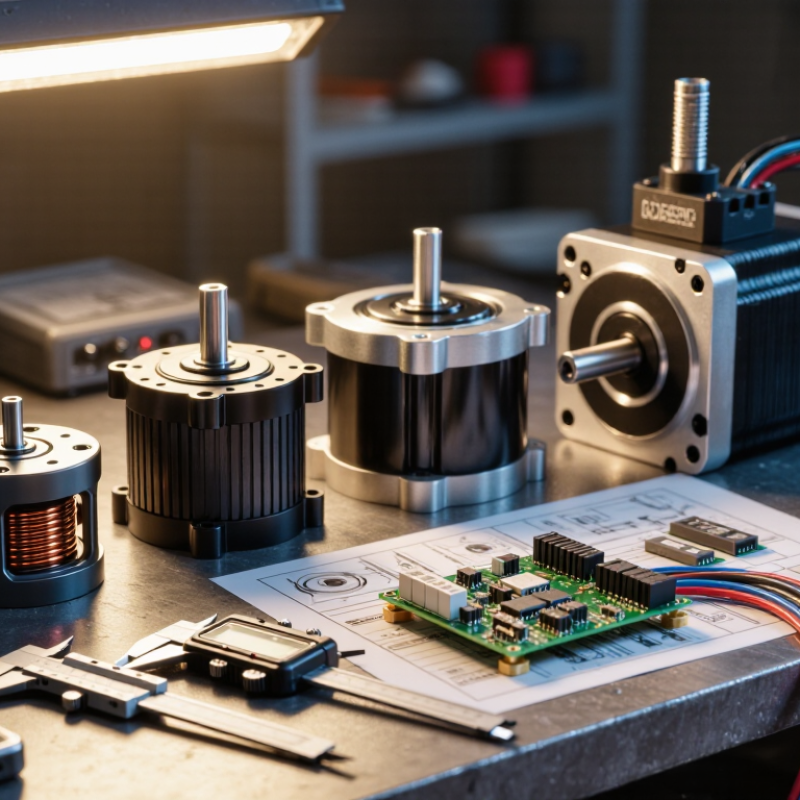
7 Tips for Choosing the Best Brushless Motor

Understand How Brushless Motors Work

A brushless motor creates rotation through controlled magnetic forces. Its stator contains copper windings, while permanent magnets sit on the rotor. An electronic controller sends current through the windings in sequence, shifting the magnetic field and pulling the rotor around. No brushes touch the moving parts, so there is less friction from brush wear. The controller still needs accurate timing. Some motors use position sensors; sensorless models estimate rotor position from electrical signals, and can feel less smooth at very low speeds.

Tip: Match the controller to the motor’s voltage and current limits. A mismatch can cause poor performance or overheating. Heat matters. Check the motor’s stated operating range, then consider how it will be cooled inside your device. A motor enclosed in a warm housing may need more airflow than one mounted in open space.

Tip: Choose for the job’s actual speed and load, not just a high power rating. A small fan and a wheeled machine need different torque and speed characteristics. Confirm that the controller supports the motor’s sensor type, if applicable. I’ve seen this detail overlooked, and it is an easy mistake to make. Also consider how often the motor starts and stops; repeated acceleration can raise heat and affect efficiency. A little extra margin is useful, but oversized components can add cost and weight without helping.

Define the Motor’s Application and Operating Conditions

Before comparing brushless motors, define the job the motor must perform. Record the required speed, continuous and peak torque, load inertia, and how often the system starts, stops, or reverses. A small fan running steadily has different needs from a conveyor lifting heavy items in short bursts. Small details matter. Heat changes everything.

Describe the operating environment, too. Note ambient temperature, dust or moisture exposure, available cooling, mounting position, and supply voltage. These conditions affect thermal limits, protection needs, and achievable performance. Estimate the load honestly; a motor sized only for average torque may struggle during startup or sudden changes. Check the controller and power supply as part of the system, since their limits can restrict motor output. Measure, don’t guess. A bench test may not reflect a warm enclosure or a real load. Treat early calculations as estimates, then revise them using measured current, temperature, and speed under representative conditions. The first specification is rarely perfect.

Compare Power, Speed, Torque, and Efficiency Ratings

Compare motor ratings at the voltage and load you will actually use. A power figure in watts describes electrical input or mechanical output, depending on the specification. Check which one the datasheet reports. A high wattage can help sustain demanding work, but it may also mean more heat, battery drain, and cooling needs.

Speed, measured in revolutions per minute, tells you how quickly the shaft turns. Pay attention to whether the figure is unloaded or measured under load. An unloaded motor may spin fast on paper, then slow noticeably when driving a fan or wheel. Torque describes turning force; it matters when starting a heavy load or resisting sudden changes. Numbers need context. Compare continuous torque with continuous torque, not a brief peak rating.

Efficiency shows how much electrical input becomes useful mechanical output. Look for efficiency across the operating range, not just one impressive point. A motor running near its best-efficiency range may stay cooler and extend battery runtime. Heat matters too. In practice, matching these ratings takes some judgment: real mounting, airflow, and duty cycles rarely match test conditions exactly. I would treat any single rating as a starting point, then check the expected load and available cooling before choosing.

Check Size, Mounting, Controller, and Cooling Compatibility

A brushless motor can fit the power target and still fail to fit the machine. Check the body diameter, overall length, shaft diameter, and usable shaft length against the available space. Compare the mounting face, bolt pattern, and pilot diameter, too. A few millimeters can shift a coupling or leave fasteners unreachable. The U.S. Department of Energy’s 2014 sourcebook, Improving Motor and Drive System Performance, estimates that motor-driven systems use about 68% of U.S. manufacturing electricity. That figure makes efficiency worth attention, but it does not replace checking your actual installation.

Match the motor to its controller, not just its rated voltage. Confirm voltage range, continuous and peak current, commutation method, and required sensor feedback. Check connector types and control signals before ordering; a controller that powers the motor may still deliver poor speed control. I would verify the controller’s current limit against the motor’s specifications. It is easy to overlook.

Cooling needs the same careful check. Compare the motor’s thermal limits with ambient temperature, duty cycle, and available airflow. A fan-cooled unit inside a tight enclosure may overheat when dust blocks its vents. A sealed housing may protect against debris but restrict cooling. Leave room around the motor, route cables clear of hot surfaces, and confirm whether the installation needs forced airflow. Catalog ratings assume conditions that your machine may not provide. I’d check those assumptions twice.

Evaluate Build Quality, Reliability, and Overall Cost

A brushless motor may look sturdy in a product photo, but small construction details tell a more useful story. Check whether the housing feels rigid and whether the mounting holes are cleanly finished. Look for secure connectors, neatly routed wires, and clear specifications for voltage, current, and operating temperature. These details can reveal how carefully the motor was designed. Small things matter.

Reliability depends on more than the motor itself. Consider the bearings, cooling path, and protection against dust or moisture if your application needs them. Ask how the motor behaves under the load you expect, not just at no load. A motor that runs smoothly on a workbench may heat up during sustained use. That difference is easy to overlook.

Compare the full cost, including a compatible controller, installation parts, and likely maintenance. A lower purchase price can be reasonable, but it may not mean lower ownership cost. On the other hand, paying more does not guarantee better performance. Match the motor’s rated output and duty cycle to your actual task, then leave some margin for demanding conditions. The perfect choice is rarely obvious; a specification sheet can still leave questions.

7 Tips for Choosing the Best Brushless Motor - Evaluate Build Quality, Reliability, and Overall Cost

Tip What to Evaluate Practical Checks Why It Matters Cost Consideration
1. Inspect build quality Housing, shaft, connectors, seals, and assembly finish. Check for secure mounting points, a straight shaft, clean connector fit, and an enclosure suited to the installation environment. Solid construction helps the motor withstand vibration, handling, and operating conditions. Compare purchase price with expected service life and the cost of replacement or installation labor.
2. Match ratings to the application Voltage, current, speed, torque, and continuous versus peak ratings. Compare the motor’s rated operating points with the load and supply. Confirm whether peak ratings are time-limited and what cooling conditions they assume. A motor that is undersized may overheat or fail to meet demand; an oversized one may add unnecessary mass and cost. Include any required controller, power supply, wiring, and cooling hardware in the comparison.
3. Check thermal performance Temperature limits, cooling method, ambient temperature, and duty cycle. Review the manufacturer’s thermal data for the intended speed and load. Allow for restricted airflow, frequent starts, or elevated ambient temperatures. Winding and bearing temperatures affect insulation life and overall reliability. Account for fans, heatsinks, ventilation, or derating if the installation cannot provide the specified cooling.
4. Evaluate bearings and mechanical fit Bearing type, shaft dimensions, allowable loads, mounting pattern, and alignment needs. Verify shaft diameter and length, mounting dimensions, and permitted radial and axial loads against the driven equipment. Incorrect loading or misalignment can increase noise, vibration, and bearing wear. Consider adapters, couplings, mounting changes, and the availability and replacement interval of service parts.
5. Compare efficiency at real operating points Efficiency across the speed-and-load range, not just a single peak figure. Use performance curves or measured data that match the planned operating speed, torque, controller, and supply conditions. Efficiency varies with operating conditions, and electrical losses become heat inside the system. Estimate energy cost over expected operating hours; a higher initial price may be offset by lower energy use in frequent or continuous operation.
6. Look for evidence of reliability Test information, operating limits, protection features, documentation, and warranty terms. Ask how temperature, vibration, overload, and environmental limits were assessed. Check whether the controller provides appropriate overcurrent or thermal protection. Clear specifications and suitable protections make performance easier to validate and help reduce avoidable failures. Review warranty coverage, repair options, lead times, and the potential cost of downtime rather than relying on warranty length alone.
7. Calculate total cost of ownership Purchase price plus integration, energy, maintenance, replacement, and downtime costs. Compare options over the same expected service period and use realistic operating hours, load profile, electricity cost, and maintenance assumptions. The lowest purchase price does not necessarily produce the lowest lifetime cost. Use a consistent estimate: initial hardware and integration + operating energy + planned service + expected downtime or replacement.

Article Source: