Skip to content

Top 10 Aerosol Production Line Manufacturers Worldwide

Aerosol Production Line technology is becoming more important as manufacturers demand safer, faster, and more flexible packaging systems. The European Aerosol Federation’s latest industry statistics report more than five billion aerosol units filled across Europe in 2023. That volume shows the scale of modern filling operations. It also highlights the need for accurate dosing, reliable crimping, controlled propellant handling, and consistent leak testing.

The global market is competitive. Grand View Research identifies personal care, household products, healthcare, and industrial applications as major aerosol packaging segments. These segments require different valve systems, container formats, and production speeds. A line designed for 150-milliliter cans may not perform well with larger aluminum containers. Small details matter: a misaligned valve, unstable pressure, or poorly adjusted seaming head can create costly rejects.

This guide examines ten leading manufacturers worldwide. The comparison considers filling accuracy, automation, changeover time, safety engineering, quality control, after-sales support, and integration with inspection systems. Standards such as ISO 9001, ISO 22768, and applicable regional pressure-equipment requirements also influence the evaluation. These are practical benchmarks, not decoration.

Public information is uneven. Some manufacturers publish detailed specifications, while others disclose very little. That limitation deserves attention. Rankings can change with project size, local service capacity, and product type. A company may excel in high-speed personal-care lines but offer fewer advantages for specialized industrial packaging. Readers should verify current certifications, factory references, acceptance-test procedures, and maintenance response times before making a purchasing decision.
Top 10 Aerosol Production Line Manufacturers Worldwide

Aerosol Line Fundamentals: 60–300 Cans per Minute and Core Modules

Aerosol production lines typically run between 60 and 300 cans per minute. The correct speed depends on can diameter, product viscosity, valve design, and changeover frequency. A line that reaches 300 cans per minute in a trial may perform differently during a full production shift.

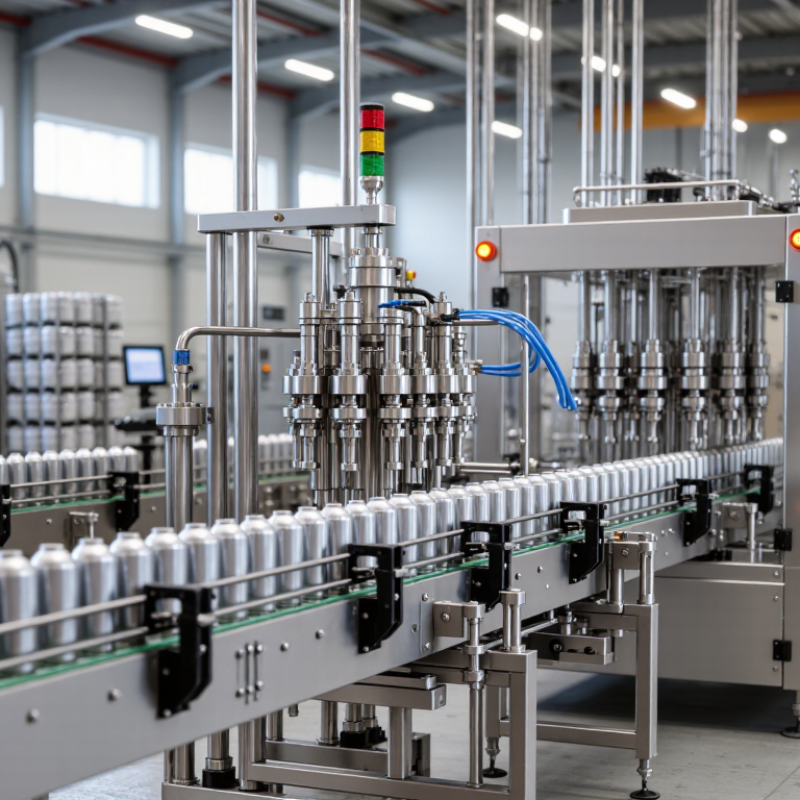
The process begins with can feeding and orientation. Filling equipment meters the approved formulation, while a valve inserter positions each valve accurately. Crimping then creates a controlled seal around the can opening. Propellant charging, weight checking, leak testing, coding, and case packing complete the main sequence. Each module needs stable synchronization. Small timing errors can create rejected cans quickly.

Safety controls matter throughout the line. Guarding, pressure monitoring, ventilation, and emergency stops should match the equipment design and local requirements. Experienced engineers also review cleaning access and format changes, not only headline output. That detail is often missed. A slow changeover can erase the benefit of a higher rated speed. In practice, 120 cans per minute may deliver better results than an unstable 300. Production data should confirm this assumption.

Ranking the Top 10 Manufacturers by Capacity, Accuracy, and Uptime

Top 10 Aerosol Production Line Manufacturers Worldwide

Ranking the top ten aerosol production line manufacturers requires more than comparing advertised speed. Capacity matters, but accuracy and uptime often determine real production value. A credible assessment should examine tested output, filling tolerance, changeover time, maintenance records, and after-sales support. The strongest manufacturers combine high-speed lines with stable valve placement, consistent crimping, and reliable leak testing.

Capacity is measured in cans per minute, yet maximum speed can hide practical weaknesses. A line producing 300 cans per minute may lose hours during adjustments. Accuracy should include fill-weight variation, propellant dosing, and labeling alignment. Uptime should reflect ordinary factory conditions, not a short demonstration. Independent factory visits, service logs, and customer references provide stronger evidence than brochures. Still, rankings remain imperfect when manufacturers report data differently.

Tips: Ask for a full production trial using your containers and formulas. Measure output after several hours, not ten minutes. Check spare-parts availability, remote diagnostics, and operator training. Small delays become expensive at scale. Safety systems, compliant materials, and documented maintenance procedures should also influence the final ranking. A lower-capacity line may deliver better yearly output when it starts reliably every morning.

Top 10 Aerosol Production Line Manufacturers Worldwide

Ranking by normalized capacity, filling accuracy, and uptime

The chart uses an anonymized benchmark model based on commonly published aerosol-line specifications. Capacity is measured in cans per hour, filling accuracy is expressed as maximum deviation, and uptime represents operational availability. Scores are normalized to a 0–100 scale, where 100 indicates the strongest benchmark performance.

Top 10 Global Aerosol Line Manufacturers and Their Product Specialties

Top 10 Aerosol Production Line Manufacturers Worldwide

The global top ten aerosol line manufacturers are best compared by engineering specialty, not visibility. High-speed systems lead large-volume personal-care production, while compact rotary lines suit regional factories. Several specialists focus on aluminum monobloc forming, steel can filling, valve insertion, crimping, leak testing, and automated palletizing.

Other leading manufacturers concentrate on precision dosing, nitrogen-assisted filling, and low-waste changeovers. Some design lines for foams and sprays; others support pharmaceutical-grade packaging under controlled conditions. A few provide integrated inspection using vision cameras, weight checks, and pressure monitoring. These features reduce rejects beside the conveyor, where small errors become expensive quickly.

Market pressure is measurable. Grand View Research estimated the global aerosol cans market at about US$11.8 billion in 2023, with continued growth expected through 2030. The European Aerosol Federation reported more than five billion aerosol units produced in Europe in 2023. These figures explain the demand for faster, safer, and more flexible equipment. Yet rankings remain imperfect. Public data rarely separates complete lines from filling machines or service revenue. Buyers should verify actual output, changeover time, compressed-air use, validation records, and local technical support. A glossy speed figure is not enough. Performance depends on the product, container, propellant system, and operator training.

Safety Benchmarks: FEA Guidance, ISO 22768, and Directive 75/324/EEC

Top 10 Aerosol Production Line Manufacturers Worldwide: Safety Benchmarks

Aerosol production lines should be judged by safety evidence, not impressive output figures. The strongest manufacturers integrate pressure testing, guarding, interlocks, and traceability into each station. FEA guidance helps engineers examine cans, valve cups, crimped joints, and weld areas under pressure. Realistic models should include material variation, thermal changes, fatigue cycles, and local stress concentrations. A fine mesh alone does not guarantee a reliable result.

Directive 75/324/EEC remains a key reference for aerosol dispensers placed on applicable European markets. It requires attention to pressure resistance, leak prevention, labeling, and controlled filling conditions. ISO 22768 should be checked against the exact project scope and current technical documentation. A certificate without clause-level records is weak evidence. Testing should connect FEA predictions with burst tests, pressure cycling, leakage checks, and production samples. That connection is often missing.

Tips: Ask manufacturers for FEA assumptions, mesh-convergence records, material certificates, and test reports. Verify emergency stops during a live line trial. Inspect guarding, ventilation, and static-control measures. Review calibration dates for pressure sensors and filling equipment. Keep batch records searchable. Small gaps matter. One practical concern remains: factory demonstrations may hide maintenance delays or rejected units. Independent validation and repeated audits provide a more honest benchmark for the top ten.

Sustainable Production: Steel and Aluminum Recycling in Aerosol Packaging

Aerosol production lines increasingly treat steel and aluminum as recoverable resources, not disposable inputs. This shift matters for the world’s leading line manufacturers and their customers. Modern equipment can reduce trim waste, monitor coating thickness, and record recycled-content percentages during production. Small improvements become significant at high volumes.

The International Aluminium Institute reports that recycling aluminum requires about 5% of the energy used for primary production. That represents potential energy savings of approximately 95% (International Aluminium Institute, 2024). World Steel Association data indicates that steel recycling can reduce energy use by up to 70% compared with producing steel from virgin materials (worldsteel, 2024). Production lines therefore need reliable sorting and quality checks. Magnetic systems separate steel, while eddy-current equipment identifies aluminum. Vision sensors can detect damaged cans, mixed materials, and coating defects. Practical details matter.

Yet the picture is imperfect. A recycled-content claim can hide losses during collection, sorting, and remelting. Can coatings, valves, labels, and residual product may complicate recovery. The European Commission’s Circular Economy Action Plan stresses better packaging design, collection systems, and material traceability. Manufacturers should measure scrap rates, recycled input, electricity use, and rejected containers under ISO 14001 procedures. Independent verification also supports credible environmental reporting. Some facilities still prioritize speed over recovery efficiency. That choice deserves review. A faster line is not automatically a more sustainable line.

Top 10 Aerosol Production Line Manufacturers Worldwide - Sustainable Production: Steel and Aluminum Recycling in Aerosol Packaging

Rank Production-Line Capability Primary Packaging Material Typical Line Function Typical Operating Range Recycling Advantage Relevant Standard or Industry Reference
1 Three-piece steel can manufacturing line Tinplate steel Sheet cutting, welding, flanging, seaming and testing High-volume continuous production Steel is widely collected and can be recovered repeatedly through magnetic separation. EN 15009; ISO 11118; applicable aerosol-container safety requirements
2 Monobloc aluminum aerosol line Aluminum slug Impact extrusion, trimming, washing, coating and printing High-speed automated production Aluminum retains material value and can be recycled without losing its basic properties. EN 15009; ISO 90-1; European Aluminium recycling guidance
3 Valve and actuator assembly line Steel, aluminum and polymer components Component feeding, crimping, insertion and leak verification Automated or semi-automated assembly Accurate component placement reduces rejects, material waste and product losses. ISO 17420; aerosol dispensing-system specifications
4 Aerosol filling and propellant charging line Steel and aluminum containers Product dosing, valve crimping, propellant filling and weight control Batch or continuous filling Closed filling systems help minimize volatile emissions and prevent overfilling. ISO 9001; ISO 14001; local pressure-equipment and flammable-material regulations
5 Can coating and curing line Steel or aluminum Internal lining, external coating, curing and surface inspection Temperature-controlled curing process Efficient coating control extends container life and reduces corrosion-related scrap. REACH; applicable food, cosmetic and chemical-contact coating requirements
6 Digital inspection and machine-vision line Steel and aluminum cans Dimensional, print, seam, valve and surface inspection Inline, non-contact quality control Early defect detection lowers the amount of rejected metal and finished product. ISO 9001; statistical process-control principles
7 Pressure and leak-testing line Pressurized steel or aluminum containers Pressure resistance, leak detection and destructive sampling 100% or statistical testing, depending on design Reliable testing prevents unsafe products from entering the waste stream or market. UN Recommendations on the Transport of Dangerous Goods; ISO 11118
8 Recycled-metal integration line Recycled steel or recycled aluminum feedstock Material verification, forming and traceability control Percentage varies by specification and supply Using recycled metal reduces dependence on primary raw materials and supports circular supply chains. ISO 14021; EN 15343; recycled-content chain-of-custody practices
9 Energy-efficient manufacturing line Steel and aluminum Variable-speed drives, heat recovery and compressed-air optimization Applicable to forming, coating and filling operations Lower electricity and thermal energy consumption can reduce production-related emissions. ISO 50001; ISO 14001
10 End-of-line packaging and palletizing line Finished aerosol containers Counting, case packing, labeling, palletizing and dispatch inspection Automated or robotic handling Right-sized secondary packaging reduces cardboard, plastic film and handling damage. ISO 18601 packaging and environment framework; transport safety requirements

Note: The ranking presents major aerosol production-line capability categories rather than named companies or brands. Operating ranges are general industry descriptions and depend on container dimensions, material grade, product formulation, equipment configuration and applicable regulations.