Top 10 Cable Harness Manufacturers for Global Buyers
Choosing the right cable harness manufacturer can affect product safety, assembly speed, and long-term operating costs. Global buyers need more than attractive websites or low quotations. They need evidence of engineering capability, consistent quality, responsive communication, and dependable delivery. A strong supplier should understand wire specifications, terminal compatibility, shielding requirements, bend protection, and application-specific testing.
This guide presents ten manufacturers serving international markets. The evaluation considers production experience, design support, sample accuracy, quality systems, traceability, and export readiness. Relevant standards may include ISO 9001, IPC/WHMA-A-620, and IATF 16949, depending on the industry and project scope. Practical checks matter too. Inspectors may review crimp height, pull-force results, continuity records, labeling, and first-article samples before approving production.
No list is perfect. Supplier performance can change with new equipment, staff, materials, or customer demand. A factory with excellent automotive experience may not suit medical assemblies. A lower price may hide longer validation work. Buyers should confirm certifications directly, request current samples, and clarify minimum order quantities, tooling ownership, lead times, and warranty terms. Small details matter.
The manufacturers below are compared for real-world purchasing decisions, not promotional claims. Their capabilities, regional strengths, and potential limitations are considered together. This approach helps procurement teams reduce avoidable surprises while selecting a partner that matches their technical, commercial, and compliance requirements. The final choice should always follow documented due diligence and project-specific testing.
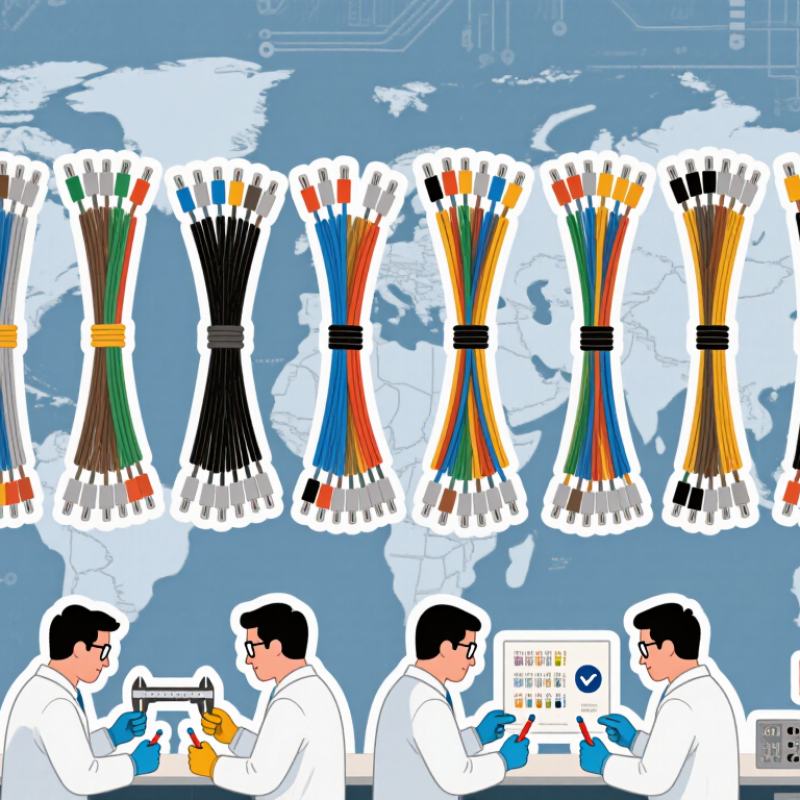
Scope and Market Scale: The Global Cable Harness Market Exceeds US$50B
The global cable harness market now exceeds US$50 billion, according to industry estimates covering automotive, industrial, aerospace, medical, and electronic equipment applications. The figure is substantial, but not perfectly clean. Research firms define “cable harness” differently, so market comparisons can shift by region and product type. Some reports include simple wire assemblies, while others count complex, tested systems.
Demand is rising with vehicle electrification, factory automation, renewable energy equipment, and data-center expansion. A modern harness may combine copper wires, terminals, shielding, seals, clips, and protective sleeving. Each part affects performance. Poor crimp height can create heat. Weak strain relief can cause early failure. Experienced manufacturers therefore use controlled drawings, validated tooling, continuity tests, insulation checks, and production traceability.
Global buyers should examine more than unit price. They should review conductor specifications, temperature ratings, ingress protection, testing records, and change-control procedures. Regional production capacity also matters when shipping delays affect assembly schedules. Certification evidence should match the final application, not merely the factory’s general capabilities. This is where supplier claims sometimes become too broad. A factory may produce high volumes, yet lack experience with low-volume, high-complexity harnesses. Buyers should request samples, inspection data, and realistic lead-time commitments before approving a wider program. The market is expanding quickly, but reliable supply still depends on disciplined engineering and honest communication.
Global buyer evaluation table covering market scope, applications, compliance requirements, and supplier capability indicators.
| No. | Evaluation Dimension | Data Point or Market Benchmark | Relevance for Global Buyers | Common Reference or Standard |
|---|---|---|---|---|
| 1 | Global Market Scope | Headline market scope: above US$50 billion, including automotive, industrial, aerospace, telecom, consumer electronics, medical, and energy applications. | Helps buyers understand the scale and diversity of the cable harness supply base. | Market estimates vary according to product definition, geography, and inclusion of wire assemblies. |
| 2 | Automotive Harness Capability | Automotive harness programs commonly require high-volume production, traceability, automated testing, and validated crimping processes. | Important for vehicle platforms, electric vehicles, battery systems, and advanced driver-assistance systems. | IATF 16949, APQP, PPAP, MSA, SPC, and IPC/WHMA-A-620. |
| 3 | Industrial and Machinery Applications | Typical products include control-cabinet wiring, sensor cables, motor cables, robotic assemblies, and machine-interface harnesses. | Buyers should assess current ratings, bending cycles, shielding, ingress protection, and service-life testing. | IPC/WHMA-A-620, IEC 60204-1, IEC 60529, and applicable equipment requirements. |
| 4 | Aerospace and Defense Readiness | These applications generally require lightweight construction, strict configuration control, documented workmanship, and extensive inspection records. | Useful for aircraft, avionics, defense electronics, and high-reliability systems where repairability and traceability are critical. | AS9100, IPC/WHMA-A-620, NASA-STD-8739.4, and applicable customer specifications. |
| 5 | Medical Device Harnesses | Medical cable assemblies may require controlled materials, biocompatibility assessment, clean manufacturing practices, and documented risk controls. | Relevant to diagnostic equipment, patient monitoring systems, surgical equipment, and laboratory instruments. | ISO 13485, ISO 14971, IEC 60601-1, and applicable regulatory requirements. |
| 6 | Electrical Testing Coverage | Standard verification may include continuity, short-circuit detection, insulation resistance, dielectric withstand, and pin-out testing. | Testing depth directly affects field reliability and reduces installation or service failures. | IPC/WHMA-A-620, customer test specifications, and product-specific validation plans. |
| 7 | Material and Environmental Compliance | International buyers commonly request documentation for restricted substances, chemical content, and conflict-mineral reporting. | Supports customs clearance, environmental declarations, and market access across major trading regions. | EU RoHS Directive, EU REACH Regulation, IEC 62474, and applicable local legislation. |
| 8 | Production and Quality Systems | Core supplier controls include incoming inspection, crimp-force monitoring, first-article inspection, process audits, nonconformance control, and corrective action. | Provides evidence that production quality can be maintained during volume increases and engineering changes. | ISO 9001; IATF 16949 for automotive suppliers; AS9100 for aerospace suppliers. |
| 9 | Customization and Engineering Support | Common engineering services include connector selection, wire-size calculation, routing design, overmolding, shielding, labeling, and prototype builds. | Reduces design-transfer risk and shortens the path from prototype approval to serial production. | Customer drawings, 3D CAD data, engineering change control, and IPC/WHMA-A-620 workmanship criteria. |
| 10 | Global Supply and Delivery Capability | Key indicators include multi-region sourcing, approved component alternatives, documented capacity planning, safety-stock policies, and export documentation. | Improves continuity of supply for global programs affected by component shortages, logistics disruption, or demand changes. | Supplier quality agreements, business continuity plans, delivery-performance KPIs, and origin documentation. |
Related Posts
-
What Are the 2026 Top Harness Cable Assembly Types?
-

5 Essential Reasons Your Business Needs a Reliable Cable Harness Supplier
-

The Ultimate Guide to Streamlining Your Harness Assembly Process for Maximum Efficiency
-

How to Optimize Your Electrical Harness Assembly for Maximum Efficiency
-
The Future of Cable and Harness Technology in Sustainable Energy Solutions
-
2026 How to Choose the Right Cable and Harness for Your Needs?