China’s Top 10 Microwave Oven Baffle Die Manufacturers deserve closer evaluation than a simple supplier ranking. A baffle die shapes the microwave cavity’s airflow and shielding components. Its accuracy affects fit, noise, durability, and assembly speed.
Fortune Business Insights valued the global microwave oven market at approximately US$10.65 billion in 2023. It projects continued growth through 2032. That expansion increases demand for stable stamping tools and repeatable production. Industry reports from Grand View Research also connect appliance manufacturing growth with automation and improved metal-forming efficiency. These figures provide context, but they do not prove every manufacturer’s capability.
Professor Taylan Altan, a leading authority on sheet-metal forming, has emphasized that “tooling is the heart of the forming process.” The statement fits this sector. A reliable Microwave Oven Baffle Die should hold tight dimensions across repeated cycles. It should also support clean edges, controlled springback, and practical maintenance. Look for evidence from CMM inspection, trial-stamping records, material certificates, and documented die-life testing.
Supplier claims can sound polished. Physical samples are more revealing. Examine a stamped baffle under workshop lighting. Check its flange consistency, burr level, and corner transitions. Ask whether the tool uses hardened inserts, guided components, or replaceable wear parts. These details expose engineering maturity.
A ranking can still miss important weaknesses. Export experience, response time, and after-sales support may matter as much as initial price. This guide compares China’s leading manufacturers through technical capability, production experience, quality control, customization, and reliability. The conclusions should be tested against current factory evidence.
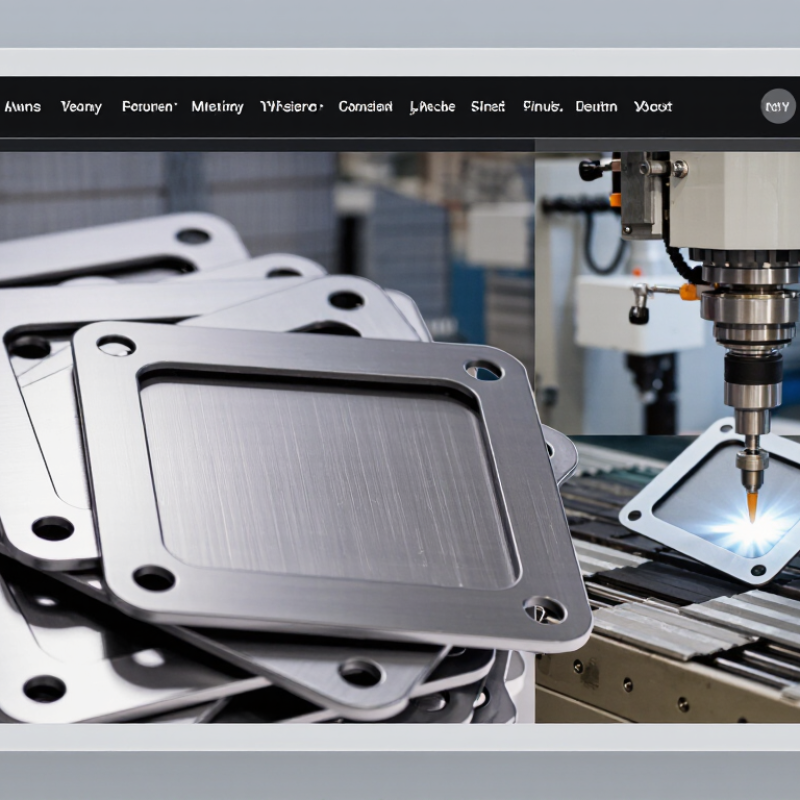
Microwave oven baffle dies form pressed metal parts that control airflow, shielding, or internal microwave movement. Their accuracy affects heating consistency, assembly fit, and long-term appliance reliability. A typical die includes a punch, die block, guide pillars, stripper plate, and replaceable forming inserts. Depending on production volume, engineers may choose a single-operation die or a progressive design. The structure sounds simple, but small alignment errors can create burrs, wrinkles, or uneven baffle angles.
Tips: Check material thickness, corner radii, and hole positions before die design. During trials, inspect flatness with a surface plate and verify every critical dimension. Keep a small allowance for springback; sheet metal rarely returns exactly as predicted.
Reliable manufacturing begins with clear drawings and practical material selection. Tool steel needs suitable hardness, toughness, and surface finishing for repeated stamping. Experienced makers normally machine, heat-treat, polish, assemble, and test the die in controlled stages. Trial parts should be checked for burr height, forming depth, edge quality, and installation fit. A perfect first trial is uncommon. I have found that rushed corrections often hide deeper alignment problems. Better results come from recording each adjustment, reviewing wear points, and testing several consecutive parts. A capable manufacturer also provides inspection records, maintenance guidance, and traceable production feedback.
Evaluating Chinese baffle die manufacturers requires more than comparing quotations. Start with proven experience in microwave oven sheet metal tooling. Ask for anonymized project samples, material grades, die life records, and trial reports. A reliable supplier should explain forming steps, tolerance control, and likely deformation risks clearly.
Inspect the production process closely. Check CNC machining accuracy, heat treatment records, inspection equipment, and assembly procedures. Measurements should cover hole position, edge profile, flatness, and burr height. Request a first-article report with actual data, not only standard templates. Factory audits can reveal whether inspection tools are calibrated and whether work instructions are followed.
Communication also matters. Technical drawings should be reviewed before production, especially around bend allowances and springback. Ask how engineers handle design changes, replacement parts, and urgent repairs. Stable suppliers provide traceable materials and documented corrective actions. References from comparable production environments add useful evidence, but they are not perfect proof. A polished workshop can still conceal weak process control. I would compare trial results with delivery records, not rely on presentation quality alone. Small details often expose the real capability.
China’s Top 10 Microwave Oven Baffle Die Manufacturers reflect a specialized segment within China’s mature appliance tooling industry. Baffle dies shape thin metal components that guide microwave airflow and protect internal parts. Their accuracy affects ventilation, noise control, and assembly consistency. Small errors can create visible distortion.
A 2024 market outlook from Mordor Intelligence estimates the global microwave oven market will expand at about 5% annually through 2029. This growth increases demand for repeatable, cost-efficient tooling. Industry selection should examine die steel, forming tolerance, surface treatment, and trial-run records. Experienced Chinese manufacturers often support progressive dies, stamping dies, and replacement inserts. However, catalog claims alone prove little.
Useful evaluation data includes dimensional inspection reports, tool-life records, and sample parts from actual production. A reliable supplier should explain material flow, springback control, and maintenance intervals in practical terms. ISO 9001 certification helps, but it cannot replace process evidence. Some workshops offer excellent machining while providing weak engineering feedback. That risk is easy to miss. Buyers should also review lead times, spare-part response, and export packaging. Recent manufacturing reports from the China Die and Mould Industry Association indicate continued modernization through automation and digital inspection, yet capability remains uneven. A shortlist of ten manufacturers is therefore a starting point, not a final verdict. On-site audits still matter.
China’s leading microwave oven baffle die manufacturers focus on repeatable forming, clean edges, and stable dimensions. Their processes commonly include CAD modeling, CNC machining, wire cutting, heat treatment, polishing, and trial stamping. For thin metal baffles, stainless steel, aluminum, and coated steel are frequent material choices. Mica or heat-resistant polymer parts require sharper punching control and lower forming pressure.
Quality control should follow documented inspection gates. Manufacturers often check die hardness, cavity alignment, burr height, surface finish, and dimensional repeatability. ISO 9001 remains a useful management benchmark. The ISO Survey 2022 reported more than 1.2 million valid ISO 9001 certificates worldwide. Safety testing should also consider IEC 60335-2-25 requirements for household microwave ovens. However, certification alone proves little. A factory may pass an audit while missing gradual tool wear. That weakness deserves attention.
Tips: Ask for first-article reports, material certificates, and capability data. Check burrs under magnification. Request repeated samples from separate production runs. A 2023 industry analysis by Grand View Research valued the global microwave oven market at over USD 10 billion, increasing pressure for consistent, high-volume tooling. Suppliers should record die maintenance intervals, punch replacement history, and corrective actions. Small records matter. A practical review should also test real assembly fit, because perfect drawings can still produce awkward installation.
| Rank | Anonymized Manufacturer Profile | Primary Production Process | Typical Baffle Die Configuration | Common Materials | Material Thickness | Key Tooling Materials | Main Quality-Control Checks | Applicable Standards and References |
|---|---|---|---|---|---|---|---|---|
| 1 | Profile 01 — High-volume progressive tooling supplier | Progressive stamping with blanking, piercing, forming, and cutoff performed in one die set. | Progressive die with replaceable forming inserts and guided strip feeding. | Cold-rolled low-carbon steel, galvanized steel, and stainless steel. | 0.30–0.80 mm | SKD11 or equivalent cold-work tool steel; hardened inserts. | First-piece approval, in-process dimensional checks, burr-height inspection, surface inspection, and functional fit testing. | ISO 9001 quality-system practices; IEC 60335-2-25 safety application reference; RoHS material screening where required. |
| 2 | Profile 02 — Precision sheet-metal die supplier | Compound die stamping for small batches, followed by secondary forming and deburring. | Compound blanking-and-piercing die with secondary bending fixture. | Electro-galvanized steel, aluminized steel, and austenitic stainless steel. | 0.40–1.00 mm | Cr12MoV, SKD11, and carbide at high-wear cutting locations. | Dimensional sampling, hole-position verification, edge-condition inspection, corrosion-resistance checks, and assembly trials. | ISO 9001; GB/T 19001 equivalent quality-management requirements; customer drawing and tolerance specifications. |
| 3 | Profile 03 — Deep-forming and ventilation-component specialist | Multi-stage forming, draw-bead control, trimming, and calibration in dedicated stations. | Compound forming die with calibration station for flatness and profile control. | Cold-rolled steel, stainless steel, and aluminum sheet for lightweight assemblies. | 0.50–1.20 mm | Pre-hardened tool steel, nitrided forming surfaces, and replaceable wear plates. | Forming-crack inspection, springback measurement, flatness check, profile gauge inspection, and coating adhesion review. | ISO 9001; ISO 2768 general tolerances where specified; appliance safety and EMC requirements defined by the finished product. |
| 4 | Profile 04 — High-speed stamping die supplier | High-speed progressive stamping with automatic coil feeding and sensor-based press monitoring. | Strip-fed progressive die optimized for repeatable pitch and low material waste. | Low-carbon steel, zinc-coated steel, and nickel-bearing stainless steel grades. | 0.25–0.70 mm | Powder-metallurgy tool steel or SKD11-equivalent inserts; carbide punches. | Automatic misfeed detection, statistical process control, burr monitoring, go/no-go gauges, and periodic die-wear checks. | ISO 9001; IATF-style process-control methods when requested; RoHS and REACH substance requirements where applicable. |
| 5 | Profile 05 — Stainless-steel appliance component supplier | Precision blanking, progressive bending, edge finishing, and controlled cleaning. | Progressive bending die with polished contact surfaces to reduce marking. | 304 stainless steel, 430 stainless steel, and corrosion-protected carbon steel. | 0.40–0.90 mm | Hardened tool steel, polished forming blocks, and corrosion-resistant guide components. | Material-grade verification, surface-finish inspection, burr and sharp-edge checks, dimensional measurement, and cleanliness testing. | ISO 9001; ASTM or EN material certificates when specified; IEC 60335 series used as a finished-appliance reference. |
| 6 | Profile 06 — Small and medium-batch tooling supplier | CNC-machined prototype tooling followed by single-operation or compound stamping. | Modular die construction for rapid changeover and replacement of individual inserts. | Cold-rolled steel, galvanized steel, aluminum, and ferritic stainless steel. | 0.30–1.00 mm | P20 or equivalent pre-hardened steel for bases; hardened inserts for cutting and forming. | Prototype dimensional report, CMM or optical measurement, fit verification, visual inspection, and sampling plan approval. | ISO 9001; customer-approved inspection plans; applicable national material and safety regulations. |
| 7 | Profile 07 — Thin-gauge precision forming supplier | Fine blanking, precision piercing, and controlled micro-forming for thin sheet. | Fine-blanking die with close-clearance cutting components and guided support. | Electro-galvanized steel, tin-coated steel, and thin stainless steel. | 0.20–0.60 mm | High-hardness tool steel, carbide cutting edges, and precision-ground guide posts. | Cut-edge quality, dimensional capability, hole-to-edge distance, flatness, and 100% visual inspection for critical features. | ISO 9001; GD&T requirements from customer drawings; RoHS/REACH declarations when requested. |
| 8 | Profile 08 — Integrated die and stamped-part supplier | Tool design, die manufacturing, stamping, deburring, washing, and packaging managed in-house. | Progressive or transfer die selected according to part geometry and annual volume. | Cold-rolled steel, galvanized steel, aluminum alloy, and stainless steel. | 0.30–1.20 mm | H13 for forming components, SKD11 for cutting components, and hardened backing plates. | Incoming material inspection, first-article inspection, process audits, final sampling, packaging inspection, and traceability review. | ISO 9001; ISO 14001 environmental practices where implemented; product-specific IEC and EMC references. |
| 9 | Profile 09 — Corrosion-resistant component supplier | Stamping with protective-film handling, edge conditioning, cleaning, and optional surface treatment. | Forming die with protective-film clearance and controlled radii for coated sheet. | Pre-painted steel, galvanized steel, 304 stainless steel, and aluminum-zinc-coated sheet. | 0.35–0.90 mm | Polished hardened steel, replaceable radii, and low-friction surface treatments. | Coating scratch inspection, adhesion testing where applicable, salt-spray testing by specification, dimensional inspection, and edge-safety checks. | ISO 9001; ASTM B117 or equivalent corrosion-test method when specified; RoHS and REACH requirements where applicable. |
| 10 | Profile 10 — Export-oriented microwave component supplier | Progressive stamping, automated inspection, washing, drying, and export-grade packaging. | Multi-station progressive die with quick-change wear inserts and poka-yoke features. | Low-carbon steel, galvanized steel, aluminum alloy, and 300-series stainless steel. | 0.25–1.00 mm | SKD11, powder-metallurgy steel, carbide punches, and precision-ground guide systems. | Incoming inspection, first-article approval, SPC, CMM or optical measurement, burr and sharp-edge checks, final AQL sampling, and lot traceability. | ISO 9001; IEC 60335-2-25 as a microwave-oven safety reference; RoHS, REACH, and customer-specific compliance requirements. |
Note: The profiles are anonymized industry categories. Material grades, thickness ranges, inspection methods, and standards should be confirmed against the approved engineering drawing, purchase specification, and final-appliance certification requirements.
Selecting among China’s top 10 microwave oven baffle die manufacturers requires more than comparing prices. UNIDO data places China at about 31.6% of global manufacturing value added in 2022. This scale offers strong tooling capacity, but supplier quality can vary sharply. The global microwave oven market was valued at approximately USD 10.67 billion in 2023, according to Fortune Business Insights. That demand increases pressure for stable, repeatable die production.
Start with process evidence. Ask for baffle die samples, dimensional inspection records, and material certificates. A reliable supplier should explain steel selection, heat treatment, polishing, and expected die life. Check whether its presses can match your sheet thickness and forming depth. Request trial-run videos, not only polished factory photos. Small details matter.
Inspect communication, too. Fast replies are not enough. Technical questions should receive drawings, tolerances, and corrective actions. ISO 9001 certification can support process control, but it cannot replace an on-site audit. Review the supplier’s maintenance plan, spare-part availability, and after-sales response time. I would also compare at least three quotations using identical specifications. The lowest offer may hide weaker steel or incomplete testing.
No audit is perfect. A pilot order remains necessary before long-term production.