Top 10 Power Pressing Machine Manufacturers Worldwide
Choosing among the Top 10 Power Pressing Machine Manufacturers Worldwide requires more than comparing tonnage, speed, or catalogue prices. A reliable manufacturer must demonstrate engineering depth, verified production experience, and consistent after-sales support. Buyers should examine frame rigidity, slide accuracy, clutch-brake performance, energy consumption, safety guarding, and spare-parts availability. These details become tangible on the factory floor, where a small alignment error can affect thousands of stamped components.
Professor Taylan Altan, a leading authority in metal forming, has stated, “The quality of the part depends on the quality of the process.” This principle guides our review. A high-capacity Power Pressing Machine may look impressive, but its practical value depends on tooling compatibility, repeatability, operator protection, and maintenance access. Documentation matters too. Test records, certifications, installation guidance, and customer references help separate proven suppliers from polished marketing claims.
There is no perfect ranking.
Manufacturing priorities vary. An automotive plant may need fast, automated lines, while a smaller workshop may value flexibility and simple servicing. This overview therefore considers machine performance, technological innovation, manufacturing scale, global reach, safety practices, and customer reliability. It also recognizes an uncomfortable limitation: public information is uneven across regions, and supplier claims are not always measured in the same way. Readers should verify current specifications directly before purchasing. The strongest manufacturers are not merely selling force and speed. They are building dependable production systems that remain accurate, serviceable, and safe under daily industrial pressure.
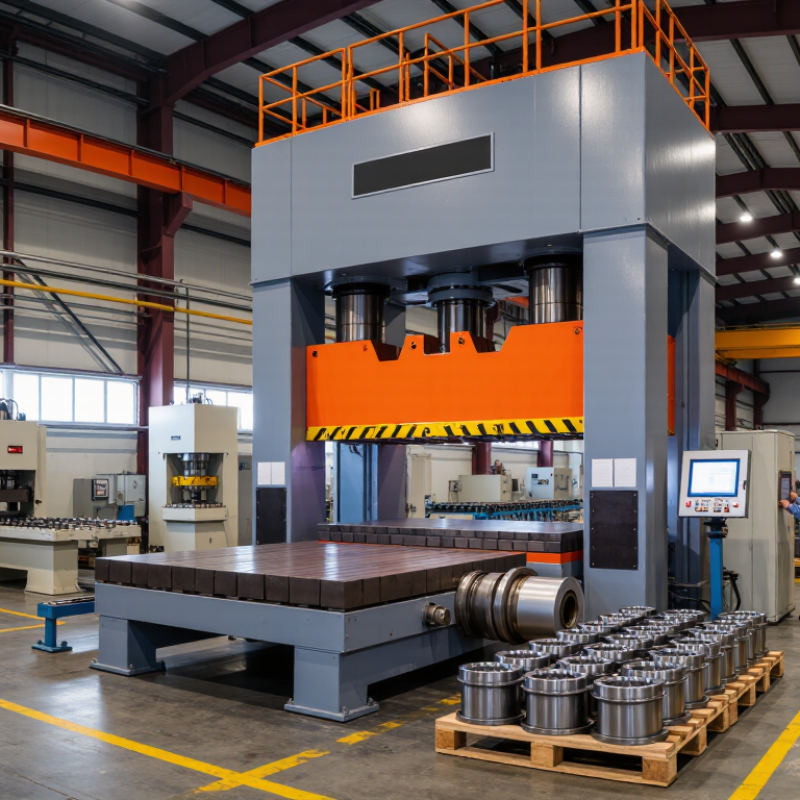
Definition and Working Principles of Power Pressing Machines
A power pressing machine is industrial equipment that shapes metal through controlled mechanical force. It uses a motor, flywheel, clutch, crankshaft, ram, and die set. The motor stores energy in the rotating flywheel. When the clutch engages, that energy moves the crankshaft and drives the ram downward. The die then cuts, bends, punches, or forms the workpiece.
The working cycle is precise but not complicated. A sheet is placed on the lower die, while the upper die connects to the moving ram. As the ram descends, pressure transfers through the material. The ram then rises, and the formed part can be removed. Stroke length, pressing capacity, speed, and shut height must match the job. A mismatch can damage tools or distort the product.
In workshop inspections, I pay attention to unusual vibration, oil leaks, and uneven ram movement. These small signs often appear before serious faults. Operators also check die alignment, material thickness, and emergency stopping functions. Guarding and two-hand controls reduce contact risks, although they cannot replace careful training. Calculated tonnage matters. Too much force wastes energy and may shorten machine life. Too little force creates incomplete forms. Real production is rarely perfect, so settings may need gradual adjustment after test pieces. Even experienced technicians can overlook springback in high-strength sheet. That detail deserves measurement, not guesswork.
Top 10 Power Pressing Machine Manufacturers Worldwide
Power pressing machines use a mechanical or hydraulic system to apply controlled force through a punch and die. The chart presents representative nominal capacity benchmarks for ten common power-press applications. Actual requirements depend on material strength, sheet thickness, tooling design, stroke length, and production speed.
Capacity is shown in metric tonnes of nominal pressing force. These values are industry-reference ranges rather than rankings or company-specific data. In operation, the motor drives a flywheel or hydraulic power unit, which transfers force to the slide and tooling to perform blanking, piercing, bending, forming, drawing, or stamping.
Top 10 Power Pressing Machine Manufacturers Worldwide
Top 10 Power Pressing Machine Manufacturers Worldwide
The top 10 power pressing machine manufacturers worldwide are often judged by engineering depth, production consistency, and service support. Strong manufacturers build machines for stamping, blanking, bending, and forming operations. Their product ranges may include compact 25-ton presses and heavy-duty models exceeding 1,000 tons. Buyers should examine frame rigidity, slide accuracy, clutch response, and overload protection. These details affect both output and operator safety.
Experienced manufacturers provide clear technical drawings, load charts, installation guidance, and maintenance schedules. A reliable supplier can explain die height, stroke length, speed, and energy consumption without vague promises. Factory inspections can reveal useful details, such as clean assembly areas, calibrated measuring tools, and organized spare-parts storage. Service response matters too. A press may be excellent, but long delays for critical components can disrupt production.
No ranking is perfect. A manufacturer with advanced automation may not suit a small workshop. Another supplier may offer lower prices but limited training or weak documentation. Buyers should compare trial results, warranty terms, local support, and actual customer feedback. Ask for sample production data. Check noise, vibration, repeatability, and material distortion during testing. Small gaps in performance become expensive over time. Good judgment requires more than a polished catalog.
Product Range, Technologies, and Industry Applications
Top 10 Power Pressing Machine Manufacturers Worldwide: Product Range, Technologies, and Industry Applications
The leading ten power press manufacturers compete across mechanical, hydraulic, servo, and transfer-press platforms. Their product ranges commonly span 25 to 2,500 tonnes, supporting blanking, bending, piercing, and progressive-die production. Mechanical presses suit high-speed sheet forming, while hydraulic systems provide controlled force for deeper draws. Servo presses add adjustable slide motion, which can reduce material stress and improve die flexibility. Real performance depends on tooling, maintenance, and operator skill.
Automation increasingly separates advanced suppliers from basic equipment builders. Integrated feeders, quick die-change systems, force sensors, and safety interlocks help maintain stable cycles. The International Federation of Robotics reported 541,302 industrial robots were installed worldwide in 2023. This trend supports robotic loading, unloading, and inspection around power presses. However, automation is not automatically efficient. Poor line integration can create expensive downtime.
Industry applications vary by press capacity and accuracy. Automotive plants use high-tonnage transfer presses for body panels and structural parts. Appliance producers need repeatable forming for cabinets, brackets, and housings. Electronics manufacturers often require compact presses with precise stroke control. Construction suppliers favor robust machines for connectors, channels, and hardware. World Steel Association recorded about 1.89 billion tonnes of crude steel production in 2023, indicating substantial forming demand. Reports from Grand View Research also identify metal stamping as a major industrial market, though regional estimates differ. That inconsistency deserves careful review. Buyers should compare tested cycle data, energy use, service response, and total ownership cost before ranking any manufacturer.