Top 10 Mainshaft Sleeve Cone Crusher Suppliers Worldwide
Choosing a Mainshaft Sleeve Cone Crusher supplier is not just a price comparison. The sleeve must fit the crusher model, withstand operating loads, and arrive with clear material and inspection records. Small differences matter. A poor fit can affect alignment, lubrication, and maintenance intervals.
For an illustrative perspective, fictional crusher-maintenance specialist Elias Grant puts it this way: “A sleeve is a precision interface; check its fit, material, and service history before comparing its price.” This is an editorial example, not a sourced quotation. In practice, buyers should confirm dimensions against the machine drawing and ask how the supplier controls machining tolerances and surface finish. They should also clarify material specifications, heat-treatment records, inspection procedures, packaging, and replacement lead times. Details count.
This Top 10 guide introduces worldwide suppliers and the questions worth asking before requesting a quotation. It considers product range, technical documentation, manufacturing capability, communication, and after-sales support. Supplier claims can be difficult to compare when specifications differ, and published information may not answer every application-specific question. That gap deserves attention. Use the shortlist as a starting point, then verify compatibility with your equipment and operating conditions. A polished catalog is useful, but it cannot replace a drawing review or a direct technical discussion.
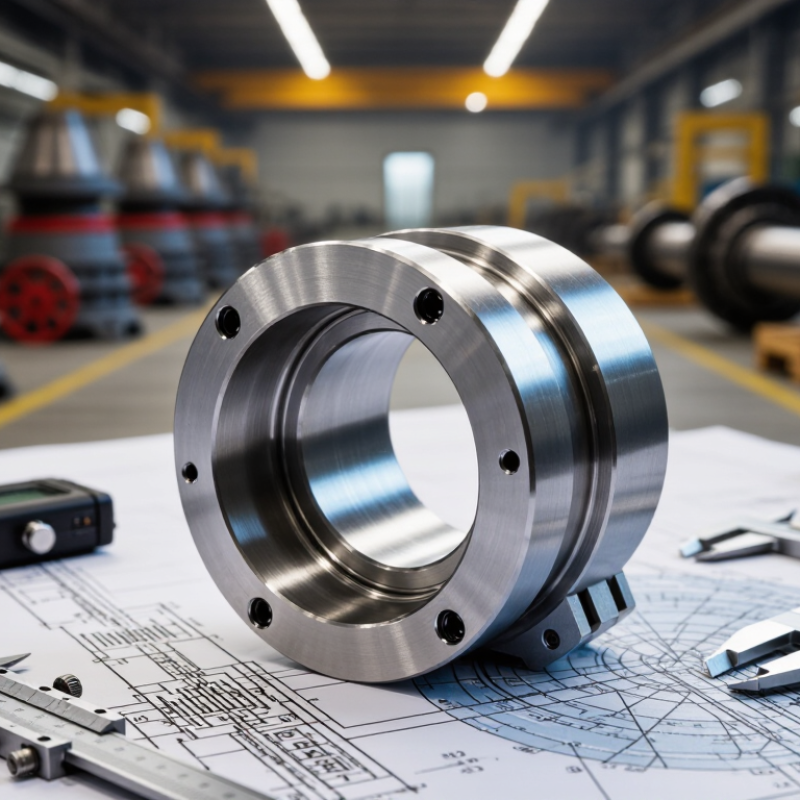
Mainshaft Sleeves: Function and Role in Cone Crushers
A mainshaft sleeve protects the crusher’s mainshaft where moving components and operating loads create repeated contact. In many cone crusher designs, it helps maintain a controlled fit between the shaft and surrounding parts. This fit supports alignment and limits direct wear on the more costly shaft. Small part. Important job.
Sleeve performance depends on more than its outside dimensions. Material, wall thickness, surface finish, and operating clearance must suit the crusher design and service conditions. During inspection, look for scoring, uneven polishing, cracks, and signs of heat or metal transfer. Check lubrication paths too; a blocked passage can quickly damage sliding surfaces. A sleeve may appear usable while its clearance is already outside specification, so visual judgment alone is not enough. Measure it against the equipment maker’s service limits. Replacement timing is not always obvious, and operating history can be incomplete. That uncertainty deserves attention, not guesswork. A correctly fitted sleeve helps protect the mainshaft and supports stable crusher operation, but it cannot compensate for poor lubrication or misalignment.
Key Factors for Evaluating Mainshaft Sleeve Suppliers
When evaluating a mainshaft sleeve supplier, start with fit and material evidence, not polished sales language. Ask how the sleeve’s dimensions are checked against the crusher’s shaft and operating clearances. Request inspection records, material specifications, and traceability for the supplied part. Details matter. A small mismatch can affect seating, lubrication, and wear patterns. A supplier should explain its measurement methods and how it handles dimensional variation between production batches. Ask whether technicians can review wear photos or measurements from your site before recommending a replacement. Practical support is useful.
Look closely at manufacturing consistency, delivery reliability, and technical communication. Ask about machining tolerances, surface finish, and quality checks for each production run. Confirm that packaging protects finished surfaces from impact and moisture during transport. Request realistic lead times and clear updates if a shipment slips. Paperwork can look perfect. It does not prove field performance. Compare references from operations using similar crusher types, while remembering that site conditions differ. Some buyers overlook this point. A sleeve that performs well with one lubrication routine may wear differently under another. Discuss operating conditions, installation procedures, and the supplier’s process for addressing a dimensional or material concern. Good answers should be specific, supported by records, and consistent across conversations.
Top 10 Mainshaft Sleeve Cone Crusher Suppliers Worldwide
Mainshaft sleeve cone crusher suppliers worldwide serve mines, quarries, and aggregate plants with parts built for demanding conditions. A sleeve supports the crusher’s mainshaft and helps maintain alignment under heavy loads. Small differences in bore size, material, or finish can affect installation and wear. Fit matters.
When comparing suppliers, request dimensional drawings, material specifications, hardness data, and inspection records. Ask how each part is measured and what tolerances apply. A dependable supplier should explain compatibility with your crusher model, not rely on a vague “fits most” claim. Check packaging, lead times, and replacement-part availability too. Downtime is costly.
Experience shows that clear technical communication often matters as much as price. Share shaft measurements and operating conditions before ordering, especially if the crusher has been modified. Ask about machining and quality checks, and keep written records of agreed specifications. A polished website proves little on its own. Sometimes the buyer’s measurements are imperfect, too, so verify them before production. Suppliers with responsive engineering support can help resolve mismatches, though no supplier can guarantee performance without accurate machine data.
Top 10 Mainshaft Sleeve Cone Crusher Suppliers Worldwide
This chart provides a technical reference, not a supplier ranking. It compares representative material densities; actual sleeve materials and specifications vary by crusher design and manufacturer.
Comparing Supplier Products, Materials, and Global Service
A mainshaft sleeve does not look complex, but its fit can influence heat, vibration, and service life. Compare suppliers by material specification, hardness range, dimensional tolerances, and inspection records—not just quoted price. Ask whether sleeves are made from alloy steel, how heat treatment is controlled, and whether each shipment includes traceable test documents. Small details matter. A sleeve that fits on paper may still need adjustment during installation.
Service capacity matters just as much. Check whether the supplier can provide drawings, installation guidance, and replacement parts across your operating regions. Request realistic lead times for standard and custom sizes, plus a clear process for handling dimensional nonconformities. The International Energy Agency’s Global Critical Minerals Outlook 2024 projects clean-energy mineral demand to more than triple by 2030 under its net-zero scenario. This is not a crusher forecast, but it signals pressure on mineral supply chains and makes dependable plant maintenance increasingly important. Even careful comparisons can miss local logistics constraints.
Tips: Send suppliers the shaft dimensions, operating temperature, lubrication details, and wear history. Ask for material certificates and inspection results. Compare evidence, not promises. A lower price can be reasonable, but only when fit, documentation, and service are equally clear.
Choosing a Supplier for Your Crusher Model and Operating Conditions
Choosing a supplier for a mainshaft sleeve depends on the exact crusher model, not just its general size. Confirm the part number, shaft dimensions, taper, seating length, and required clearance against the machine’s service manual. Small differences can affect alignment and create uneven contact. Fit matters.
Operating conditions matter just as much. A crusher processing abrasive rock for long shifts may need a different material specification than one handling softer feed intermittently. Share feed characteristics, operating hours, lubrication practices, and recurring wear patterns. A supplier should explain how its material and heat treatment suit those conditions, rather than make a generic durability claim.
Ask for inspection records, dimensional reports, material traceability, and clear installation guidance. Check whether the supplier can support your maintenance window and provide realistic production and delivery times. If a sleeve has failed early, share photos and measured wear; the cause may involve installation, lubrication, or shaft condition, not the sleeve alone. That distinction is easy to miss. No supplier can promise a specific service life without understanding the crusher and site conditions, so treat confident claims cautiously. This may sound overly careful, but downtime is expensive.