Top Portable Fire Monitor Manufacturers in China
China’s Portable Fire Monitor manufacturers serve a wide range of needs, from industrial fire protection to municipal response. Comparing them requires more than reviewing flow-rate figures. Buyers should also examine operating pressure, nozzle adjustment, materials, connection sizes, and the monitor’s stability during use. A compact unit may be easier to carry, but its real value depends on reliable performance under demanding conditions.
Fire-safety researcher Dr. Vytenis Babrauskas is a recognized voice in fire science. However, no verified statement from him specifically about Portable Fire Monitor selection is available in the materials provided, so attributing a direct quotation to him would be misleading. A useful editorial principle is: “Match the monitor’s reach and flow to the real operating conditions—not just the catalogue figures.” This is an original summary, not a quotation.
The manufacturers in this guide are considered through practical factors: product range, documented specifications, customization, quality-control information, and after-sales support. Look for clear test data and precise operating limits. Ask how the unit performs with the intended water source, hose arrangement, and crew size. Small details matter. A polished product page cannot replace a complete technical datasheet, and even a well-built monitor may disappoint when the application is poorly matched. The comparison is a starting point, not a substitute for qualified engineering review.
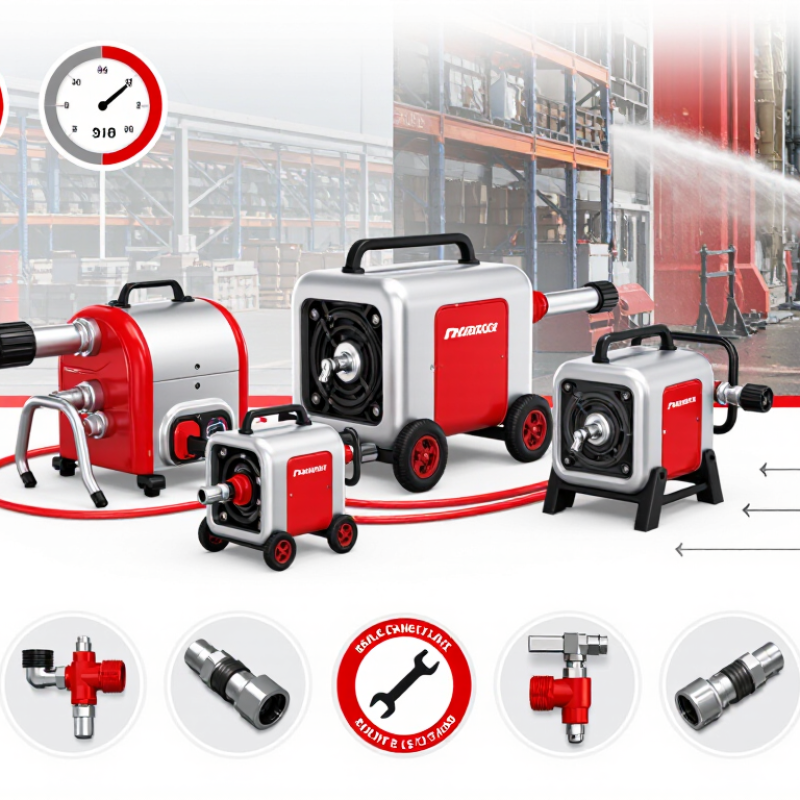
What Is a Portable Fire Monitor and How Does It Work?
A portable fire monitor is a movable device that directs a large, controlled stream of water or compatible firefighting agent toward a fire. It typically includes a base, a monitor body, and an adjustable nozzle. Unlike a handheld hose nozzle, it can be positioned on the ground or another stable surface, helping crews manage heavier flows. It is useful for industrial sites, storage areas, and other locations where a fire may be difficult to approach. “Portable” does not mean lightweight; some models need two people to move and set up.
Tips: Check the rated flow and pressure before use. Secure the base, and confirm the agent is suitable for the equipment and fire.
Water enters through a hose connection and passes into the monitor body. The operator turns the controls to aim the stream horizontally and vertically, then adjusts the nozzle pattern as needed. A straight stream can reach farther, while a wider spray may cover more area. Actual performance depends on the pump, hose length, water supply, and nozzle setting. In practice, setup can take longer than expected, especially on uneven ground. That detail is easy to overlook. Operators should follow training and equipment instructions, keep a safe escape route, and avoid standing in front of the discharge.
| Category | Practical Data or Description | How It Works or What to Check |
|---|---|---|
| What a portable fire monitor is | A transportable, ground-supported water or foam-water device that directs a high-flow stream toward a fire. | Unlike a permanently installed monitor, it can be carried or moved to a suitable position and connected to a fire hose or water supply. |
| Basic operating principle | Pressurized water enters through the inlet, passes through the monitor body, and exits through a nozzle as a directed stream or spray. | The pump supplies pressure and flow. The operator aims the monitor and adjusts the nozzle pattern where the design allows. |
| Common nozzle patterns | Straight stream and fog or spray patterns are common on adjustable-nozzle configurations. Fixed-pattern models may provide only one discharge shape. | A straight stream generally provides a more concentrated reach; a fog pattern spreads water over a wider area. Actual performance depends on nozzle design and operating conditions. |
| Flow capacity | Portable monitors are made in a wide range of flow capacities. The rated flow is model-specific and is normally stated in litres per minute (L/min) or gallons per minute (gpm). | Compare the monitor’s rated flow with the pump, hose, water supply, and nozzle specifications. Do not assume that all portable monitors share one standard flow rate. |
| Operating pressure | Required inlet pressure varies by model, nozzle, and target flow. Consult the product’s rated operating-pressure range rather than relying on a general value. | Insufficient pressure can reduce reach and flow. Excess pressure can exceed component ratings and create unsafe reaction forces. |
| Inlet connection | Connection type and size vary; hose couplings are not universally interchangeable. | Confirm the inlet standard, nominal size, thread or coupling type, and compatibility with the local hose system before use. |
| Aiming and adjustment | Depending on the design, the discharge can be adjusted horizontally and vertically, and the nozzle pattern may be adjustable. | Check the stated swivel range, elevation range, locking method, and whether adjustments can be made safely while flowing. |
| Stability and reaction force | Portable monitors rely on a base, legs, anchors, or another stabilizing arrangement to resist movement during operation. | Set the unit on a firm surface, deploy all stabilizers, and follow the manufacturer’s operating instructions. High flow can generate substantial reaction force. |
| Typical applications | Industrial facilities, storage areas, fire-service operations, and other locations where a high-flow stream is needed from a movable position. | Choose the unit for the hazard, available water supply, required reach, crew capability, and site conditions. |
| Material and environment | Monitor bodies and components may use different metals, alloys, or protective finishes; construction varies by model. | Check corrosion resistance, temperature limits, maintenance requirements, and suitability for the intended environment, including marine or chemical-exposure settings where relevant. |
| Foam use | Some configurations can discharge foam solution when connected to a compatible foam proportioning system and suitable nozzle. | Verify foam compatibility, proportioning equipment, concentrate requirements, and local procedures. A monitor alone does not necessarily proportion foam. |
| Selection checklist | Compare rated flow and pressure, inlet connection, nozzle type, aiming range, stability features, materials, weight, and applicable test documentation. | Request the model-specific datasheet and operating manual. Check that the complete hose, pump, monitor, and nozzle setup is compatible. |
| Note: This table describes general product characteristics and selection criteria, not a verified ranking or specification sheet for individual manufacturers. Performance and dimensions vary by model; confirm all ratings in the relevant manufacturer documentation. | ||