How to Choose a Cable Harness Assembly Supplier
Choosing a cable harness assembly supplier is a decision about process control, not just price. A harness may look simple on a drawing, yet one poorly crimped terminal can interrupt a machine or vehicle. Grand View Research estimated the global wire harness market at USD 79.3 billion in 2023 and projected a 4.2% compound annual growth rate from 2024 to 2030. The scale is substantial. But market growth does not prove that any particular supplier can deliver consistent quality.
A useful principle comes from manufacturing quality expert W. Edwards Deming: “Quality comes not from inspection, but from improvement of the production process.” For supplier selection, that means looking beyond a polished sample. Ask how the supplier controls crimp height, verifies continuity, traces materials, and manages design changes. Request evidence, such as inspection records and a sample production run. Then check whether the evidence matches the harness you actually need.
Details matter. A connector that fits in a drawing may be awkward to assemble in a crowded enclosure. A supplier’s response to a small engineering change can reveal more than a sales presentation. Still, audits have limits; a tidy factory visit cannot guarantee every future batch. The sections ahead examine technical capability, quality systems, capacity, communication, and total cost. The aim is not to find a flawless supplier. It is to find one that can show its controls, discuss its weak points, and improve when the evidence calls for it.
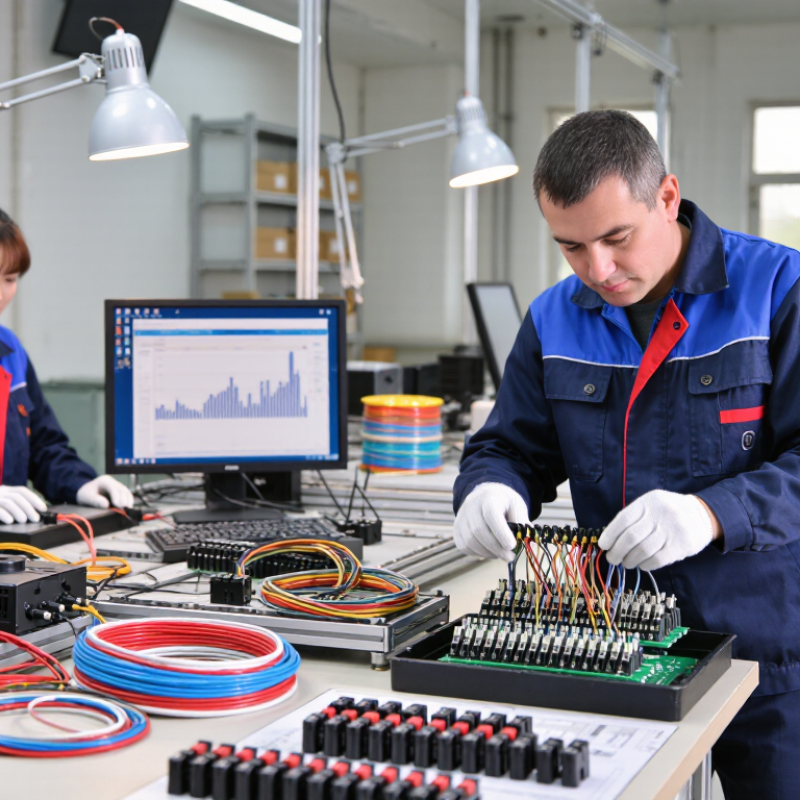
Define Your Cable Harness Assembly Requirements
Define Your Cable Harness Assembly Requirements
Before comparing suppliers, write down what the harness must do. Specify the operating voltage, current, signal type, and connector locations. Include cable length, wire gauge, and any shielding needs. A sketch with measured distances can prevent costly assumptions. For example, note whether a harness runs beside a motor or bends around a tight enclosure. Small details matter.
Describe the installation environment, too. Record expected temperatures, moisture exposure, vibration, and available space. If the assembly must meet a particular performance or quality standard, name it clearly and explain how acceptance will be checked. Ask for sample testing when fit or routing is uncertain. A prototype can reveal a connector that looks right on paper but cannot be reached after installation.
Set practical expectations for volume, delivery timing, labeling, and documentation. Tell suppliers whether you need inspection records, material details, or continuity-test results with each shipment. Requirements often change after the first build; that is normal. Still, mark confirmed specifications separately from open questions. I have seen teams overlook service access until assembly begins. It is an easy miss, and worth reviewing before requesting a quote.
How to Choose a Cable Harness Assembly Supplier — Define Your Cable Harness Assembly Requirements
| Requirement Area | Information to Define | Example Requirement | Supplier Evidence to Request |
|---|---|---|---|
| Application and environment | Equipment function, installation location, operating temperature, moisture, chemicals, vibration, and expected service life. | Indoor equipment; operating range of −20°C to +80°C; occasional vibration. Treat these figures as project-specific examples, not default ratings. | Design review confirming that selected wires, insulation, seals, and protective coverings suit the stated environment. |
| Electrical requirements | Operating and transient voltage, continuous and peak current, circuit count, grounding, shielding, and any required insulation or dielectric tests. | Define current by circuit and duty cycle. Confirm conductor size against applicable wire ratings and the actual installation conditions rather than choosing it from a generic current table alone. | Electrical design review, wire specifications, and a documented test plan identifying required continuity, insulation-resistance, or dielectric-withstand tests. |
| Wire and cable construction | Conductor material and size, strand construction, insulation material, temperature and voltage ratings, color, and shielding requirements. | Specify wire by the applicable drawing or recognized wire specification, including conductor size, insulation type, color, and required ratings. | Material datasheets, wire markings or traceability records, and confirmation that substitutions require written approval. |
| Connectors and terminals | Connector series or drawing-controlled part, cavity count, keying, contact type, plating requirements, seals, and mating interface. | Identify connector and contact part numbers on the bill of materials; state which mating components are customer-supplied, if any. | Approved bill of materials, incoming inspection procedure, and crimp tooling and process records. |
| Dimensions and routing | Overall lengths, branch lengths, breakout locations, bend or routing constraints, labels, and dimensional tolerances. | Provide a controlled drawing with dimensions and tolerances; define measurement points and whether lengths are measured between connector reference points. | First-article dimensional report using the approved drawing and a sample assembly or inspection fixture, where appropriate. |
| Protection and finish | Conduit, sleeving, loom, grommets, strain relief, edge protection, heat-shrink, overmolding, and required coverage locations. | Show protection type and start/stop points on the drawing; specify material and color where they affect fit, function, or identification. | Process description and inspection criteria for coverage, placement, retention, and visible workmanship. |
| Workmanship and acceptance | Crimp, solder, splice, sealing, routing, labeling, and visual-acceptance requirements. | Reference the agreed workmanship standard and revision, such as IPC/WHMA-A-620, and define the applicable class or project-specific acceptance criteria. | Workmanship procedure, operator training records, inspection checklist, and sample inspection results. |
| Testing and inspection | Test coverage, test sequence, limits, sampling plan, calibration requirements, and record retention. | Define whether every assembly needs a circuit-to-circuit continuity and miswire test; specify any additional test only when required by the design or applicable standards. | Test procedure, calibrated-equipment records, and serialized or lot-based test results as agreed. |
| Compliance and materials | Applicable product, market, and customer requirements for restricted substances, safety, and material declarations. | State whether RoHS or REACH-related documentation is required and identify the applicable revision, scope, and declaration format. | Supplier declarations and supporting material documentation matched to the supplied parts and assembly revision. |
| Production volume and delivery | Prototype quantity, forecast, order size, delivery schedule, packaging, labeling, and requested production ramp. | Separate prototype, pilot, and expected production quantities; identify required delivery dates and packaging conditions. | Capacity and lead-time assessment, production plan, packaging proposal, and escalation process for supply risks. |
| Change control and traceability | Drawing and BOM revision control, approved substitutions, lot identification, and notification of process or material changes. | Require written approval before changes to specified materials, components, tooling, manufacturing location, or controlled process. | Document-control procedure, lot-traceability example, and formal change-notification process. |
Note: Example values are illustrative starting points. Final ratings, tolerances, tests, and acceptance criteria should be established from the application, approved design documents, and applicable requirements.
Related Posts
-

Revolutionizing Your Production: The Future of Wire Harness Design and Its Impact on Manufacturing Efficiency
-
Top Wire Harness Design Techniques for Optimal Performance?
-

2026 Best Wire Assemblies for Global Buyers to Consider?
-
Why Choose Cable Harness Assembly for Global Sourcing?
-
2026 How to Choose the Right Cable and Harness for Your Needs?
-

What Are the 2026 Top Harness Cable Assembly Types?