Skip to content

Top 10 Electrical Harness Assembly Manufacturers?

Choosing among the Top 10 Electrical Harness Assembly Manufacturers requires more than comparing prices or polished capability sheets. A harness may look simple on a drawing: colored wires, sealed connectors, clips, and a protective sleeve. On the production floor, every crimp, branch length, label, and test result matters. One loose terminal can disrupt an entire assembly.

EMC engineer Henry Ott’s work highlights why electromagnetic compatibility belongs in electrical design decisions. A practical maxim for this guide is: “A dependable harness starts with details that survive production, installation, and service.” This is an editorial principle, not a direct quotation from Ott. It points to questions buyers should ask: Can the manufacturer control crimp height? Are continuity and insulation tests recorded? Can the team trace materials back to a lot? Ask for evidence, not just assurances. A clean sample helps, but it cannot prove stable output across thousands of units.

The manufacturers ahead are assessed through capabilities that matter in real projects, including engineering support, quality systems, customization, and production scale. Certifications can provide useful signals, but they do not replace a careful review of process controls and test records. Needs also differ. A compact industrial harness and a high-volume automotive program demand different equipment, documentation, and support. No ranking can settle every sourcing decision. Use this list as a starting point, then compare each supplier against your drawings, volumes, and operating conditions. Some details may be easy to overlook. They rarely stay small for long.
Top 10 Electrical Harness Assembly Manufacturers?

Electrical Harness Assemblies: Components, Applications, and IPC/WHMA-A-620

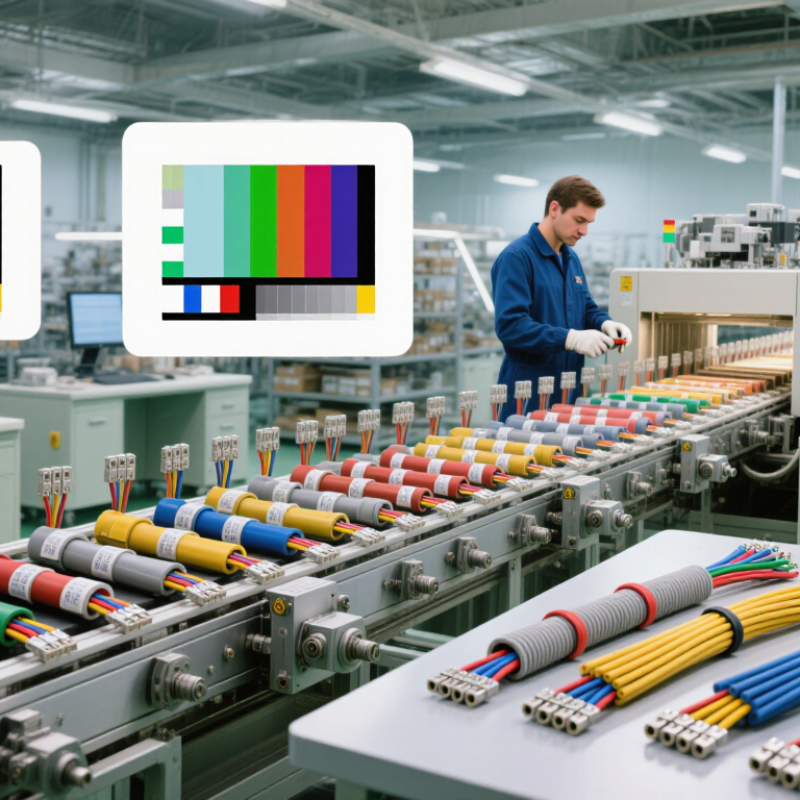
An electrical harness assembly organizes wires into a dependable path between power sources, controls, and connected equipment. A typical build may include insulated conductors, crimp terminals, connectors, seals, labels, and protective sleeving. Branch points are often secured with tape, clips, or molded supports. Small details matter.

These assemblies appear in industrial machinery, transportation systems, and medical equipment, where vibration, heat, moisture, and limited installation space affect performance. A poorly supported branch can rub against a panel edge. A weak crimp may look acceptable but create resistance and heat under load. Fit, routing, and strain relief deserve checks alongside electrical continuity.

IPC/WHMA-A-620 provides workmanship and acceptance criteria for cable and wire harness assemblies. It addresses practices such as crimping, soldering, insulation, conductor damage, and marking. The applicable revision and customer specifications should guide inspection. The standard does not replace product-specific design or electrical testing requirements. A clean-looking harness is not automatically a reliable one. Inspection records, sample measurements, and clear acceptance limits help make quality repeatable. Yet criteria cannot prevent every field failure; real operating conditions may reveal assumptions that a bench inspection misses.

How to Rank Manufacturers: IATF 16949, Production Capacity, and Quality

Ranking electrical harness assembly manufacturers requires more than comparing certificates. IATF 16949 certification is a useful starting point, but verify its current validity and whether it covers the specific production site. Ask how the manufacturer controls crimp height, pull-force results, wire routing, and connector locking. Request sample inspection records, corrective-action examples, and traceability details. A certificate alone cannot show how consistently a supplier handles daily production.

Production capacity should match your actual demand, including seasonal peaks and engineering changes. Ask about available workstations, trained operators, tooling maintenance, and backup plans for critical processes. A floor walk can reveal practical details: organized wire reels, labeled work-in-progress, and calibration records near test equipment. Quality data matters too. Review defect trends, first-pass yield, and responses to recurring failures. No scorecard is perfect; one overlooked process may still cause delays.

Tips: Compare the same evidence across every candidate. Request a pilot build before scaling orders. Check a sample harness against drawings and pin-out requirements. Look closely. If answers sound polished but lack records, pause and investigate. Some suppliers may need closer monitoring, even when their headline metrics look strong.

Top 10 Electrical Harness Assembly Manufacturers by Industry and Capability

A useful look at the top 10 electrical harness assembly manufacturers starts with industry fit, not a generic ranking. Automotive suppliers often manage repeatable, high-volume builds and strict traceability. Aerospace and rail specialists focus on detailed documentation, inspection, and complex routing. Medical equipment and industrial automation teams may prioritize compact layouts, reliable connectors, and low-volume customization. Energy, telecommunications, appliances, heavy equipment, and marine applications bring their own demands for temperature, vibration, or moisture resistance.

Capability matters just as much as sector experience. Compare prototype support, wire processing, crimp and pull-test controls, overmolding, labeling, and end-of-line electrical testing. Ask how a supplier handles drawing revisions and component shortages. A clean sample harness is useful; consistent records and repeatable production are more telling. Small details matter.

Tips: Share drawings, expected volumes, operating conditions, and acceptance criteria before requesting a quote. Ask for a sample inspection report and a clear explanation of test coverage. Verify details against your own application.

Any top-ten comparison is imperfect because manufacturers differ in equipment, scale, and engineering support. A supplier suited to a long automotive run may not be ideal for a short custom build. Check actual capacity, quality procedures, lead times, and communication with the team that will manage your project. Sometimes the less obvious fit is better.

Top 10 Electrical Harness Assembly Manufacturers by Industry and Capability

Industry-level capability guide, not a ranking of named suppliers. Requirements and standards vary by product, destination market, and customer specification.

No. Industry Typical Harness Applications Common Assembly Capabilities Key Design and Quality Considerations Relevant Standards or References
1 Automotive Vehicle body, powertrain, lighting, infotainment, and battery-system wiring. High-volume automated wire processing, connector assembly, circuit testing, and configuration control. Vibration, temperature variation, abrasion protection, routing constraints, and traceability. ISO 6722 covers dimensions and requirements for road-vehicle cables; applicable requirements depend on the vehicle and market.
2 Aerospace Aircraft electrical and electronic system interconnections. Complex point-to-point wiring, shielded cable preparation, controlled crimping, and detailed inspection records. Weight control, routing separation, environmental exposure, workmanship, and stringent documentation. SAE AS50881 provides aerospace vehicle wiring guidance; project and airworthiness requirements also apply.
3 Rail and Transit Rolling-stock power, control, communications, and passenger-information systems. Multi-branch harness construction, rugged connectors, cable identification, and continuity testing. Vibration, fire behavior, maintainability, long service life, and installation routing. EN 50343 addresses installation of cabling on railway rolling stock; fire requirements are determined by the applicable rail specification.
4 Marine and Shipbuilding Shipboard power distribution, navigation, control, and monitoring systems. Marine cable termination, sealed connections, corrosion-resistant hardware, and installation-ready looms. Moisture, salt exposure, vibration, electromagnetic compatibility, and compartment-specific installation needs. The IEC 60092 series covers electrical installations in ships; the applicable part depends on the installation.
5 Industrial Automation Machine control panels, sensors, actuators, drives, and robotic equipment. Custom cable assemblies, panel wiring, labeled conductors, connectorization, and electrical testing. Flex life for moving cables, electrical noise, machine safety, serviceability, and clear wire identification. IEC 60204-1 addresses electrical equipment of machines, including relevant design and verification requirements.
6 Medical Equipment Internal wiring and external cable assemblies for diagnostic, monitoring, and treatment equipment. Low-volume, high-mix assembly, controlled component handling, inspection, and production records. Electrical safety, insulation, cleaning compatibility, reliability, and the equipment’s intended-use environment. IEC 60601-1 addresses basic safety and essential performance of medical electrical equipment; it is not a harness-only standard.
7 Household and Commercial Appliances Internal wiring for kitchen, laundry, heating, cooling, and other electrical appliances. Repeatable cut-strip-crimp processes, appliance-specific connectors, and end-of-line continuity checks. Heat exposure, abrasion, insulation selection, assembly repeatability, and product-specific safety requirements. The IEC 60335 series covers safety of household and similar electrical appliances.
8 Telecommunications and Data Centers Equipment interconnects, rack wiring, power leads, and structured cabling links. Cable preparation, connector termination, labeling, length control, and electrical or transmission testing as specified. Signal integrity, bend radius, cable management, port identification, and compatibility with the network design. ISO/IEC 11801 provides requirements for generic cabling systems; the required category and test limits depend on the installation.
9 Solar Photovoltaic Systems PV module leads, array connections, inverter connections, and related power wiring. Weather-resistant cable assembly, compatible connector termination, polarity identification, and continuity checks. Outdoor UV exposure, moisture, temperature cycling, voltage rating, and connector compatibility. IEC 62930 specifies requirements for electric cables used in photovoltaic systems.
10 Defense and Security Equipment Wiring for mobile platforms, communications equipment, control systems, and field-deployed electronics. Ruggedized cable assemblies, shield termination, sealed connectors, custom branching, and documented testing. Shock, vibration, environmental exposure, electromagnetic interference, configuration control, and application-specific qualification. Applicable requirements are defined by the contract, platform specification, and destination-market regulations; there is no single universal harness standard.

Comparing Workmanship Requirements Across IPC/WHMA-A-620’s 3 Classes

IPC/WHMA-A-620 divides wire-harness workmanship into three product classes. Class 1 covers general electronic products, Class 2 dedicated-service products, and Class 3 high-performance products. The standard sets acceptance criteria for work such as crimping, soldering, insulation support, and wire routing. Class choice changes how closely a finished assembly is judged; it does not replace sound process control.

On a bench, the differences can show up in small details: a crimp’s shape, exposed conductor strands, or a wire’s clearance from a sharp edge. Inspectors should use the class specified by the customer and check the applicable acceptance criteria, rather than relying on a vague “good workmanship” rule. Small flaws matter. A neat-looking harness may still fail a requirement, while a cosmetic variation may be acceptable under the chosen class. That distinction is easy to miss.

Workforce data adds context, though it does not measure workmanship directly. The U.S. Bureau of Labor Statistics’ 2022–32 employment projections forecast a 7% decline in electrical and electronic equipment assembler jobs. That makes repeatable training and inspection more important, not less. Still, a checklist alone cannot replace a trained eye. I would leave room for judgment, and document why.

Supplier Evaluation: Testing, Traceability, Compliance, and Global Reach

Choosing among the top ten electrical harness assembly manufacturers requires more than comparing price and lead time. Ask how each supplier verifies crimp height, pull strength, continuity, and insulation resistance. Request sample test records tied to a specific harness revision. A clean report matters. So does a repeatable process on the production floor.

Tips: Ask to see a redacted traceability record. It should connect wire lots, terminals, operator checks, and test results to a build date or serial number. Confirm how the supplier handles a failed test. Ask for evidence, not promises.

Compliance documents should match the destination market and the actual product configuration. Check revision dates, material declarations, and change-control procedures. For global reach, examine factory locations, shipping routes, language support, and backup capacity. A second site is useful only if its tooling and inspection methods are qualified. During an audit, follow one harness from incoming wire to packed shipment. That walk-through can reveal gaps a presentation misses. No scorecard replaces judgment; even strong suppliers may stumble during a sudden engineering change.