Skip to content

Top SMA Female Connector Suppliers for Global Buyers

Global buyers need more than a low unit price when selecting an sma female connector supplier. Connector performance affects signal stability, installation time, and long-term maintenance. A small interface can influence an entire wireless assembly.

Industry data supports this importance. MarketsandMarkets identifies telecommunications, automotive, aerospace, and defense electronics as major RF connector demand sectors. Its market analysis also links growth to 5G infrastructure, connected vehicles, and high-frequency equipment. Grand View Research similarly reports continued expansion in the global RF connector market, driven by communication networks and advanced electronics. However, market forecasts vary by product definition and research method. That limitation deserves attention.

The best suppliers show measurable engineering capability. They provide impedance details, frequency ratings, return-loss data, mating-cycle results, and material specifications. Buyers should check whether each sma female connector uses reliable gold or nickel plating, stable dielectric materials, and controlled machining tolerances. Practical evidence matters. Ask for inspection records, sample testing, traceability documents, and production photos.

Certification is not enough by itself. ISO 9001 supports process control, but it does not automatically prove connector performance. Suppliers should also explain RoHS or REACH compliance, packaging methods, and export documentation. A clean datasheet helps. A repeatable test report helps more.

Global sourcing still contains uncertainty. Some suppliers publish excellent specifications but offer limited field experience. Others have strong manufacturing records but weak technical communication. Careful comparison remains necessary. This guide examines leading suppliers through product quality, customization, testing capability, delivery reliability, and buyer support. The goal is practical selection, not promotional ranking.
Top SMA Female Connector Suppliers for Global Buyers

What Is an SMA Female Connector?

What Is an SMA Female Connector?

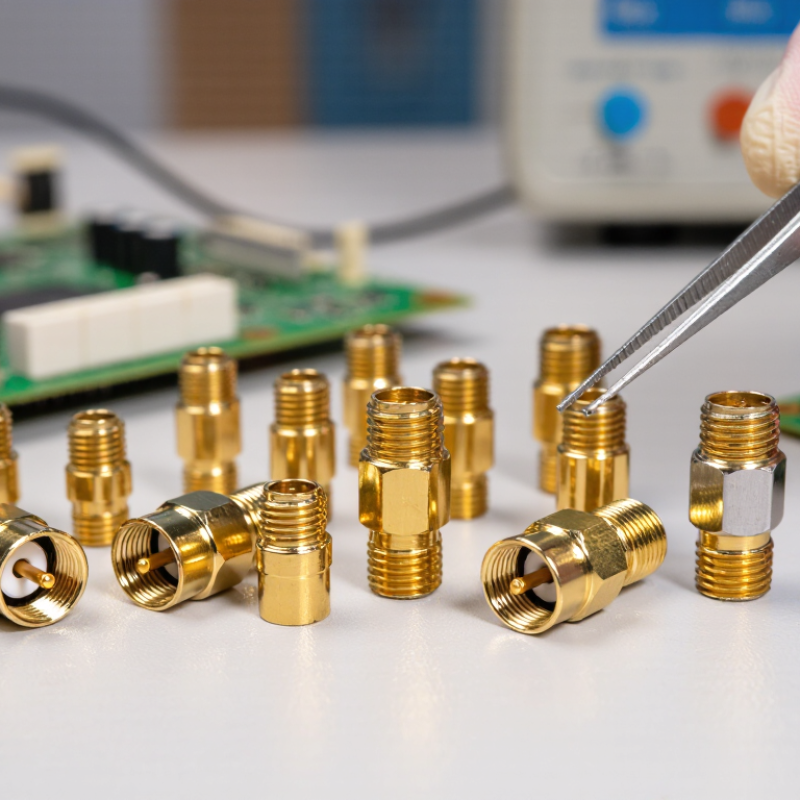
An SMA female connector is a threaded RF interface with a socket contact. It receives the center pin of an SMA male connector. Its external threads create a firm mechanical connection and help maintain stable electrical contact. Most SMA systems use a 50-ohm impedance, supporting signal transmission in wireless, test, navigation, and industrial equipment.

Standard SMA female connectors commonly operate from DC to 18 GHz. Precision versions may reach higher frequencies, but performance depends on design, cable, and assembly quality. IEC 61169-15 defines key dimensional and electrical requirements for SMA interfaces. That standard matters when global buyers compare suppliers.

Market data also shows why this small component deserves careful review. Grand View Research estimated the global RF connector market at about USD 1.7 billion in 2023. Its report forecasts continued growth through 2030, driven by wireless infrastructure, testing equipment, and connected devices. The estimate is useful, but market reports differ in scope. Buyers should not treat one forecast as absolute.

A reliable evaluation includes return loss, insertion loss, operating frequency, plating, torque, and mating durability. Check the datasheet. Then inspect sample performance with calibrated equipment. A connector may look flawless and still leak signal under vibration. That is the part many purchasing teams underestimate. Thread engagement, cable preparation, and installation torque can change real-world results. Even experienced engineers sometimes overlook those details.

Key Specifications for Evaluating SMA Female Connectors

Selecting an SMA female connector requires more than checking thread size. The interface should follow IEC 61169-15 and maintain a 50-ohm impedance. MarketsandMarkets estimates the RF connectors market will grow from USD 4.5 billion in 2024 to USD 6.4 billion by 2029. That expansion increases supplier choice, but not necessarily quality.

Frequency rating comes first. Many SMA female connectors support applications up to 18 GHz, while insertion loss and VSWR vary by design. Ask for test data, not only catalogue claims. A practical target is VSWR below 1.30:1 at the operating frequency. Also verify dielectric material, center-contact plating, and cable compatibility. Small mismatches can create visible signal loss.

Mechanical details matter equally. Check mating-cycle ratings, panel thickness, mounting torque, and thread accuracy. A connector used outdoors may need an IP-rated assembly, sealed interface, or corrosion-resistant finish. Temperature ratings should match the equipment, not the warehouse. Request batch traceability, dimensional inspection records, and RoHS or REACH declarations where applicable. These documents reveal supplier discipline.

Do not overlook the cable. A connector optimized for rigid coax may perform poorly on flexible cable. I would also inspect several samples under magnification. Perfect-looking parts sometimes hide weak solder joints. One specification can still be incomplete.

Top SMA Female Connector Suppliers for Global Buyers

Key Specifications for Evaluating SMA Female Connectors

This chart presents representative industry benchmarks for 50 Ω SMA female connectors across common operating frequencies. Lower VSWR and insertion loss generally indicate better RF performance. Actual limits vary by connector design, cable assembly, interface configuration, and test conditions, so buyers should confirm the supplier’s datasheet and test report.

Typical impedance: 50 Ω Common frequency range: DC–18 GHz Interface standard: IEC 61169-15 Common coupling thread: 5/16-24 UNEF

How to Compare Global SMA Female Connector Suppliers

Comparing global SMA female connector suppliers requires more than checking prices. Start with electrical performance. Review impedance, frequency range, return loss, and voltage ratings. Confirm whether specifications apply to production units or laboratory samples. Ask for drawings with thread dimensions, contact materials, plating thickness, and tolerance data. Small differences can affect mating reliability and signal performance.

Supplier experience should be visible in testing and documentation. Request sample units before placing a large order. Inspect the threads, center contact, solder connection, and surface finish under magnification. A supplier should provide inspection records, material details, and clear batch traceability. Check production capacity, lead times, packaging protection, and communication during technical discussions. A polished datasheet can still hide weak process control.

Tips: Compare at least three suppliers using the same checklist. Ask how they handle rejected parts and engineering changes. Confirm test methods, not only test results. Request a written sample approval process. Cost matters, but unstable tolerances create higher expenses later. I would also review recent delivery performance, because promised capacity is not always actual capacity. Even experienced buyers can overlook packaging damage during long-distance shipping. Keep one approved sample for future comparison.

Top SMA Female Connector Suppliers for Global Buyers - How to Compare Global SMA Female Connector Suppliers
Comparison Dimension Realistic Market Benchmark What Global Buyers Should Verify Why It Matters
Connector Interface SMA female connectors normally use a threaded coupling interface with a 1/4-36 thread. The standard interface is commonly designed for 50-ohm RF systems. Confirm the connector follows the required SMA interface dimensions and is mechanically compatible with the mating SMA male connector. Correct interface geometry prevents poor mating, mechanical damage, and unstable RF performance.
Typical Frequency Range Commercial SMA female products are commonly rated from DC to 18 GHz. Precision versions may be specified for operation up to approximately 26.5 or 27 GHz. Request the guaranteed frequency range for the exact part number, not only the general product family. The usable frequency range directly affects insertion loss, return loss, and signal integrity.
Characteristic Impedance 50 ohms is the standard impedance for most SMA RF connectors and related coaxial cable assemblies. Check impedance consistency between the connector, cable, PCB, test equipment, and mating components. Impedance mismatch can cause reflections, standing waves, and reduced power transfer.
Available Mounting Styles Common configurations include cable-mount, straight, right-angle, bulkhead, panel-mount, PCB through-hole, and edge-launch designs. Confirm mounting method, body orientation, panel cutout, board thickness, pin length, and termination method. The correct mounting style simplifies assembly and avoids redesign of the enclosure or PCB.
Contact and Body Materials RF connectors commonly use copper-based contact materials with plated contact surfaces and brass or stainless-steel bodies, depending on performance and durability requirements. Request the material specification, plating type, plating thickness, and applicable environmental restrictions. Materials influence conductivity, corrosion resistance, mechanical life, and long-term stability.
Contact Plating Gold-plated contact surfaces are widely used for low contact resistance and corrosion resistance. Plating thickness varies by product and application. Obtain the minimum plating thickness and the test method used to measure it. Plating quality affects insertion loss, contact reliability, and resistance to oxidation.
Insulator Material PTFE is widely used as the dielectric insulator in standard SMA connector constructions because of its electrical properties and temperature performance. Verify dielectric material, operating temperature range, and suitability for the required frequency band. The insulator affects dielectric loss, impedance control, and thermal reliability.
Operating Temperature Many commercial SMA connectors are specified around -55°C to +85°C or -55°C to +125°C, depending on design and materials. Check the temperature rating for the complete connector assembly, including cable, seal, and termination. Temperature capability is essential for outdoor, aerospace, industrial, and automotive applications.
Voltage Rating Voltage ratings vary according to connector geometry, insulation, altitude, frequency, and safety requirements. Standard RF versions are commonly rated in the hundreds of volts, but the exact value is product-specific. Request the working-voltage and dielectric-withstanding-voltage values for the exact configuration. Correct voltage data helps prevent insulation breakdown and safety failures.
Insertion Loss Insertion loss is frequency-dependent. High-quality SMA connectors generally specify low loss at lower frequencies, with increasing loss as frequency rises. Ask for measured insertion-loss curves or limits at the operating frequencies of the application. Lower insertion loss improves available signal power and measurement accuracy.
Return Loss or VSWR Performance depends on frequency and design. A VSWR specification below approximately 1.30:1 is common for many quality commercial SMA products over a defined band. Compare return-loss or VSWR data across the full operating band, including cable and assembly effects. Good matching reduces reflections and improves RF system efficiency.
Mechanical Durability Many SMA connectors are designed for repeated mating cycles, but the specified cycle count varies by construction, plating, and application. Request the rated mating-cycle count and the test conditions used for qualification. Durability is especially important for laboratory equipment, field-service products, and test fixtures.
Environmental Sealing Standard SMA connectors may not be sealed. Environmental versions can include gaskets or sealing features and may carry an ingress-protection rating. Confirm the IP rating, sealing method, salt-spray performance, and cable-interface requirements where applicable. Sealing protects the RF interface from moisture, dust, and corrosion in demanding environments.
Compliance Documentation Common documentation may include dimensional drawings, material declarations, electrical test reports, RoHS information, and quality-system certificates. Request current technical drawings, certificates, inspection records, and declarations applicable to the destination market. Complete documentation supports regulatory approval, incoming inspection, and traceability.
Quality Management Global buyers commonly evaluate suppliers against recognized quality systems such as ISO 9001. Additional sector-specific systems may be required for aerospace, automotive, or medical applications. Verify certificate validity, production-site coverage, audit history, and inspection procedures. A controlled quality system reduces batch variation and improves delivery consistency.
Customization Capability Typical customization may include cable type, connector orientation, bulkhead dimensions, plating, packaging, labeling, and PCB footprint adaptations. Confirm engineering support, drawing approval procedures, tooling ownership, and minimum order requirements. Customization can reduce integration work but may increase tooling cost and lead time.
Prototype Lead Time Standard catalog samples are often available faster than custom or tooled versions. Actual timing depends on stock, configuration, and export arrangements. Obtain a written sample schedule, including drawing approval, production, inspection, and shipping stages. Reliable prototype timing supports faster design validation and product launch planning.
Mass-Production Lead Time Production lead time varies with order quantity, material availability, customization, capacity, and inspection requirements. Compare standard lead time, peak-season capacity, safety-stock options, and on-time delivery records. Predictable supply reduces production interruptions and emergency procurement costs.
Minimum Order Quantity Standard parts may be available in small quantities, while customized connectors commonly require a higher minimum order because of tooling, setup, or dedicated materials. Request separate quantities for samples, pilot production, and recurring orders. MOQ affects inventory investment, cash flow, and suitability for low-volume projects.
Global Logistics International delivery options may include express courier, air freight, and consolidated freight, subject to export controls and destination requirements. Compare shipping terms, export documentation, customs support, packaging standards, and tracking capability. Efficient logistics improve landed-cost visibility and reduce customs delays.
Total Landed Cost The final cost includes unit price, tooling, testing, packaging, freight, insurance, duties, taxes, and any distributor or inspection fees. Request a comparable quotation using the same specification, quantity, delivery term, and destination. The lowest unit price does not always produce the lowest total procurement cost.
Technical Support Useful support includes 2D drawings, 3D models, mating guidance, RF test data, cable-assembly advice, and failure analysis. Evaluate response time, engineering competence, revision control, and availability of pre-sales and after-sales support. Strong technical support lowers integration risk and speeds up problem resolution.
Note: Electrical, mechanical, environmental, and delivery values are representative industry benchmarks. Buyers should confirm the guaranteed specification for the exact SMA female connector part number, configuration, quantity, and application.

Manufacturing Standards, Quality Control, and Certifications

Reliable SMA female connector suppliers are judged by manufacturing discipline, not attractive catalogs. Buyers should request drawings with controlled dimensions, material grades, plating thickness, and interface tolerances. The SMA interface typically follows IEC 61169-15 requirements, while internal procedures should reflect ISO 9001 principles. Traceability matters. Each production lot should link to raw materials, machine settings, operators, and inspection records.

Quality control must continue beyond visual checks. Incoming materials need verification for brass composition, dielectric stability, and surface finish. In-process teams should inspect thread dimensions, pin alignment, torque, and connector damage. Final testing may include insertion loss, return loss, voltage standing wave ratio, insulation resistance, and mechanical pull strength. Environmental testing can expose weaknesses caused by humidity, temperature cycling, salt exposure, or repeated mating.

A certificate alone is not enough. Experienced global buyers should verify its scope, validity, issuing body, and relevant test methods. ISO/IEC 17025 laboratory reports provide stronger confidence for measurement results. RoHS and REACH declarations may also support regional compliance, but they require current material evidence. Ask for sample inspection reports, not only promises. No supplier gets every batch perfect. That admission matters. A useful supplier explains failure rates, corrective actions, and retest rules without hiding inconvenient details. Some suppliers still overemphasize plating appearance while overlooking contact resistance. Careful buyers should challenge that gap before approving volume production.

Ordering, Customization, and International Supply Considerations

Top SMA Female Connector Suppliers for Global Buyers

Ordering SMA female connectors internationally requires more than comparing unit prices. Specify 50-ohm impedance, mating interface, frequency range, plating, cable compatibility, and packaging before requesting quotations. IEC 61169-15 provides a useful reference for screw-coupled RF connectors, but buyers should confirm the supplier’s test method and revision. A 2024 MarketsandMarkets assessment places the global RF connectors market in the multi-billion-dollar range, supported by telecommunications, test equipment, and industrial electronics demand.

Ask suppliers for dimensional drawings, insertion-loss data, return-loss results, material declarations, and batch traceability. Customization may include gold-plated contacts, stainless-steel bodies, right-angle designs, bulkhead mounting, or pre-cut coaxial assemblies. Small details matter. A connector that fits mechanically may still fail at high frequency because of poor cable preparation or inconsistent torque. No checklist is perfect. Field feedback should influence the next order.

International supply planning also needs practical controls. Confirm minimum order quantities, production lead time, sample approval, carton protection, HS classification, and Incoterms in writing. The World Bank’s Logistics Performance Index shows substantial differences in customs efficiency and shipment reliability across markets, so buffer stock remains sensible. Request pre-shipment inspection when tolerances are tight. A 2023 IPC industry report also highlights continuing electronics supply-chain pressure, making dual sourcing and documented alternates valuable. One overlooked issue is regional voltage irrelevant to passive connectors, while corrosion resistance and storage humidity are not.