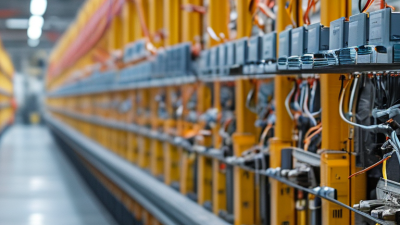
Choosing a wiring partner can shape a product’s reliability long after the first sample passes inspection. Electrical wiring harnesses must match the equipment, operating environment, and assembly process—not just the drawing. A connector that fits on a bench may loosen under vibration. A cable that works indoors may not suit heat, moisture, or repeated movement. Small details matter.
This guide introduces ten manufacturers buyers may consider for custom and production harnesses. It looks at practical factors such as engineering support, material options, quality controls, production capacity, and communication. Buyers should also ask about wire-gauge selection, connector sourcing, labeling, traceability, and how design changes are managed. These questions help reveal whether a supplier can support the full project, from prototypes to repeat orders.
No shortlist is perfect. Supplier capabilities change, and a strong reputation does not guarantee a good fit for every application. That judgment takes work. Request drawings, sample parts, and clear answers about inspection procedures before making a decision. Compare quotations carefully, too; a lower price may leave out testing, documentation, or other needed services. The manufacturers featured here offer different strengths, so the best choice depends on your technical requirements, schedule, and production volume. A little uncertainty is normal. It is better to surface it early than discover it after harnesses reach the assembly line.
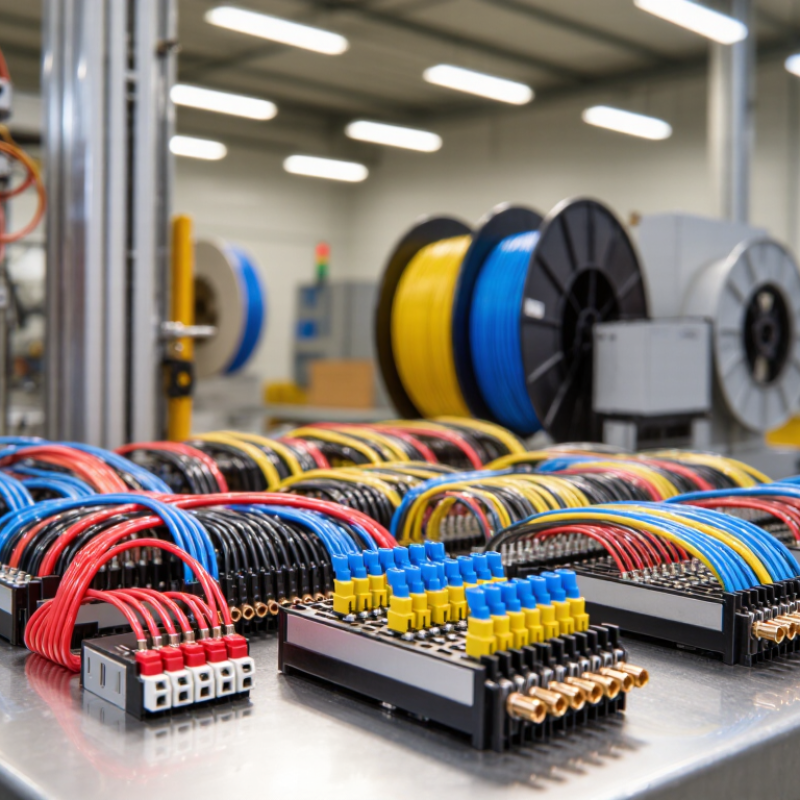
An electrical wiring harness is an organized assembly of insulated wires, terminals, connectors, and protective coverings. It carries electrical power and signals between components, such as sensors, lights, control units, and motors. Rather than leaving separate wires loose, a harness bundles them into a routed assembly that can be secured with clips and guided around machinery. Not just copper. Its layout also helps technicians trace connections and reduces exposure to heat, vibration, moisture, and abrasion.
Harnesses appear in passenger vehicles, trucks, farm equipment, factory machines, aircraft, and household appliances. In a vehicle, one branch may reach a headlamp while another connects to a door sensor or battery. The International Energy Agency’s Global EV Outlook 2024 reports nearly 14 million electric car sales in 2023, around 18% of worldwide car sales. That shift increases the need for harnesses that can manage power, data, and space constraints in electrified vehicles. Industrial systems use them too, where long cable runs must stay organized around moving parts. Design details matter. A tight bend, poorly sealed connector, or unclear label can make installation and maintenance harder; practical layouts still deserve careful review.
Evaluating an electrical wiring harness manufacturer starts with the drawing, not the sales pitch. Share a representative print and ask how the team checks wire gauges, connector orientation, and branch lengths. A capable partner should flag unclear dimensions before production. Look for documented inspection steps, traceable material records, and test results tied to specific assemblies. Ask whether continuity and pull tests are performed, and how failures are recorded. Specific answers matter.
Then examine the production floor or request a live video walkthrough. Check whether workstations are organized, labels remain readable, and operators use the correct crimp tools. Small details count. Request sample harnesses built to your specifications, then inspect routing, strain relief, and terminal retention yourself. Discuss forecast changes, lead times, and how urgent revisions are handled. Ask for examples of corrective actions, without requesting confidential customer details. A neat sample is useful, but it cannot prove consistent output across a full run. I have seen buyers give too much weight to a low quote; pricing alone reveals little about process control. Compare evidence, communication, and repeatability before deciding.
Suggested buyer-side evaluation weights for comparing suppliers. These weights are a practical scoring framework, not measured industry statistics or ratings of specific manufacturers.
Score each supplier against the same criteria, using evidence such as audit records, sample builds, process documentation, capacity plans, and quotations. Adjust the weights to match your product risk and project priorities.
Grand View Research estimated the global automotive wiring harness market at USD 52.9 billion in 2023, with continued growth projected through 2030. This market figure shows the sector’s scale, not a supplier’s quality. Buyers should compare each manufacturer’s engineering support, traceability, testing, and production capacity.
Fit matters. These profiles are useful starting points, not proof of performance; even a polished sample may hide weak change control.
Tips: Request a sample, inspection criteria, and a recent production record. Check connector retention, labels, splice quality, and bend radius. Ask how the supplier handles design changes and shortages. Then compare the quote with the testing and support included.
A wiring harness manufacturer is defined less by its catalogue than by what it can control on the production floor. Ask how it verifies crimp height, pull strength, continuity, and connector fit. For a prototype run, hand-built samples may be practical. High-volume programs usually need repeatable tooling, automated checks, and lot-level traceability. Details count. A supplier should also explain how it handles engineering changes without mixing old and revised parts.
Certifications help buyers compare quality systems, but they do not prove every process is suitable. IATF 16949 is relevant to automotive quality management; ISO 13485 may matter for medical-device supply chains. Request the certificate scope and check whether the actual production site is covered. Not always. A certificate can look reassuring while leaving questions about subcontracted cutting, plating, or testing unanswered. Ask for process records and sample inspection results.
Market needs are changing, too. The International Energy Agency’s Global EV Outlook 2024 reported nearly 14 million electric-car sales in 2023, about 18% of global car sales. That shift increases attention to high-voltage insulation, shielding, thermal protection, and clear assembly controls. Manufacturers serving industrial equipment may instead prioritize rugged jackets, flexible routing, and smaller production batches. One capability rarely fits all. Compare suppliers against the application’s voltage, environment, volume, and documentation needs—not a generic “full-service” claim.
| Profile | Typical capabilities | Common harness work | Relevant quality frameworks | Typical markets | Buyer fit |
|---|---|---|---|---|---|
| 1. Automotive high-volume specialist | Automated wire processing, connector insertion, in-line testing, production traceability, and high-volume manufacturing systems. | Vehicle body, powertrain, chassis, and interior wiring harnesses. | IATF 16949 and ISO 9001 are commonly relevant; IPC/WHMA-A-620 may be used for workmanship criteria. | Passenger vehicles, commercial vehicles, and automotive suppliers. | Buyers needing repeatable production at scale and automotive quality-system alignment. |
| 2. Electric-vehicle and high-voltage specialist | High-voltage cable assembly, insulation and continuity checks, connector handling, and defined electrical safety controls. | Battery, inverter, charging, and high-voltage distribution assemblies. | IATF 16949 or ISO 9001 may apply; product and process requirements depend on the vehicle program and applicable safety standards. | Electric vehicles, charging equipment, and energy storage. | Buyers who need documented high-voltage design and manufacturing controls. Confirm voltage range and test scope. |
| 3. Aerospace and defense harness specialist | Controlled assembly processes, configuration management, detailed inspection records, and support for demanding environmental requirements. | Aircraft electrical interconnect systems, avionics wiring, and defense platforms. | AS9100 is relevant to aerospace quality management; IPC/WHMA-A-620 and customer-specific requirements may also be specified. | Commercial aerospace, defense, and space programs. | Buyers requiring strict documentation, revision control, and qualification evidence. |
| 4. Medical-device cable and harness supplier | Controlled assembly, cleanliness practices where required, material traceability, and support for design and regulatory documentation. | Patient-monitoring, diagnostic, therapeutic, and medical-equipment cable assemblies. | ISO 13485 is relevant to medical-device quality management; applicable requirements depend on the product and supplier role. | Medical devices, laboratory equipment, and healthcare technology. | Buyers who need quality-system evidence and change-control support for regulated products. |
| 5. Industrial automation harness manufacturer | Flexible production, custom cable preparation, connectorization, labeling, and electrical testing for equipment builds. | Machine wiring, control panels, sensors, actuators, and robotic equipment. | ISO 9001 is common; IPC/WHMA-A-620 can provide workmanship acceptance criteria when specified. | Factory automation, robotics, material handling, and industrial machinery. | Buyers with varied configurations, moderate volumes, and frequent engineering changes. |
| 6. Heavy-equipment and off-highway supplier | Ruggedized assembly, abrasion and environmental protection options, large-gauge wire processing, and robust connector integration. | Equipment power and control harnesses for mobile machinery. | ISO 9001 or IATF 16949 may be relevant depending on the customer and program; environmental tests are typically defined by the application. | Agriculture, construction, mining, and material-handling equipment. | Buyers prioritizing durability, serviceability, and application-specific environmental validation. |
| 7. Marine and transportation harness supplier | Custom routing and branch assemblies, protective sleeving, corrosion-aware material selection, and installation-oriented documentation. | Vessel, rail, bus, and specialty-transport electrical systems. | ISO 9001 may apply; project specifications and sector rules determine material, fire-performance, and testing requirements. | Marine, rail, transit, and commercial transportation. | Buyers needing assemblies tailored to vehicle layouts and applicable project requirements. |
| 8. Electronics and appliance harness producer | Automated cut-strip-crimp operations, connector assembly, labeling, and repeatable testing for large product families. | Internal wiring for appliances, consumer equipment, and electronic products. | ISO 9001 is common; IPC/WHMA-A-620 may be used as a workmanship reference where required. | Home appliances, consumer electronics, and commercial equipment. | Buyers seeking cost-efficient production of repeat designs and standardized assemblies. |
| 9. Prototype and low-volume engineering partner | Rapid prototyping, engineering collaboration, drawing review, sample builds, and flexible production scheduling. | Prototype harnesses, pilot builds, custom cable assemblies, and low-volume products. | ISO 9001 may be held; workmanship and inspection requirements should be agreed for each project. | Product development, test equipment, research, and specialized machinery. | Buyers who value engineering access and short-run flexibility over mass-production economics. |
| 10. Global contract-manufacturing provider | Multi-site production options, supply-chain coordination, manufacturing engineering, and programs spanning several assembly types. | Wiring harnesses integrated with cable assemblies, box builds, or larger electromechanical products. | Certifications may differ by site and business unit; verify the exact facility, product scope, and certificate validity. | Automotive, industrial, medical, communications, and consumer sectors, depending on site capability. | Buyers consolidating suppliers or seeking regional production options and broader manufacturing support. |
Selection tip: compare the specific factory, engineering support, production capacity, test coverage, traceability, and applicable certificates—not just the supplier’s overall company profile.
A wiring harness supplier should fit the project, not just offer the lowest unit price. Start with the operating environment: temperature range, vibration, moisture, chemicals, and routing space. Share drawings, connector specifications, current loads, and expected order volumes early. Ask how the supplier checks crimp height, pull force, continuity, and labeling. Clear answers matter. So does a sample build.
Check whether the production process suits your order pattern. A prototype team may handle design changes well, while a high-volume line may offer greater consistency. Request inspection records, material traceability, and first-article results. Confirm lead times for wire, terminals, and tooling; delays can start upstream. Discuss revision control, too. One missed drawing update can leave a tidy harness that will not fit the enclosure. Check the details twice.
Tips: Share a real installation photo alongside the drawing. Ask for a sample routed through the tightest bend. Compare tolerances, test coverage, and packaging—not price alone. A checklist helps, but it can miss awkward assembly realities. If answers seem vague, clarify them before approving production.